Saudi Arabia's Recovery Case Now Runs Through Logistics as Much as Oil
The IMF sees Saudi growth recovering as maritime flows normalize. Diversified export routes, domestic demand and Vision 2030 investment are central to the resilience case.
Outspoken Digest Gulf Economics Desk
Sunday, August 2, 2026/2 min read
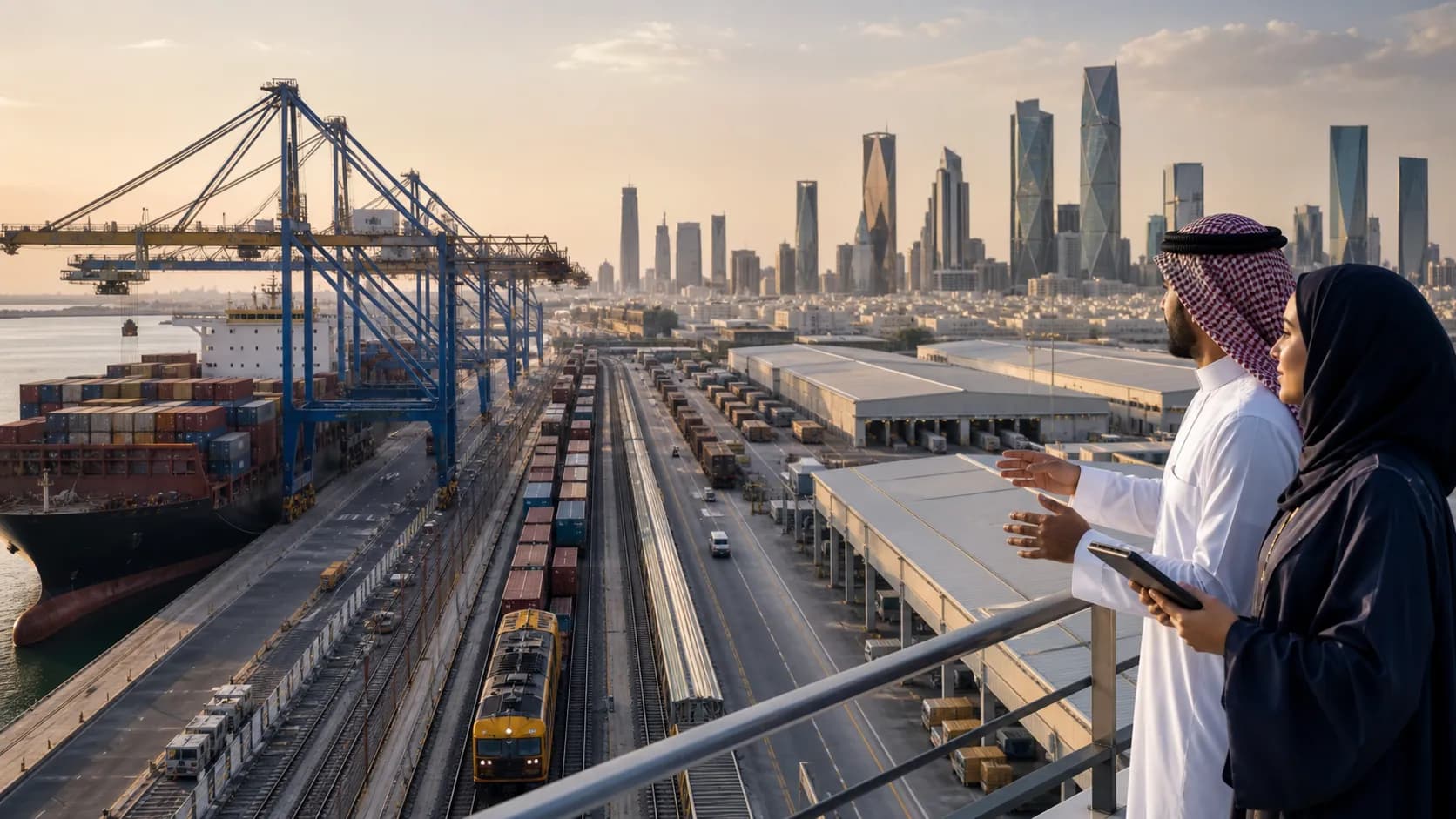
Saudi Arabia's 2026 outlook is usually summarized through oil prices and production. This year's disruption has made logistics equally important. The ability to redirect barrels, use the East-West pipeline, draw on overseas inventories and keep domestic projects moving has become part of the Kingdom's macroeconomic resilience.
What the latest evidence says
The IMF says the Saudi economy entered 2026 with strong momentum after 4.5 percent growth in 2025. Its mission projected growth around 2 percent this year if maritime shipments normalize, with inflation near 2.3 percent. The Fund highlighted low public debt, ample reserves, a large sovereign wealth fund and diversified infrastructure as important buffers.
IMF 2026 Saudi Arabia mission statement provides the primary data and institutional assessment behind this report.
IMF Saudi Arabia country page adds the second official reference used to compare the outlook and its risks.
Why this matters now
Those buffers buy time, but the more durable story is the non-oil economy. Stable public employment, government spending and continued private and public capital projects can support demand while export routes recover. Vision 2030 matters here not as a slogan but as a portfolio of tourism, logistics, industry and services that reduces dependence on one channel.
What to expect in the upcoming period
A near-term recovery would be visible first in shipping volumes, business confidence and project execution. Normalized transit can restore oil revenue and lower imported logistics costs, while domestic investment sustains activity. The strongest outcome is not simply a return to the old path; it is using the shock to strengthen Red Sea routes, private-sector capacity and fiscal prioritization.
The risk inside the forecast
The IMF is explicit that prolonged conflict would weaken investment and medium-term growth. Large projects also require discipline when revenue is uncertain. Spending reprioritization, transparent sequencing and continued financial supervision can protect the most productive investments without assuming every proposal must proceed on its original timetable.
What readers should watch next
Saudi Arabia's positive case remains credible because it combines resources with reform and infrastructure. The coming period will test execution rather than ambition. If trade routes normalize and non-oil projects keep attracting private activity, 2026 can be remembered as a resilience test that accelerated diversification instead of interrupting it.
Published in The Outspoken Digest
Newsletter
The Digest, in your inbox
One edition, sent when it is ready. No noise, and your address is never passed on.
Read Next
More Business →
Jio Platforms Raises Rs 8,110 Crore From Anchors at the Top of Its Range as India's Biggest IPO Opens
Oct 21, 2026/2 min read

Netflix Beats on Profit, Then Slides After Hours as It Trims Its Ad Forecast and Guides Lower
Oct 21, 2026/2 min read
Wall Street Rebounds as AI Stocks Recover, With the Nasdaq Up 1.1% and the 10-Year Yield Above 5.15%
Oct 20, 2026/2 min read

CoreWeave Shares Fall 25 Percent in a Week as Its Bonds Flash Warning Signs for AI's Borrowers
Oct 18, 2026/2 min read