School Was Built for a World Where Knowledge Was Expensive. That World Ended and the Building Did Not
The rules that made sense when a teacher was the only source in the room are now the ones causing damage. The answer is not less rigour. It is rigour moved to the place where it still means something.
Tuesday, August 18, 2026/6 min read
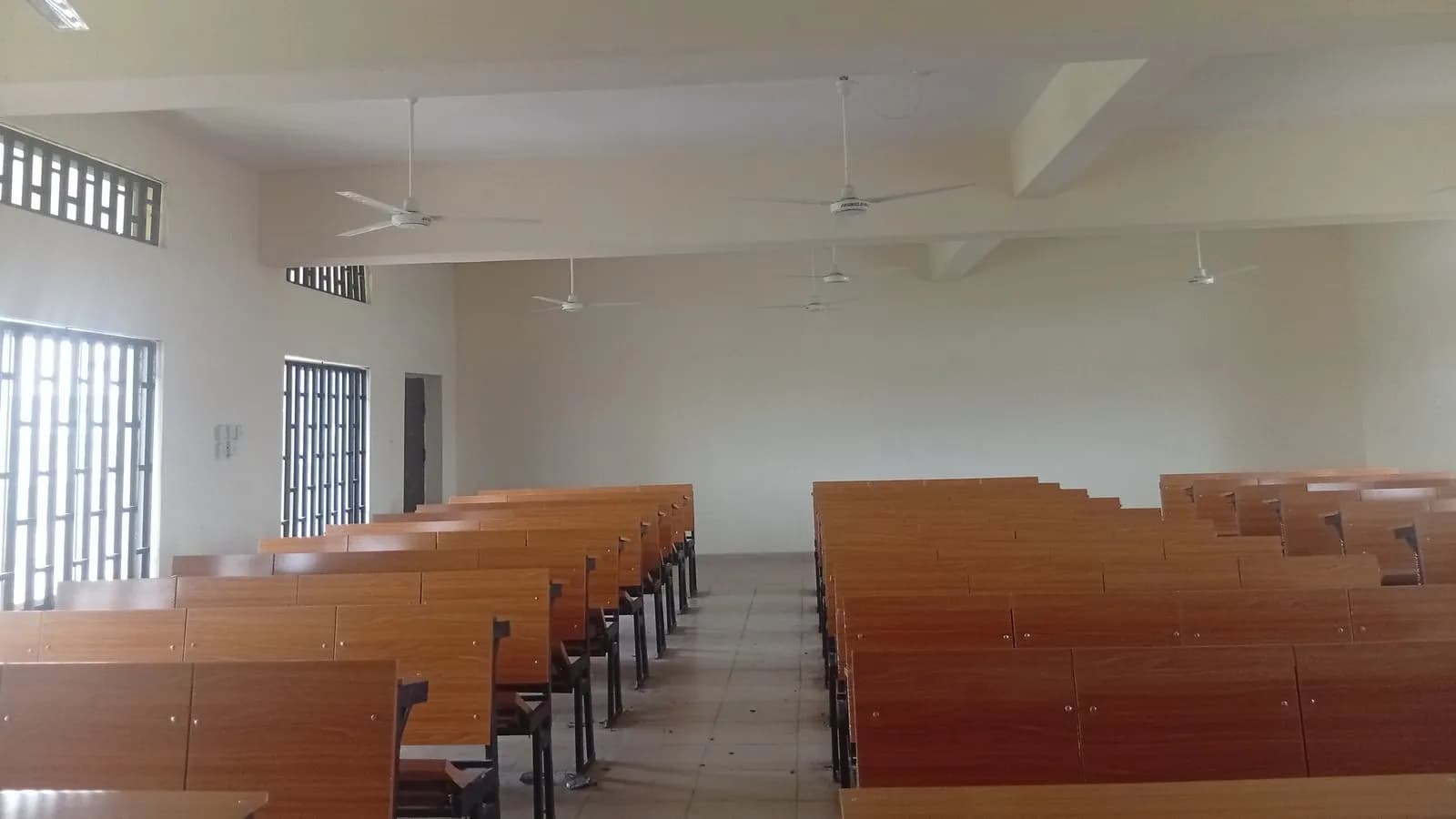
Sit in almost any classroom in the world and you are sitting inside a solution to a problem that no longer exists.
Rows of desks facing one adult. A fixed sequence of topics delivered at one speed. A bell. A rule that you may not look anything up. Every one of those choices was rational when knowledge was genuinely scarce, when the teacher was the only expert within twenty miles and the textbook was the most expensive object in the room. Under those conditions, transmitting information efficiently to thirty people at once was a genuine engineering achievement.
None of those conditions hold. All of the design decisions remain.
What was school actually built to do?
Two things, and it is worth separating them because only one has survived.
The first was transmission. Getting information from where it existed into the heads of people who had no other access to it. That job is finished. A fourteen year old with a phone has better access to explanation than a graduate student had in 1995, and no institution can compete with that on distribution.
The second was sorting. Producing a ranked, credentialed signal that employers and universities could rely on. That job has not finished. It has quietly broken, which is a different thing and considerably more dangerous, because everyone is still acting on the signal.
Why is constraint now the thing doing damage?
Because the constraint was never the point. It was a proxy for something else, and the proxy has come apart from the thing it stood for.
Take the rule against looking things up. Its purpose was never to produce adults who cannot use a reference. It was a way of verifying that something had been internalised, at a time when the only way to check was to remove every alternative. The removal was instrumental. Somewhere in the last century it became the value itself.
Now apply that to a sixteen year old who has spent their whole life with instant access to every explanation ever recorded and is told, for six hours a day, that using any of it is cheating. They are not learning discipline from that. They are learning that school operates on rules which do not describe the world, which is precisely the lesson that produces a student who games the system rather than engages with it.
The cost lands hardest on the children who were always poorly served by one speed and one sequence: the ones who were ready three chapters ago and the ones who needed another week on the last one. Abundant material could serve both of them. A fixed pace serves neither, and now it does so while an unlimited tutor sits in their pocket being formally forbidden.
But does the evidence not show AI makes students worse?
Yes, and any argument for change that dodges this is not worth reading, so let us take it directly.
The strongest study yet, a ten-year panel of 3.2 million maths interactions, found students spending 27 per cent less time on the problems these tools can solve, and performing 25 per cent worse on supervised assessment while their unsupervised scores rose. We covered the findings in full in a separate piece, and they are damning.
But look closely at what that study actually isolates. The damage occurred in unsupervised homework, on tasks where finishing was the goal, in a system that rewards a completed answer. It did not occur among ten year olds, who mostly work where an adult can see them. And it disappeared entirely under proctoring.
That is not evidence that abundant resources make children stupid. It is evidence that if you set a task whose only purpose is to be handed in, and a machine can hand it in, the machine will hand it in. The tool did not cause that. It revealed it. A great deal of what we assign turns out to have had no function beyond generating a mark, and we only found out when something else could generate the mark.
What would a better model actually look like?
Not a slogan about creativity. Four structural changes, each of which follows from the evidence rather than from optimism.
- Verify in the room, liberate outside it. If it matters, it is demonstrated under supervision: written, spoken, defended, built while someone watches. Everything else stops pretending to be assessment and becomes what it should have been, which is practice. This is the single change with actual evidence behind it, and universities returning to invigilated in-person examination have already begun it.
- Assess the process, not the artefact. Ask a student to explain the route they took, defend a choice, or find the error in a worked solution that is subtly wrong. A finished essay is now almost information-free. A student talking through why they rejected their first approach is not, and cannot be outsourced.
- Teach the operating manual explicitly. How to check a confident claim against a primary source. How to notice you have accepted something because it was fluent. When to refuse the shortcut because the struggle is the point. These are teachable, examinable skills and almost nowhere are they on a timetable.
- Let pace vary, since the material finally allows it. The fixed sequence existed because one teacher could not run thirty tracks. That constraint is technological and it has lifted. Keeping it now is a choice about administration, not about pedagogy.
Does this actually produce a more capable generation?
It can, and the honest answer includes the condition attached.
A student who has been taught to direct their own learning, to interrogate a source, and to know when to put the tool down is genuinely more capable than the equivalent student thirty years ago. They have the same brain and vastly more leverage. That is not a hopeful projection, it is arithmetic.
A student who has been given the same tools with no guidance and an assessment system that rewards a finished artefact will use them to finish artefacts, and will arrive at twenty-two with excellent grades and a documented 25 per cent deficit in what those grades were supposed to represent. Both outcomes are available from identical technology. The variable is the adults.
This is also no longer an abstract argument about the future of work. The junior rungs of a great many professions are being sawn off right now, a pattern we traced in our reporting on the class of 2026 and on what UAE employers now accept as evidence of competence. Employers have already stopped believing the credential and started asking to see the work. Schools are the last institution still acting as though the signal holds.
What should a school do this term?
With UAE classrooms reopening on 31 August, the practical version of all this fits on one page.
Pick the handful of things that genuinely must be verified in each subject and verify those under supervision, properly, without apology. Stop grading everything else and say so out loud, so that students know which work is for a mark and which is for them. Put one lesson a fortnight into how to use these tools well, taught by someone who actually uses them. And drop the detection software, which a study of fourteen such tools found produces false positives as high as 50 per cent, meaning it accuses honest children on evidence no school would accept from any other source.
None of that requires a new curriculum or a budget. It requires deciding that the purpose of the constraint was always the learning, and that when the two come apart, the learning wins. For families, the groundwork starts before term does, which is what our guide to rebuilding a school morning from scratch is for.
Published in The Outspoken Digest
Newsletter
The Digest, in your inbox
One edition, sent when it is ready. No noise, and your address is never passed on.
Read Next
More Latest Trends →
Houthi Missile Hits Aramco's Dhahran Headquarters as Saudi Arabia and Yemen's Rebels Trade Strikes
Oct 15, 2026/3 min read

Kimberly Guilfoyle Resigns as US Ambassador to Greece After the White House Asked Her to Go
Oct 15, 2026/2 min read

Two Cargo Ships Sink Near the Strait of Hormuz as Attacks on Shipping Surge
Oct 15, 2026/2 min read

Pope Leo XIV Has Lung Cancer, the Vatican Says, After Surgery to Remove Part of His Right Lung
Oct 15, 2026/2 min read