Shakriyeh, the Mansaf You Make With Fresh Yoghurt
Northern Levantine kitchens skip the dried jameed and cook lamb in fresh yoghurt instead. Softer, quicker, and the version most families actually make on an ordinary week.
Saturday, July 25, 2026/3 min read
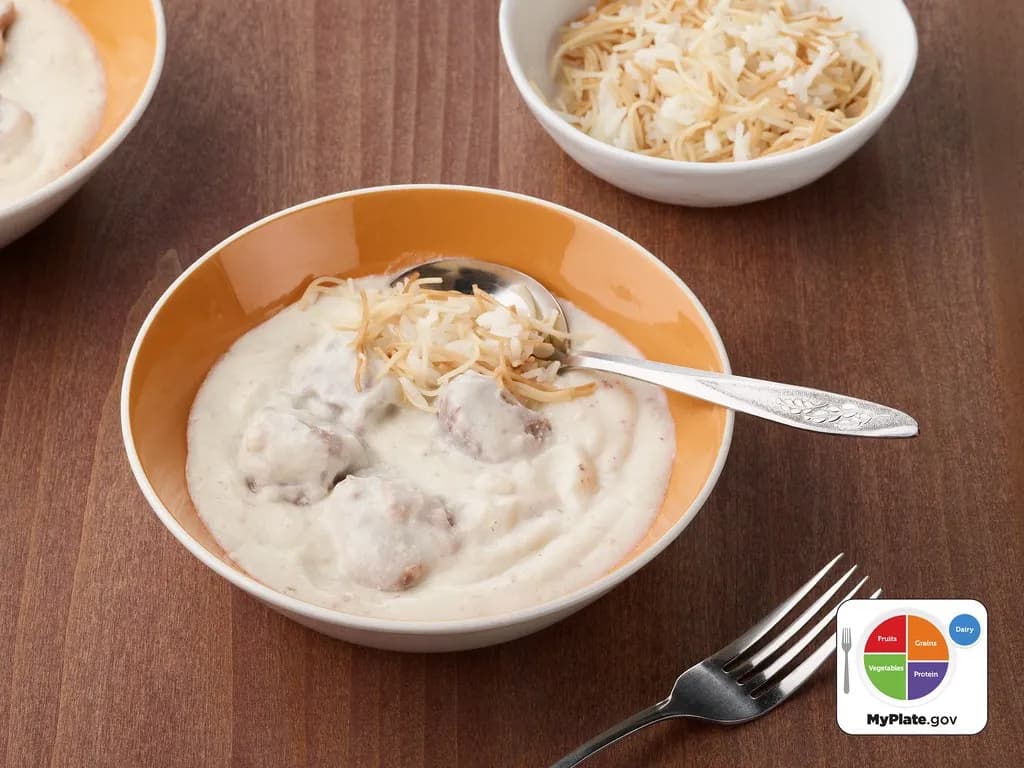
Mansaf built on jameed, the rock hard dried yoghurt of the southern Levant, is a dish for occasions. It takes soaking, breaking down and a whole day of intent. Shakriyeh is what the same idea looks like on a Tuesday.
It is a lamb and yoghurt stew made across Lebanon, Syria, Jordan and Palestine, usually served over rice, as the reference entry on the dish records. In Lebanon it is more often called laban immo, which translates as his mother's milk, on the logic that the lamb is cooked in the milk of its own mother. The name shakriyeh appears to come from the Arabic root for thanks.
The relationship to mansaf is real and worth stating plainly. The record on mansaf describes an urban, less ceremonial adaptation using undried yoghurt, called shakriyeh or laban immo, sometimes made with poultry rather than lamb, common in Palestine, Lebanon, Syria and northern Jordan. Northern regions with reliable fresh milk cooked this way; the drier south preserved its yoghurt into jameed and cooked the other way.
The technique that matters is stabilising the yoghurt so it does not split, and Hungry Paprikas sets out the standard approach of cooking meat and yoghurt separately before bringing them together.
Ingredients
Serves 5. Total time: 2 hours 15 minutes, mostly unattended.
- 1 kg lamb shoulder or shank, cut into large chunks on the bone
- 1 onion, halved
- 2 bay leaves
- 4 cardamom pods, bruised
- 1 cinnamon stick
- 1 kg full fat plain yoghurt, at room temperature
- 1 egg white
- 1 tbsp cornflour
- 1 tsp salt, plus more to taste
- 2 tbsp ghee or butter
- 4 garlic cloves, crushed
- 2 tbsp dried mint
- 300 g long grain rice
- 60 g vermicelli, broken
- 50 g pine nuts or flaked almonds, toasted in ghee
- A handful of flat leaf parsley, chopped
Method
- Put the lamb in a pot with the onion, bay, cardamom and cinnamon. Cover with cold water, bring to the boil and skim the grey foam off carefully for the first few minutes. That foam is what makes a cloudy, muddy tasting broth if left in.
- Reduce to a bare simmer, part cover, and cook 90 minutes to 2 hours until the meat is tender enough to give under a fork. Lift the meat out and strain the broth, keeping about 500 ml.
- Whisk the yoghurt, egg white, cornflour and salt in a large heavy pan until completely smooth. This is the step that prevents curdling: the starch and protein hold the emulsion together when the yoghurt heats.
- Set over medium low heat and stir constantly in one direction with a wooden spoon until it comes to a gentle simmer. Do not stop stirring and do not let it boil hard. It will thicken and turn glossy after 10 to 12 minutes.
- Once it has simmered and stabilised, stir in about 300 ml of the reserved broth to reach a pourable, single cream consistency. Add the lamb and simmer very gently 15 minutes more.
- Melt the ghee in a small pan, cook the garlic 30 seconds until fragrant, then add the dried mint off the heat and swirl. Stir this straight into the yoghurt pot. Adding mint to hot fat rather than to liquid is what lifts its aroma.
- For the rice, toast the vermicelli in a little ghee until deep gold, add the rinsed rice, then 600 ml water and a teaspoon of salt. Cover and cook 12 minutes, then rest off the heat 10 minutes before forking through.
- Serve the lamb and sauce over the rice, scattered with toasted nuts and parsley.
Notes, swaps and keeping
Use full fat yoghurt at room temperature. Low fat splits far more readily, and yoghurt straight from the fridge shocks when it hits heat. Goat yoghurt is traditional in many households and gives a sharper, more interesting result if you can get it.
Chicken thighs work well and turn the dish into a 45 minute proposition rather than a two hour one. Poach them in the same aromatics and reduce the simmering time accordingly.
If the sauce does split despite everything, take it off the heat and whisk hard; a small splash of cold yoghurt whisked in sometimes brings it back. It will taste correct even if the texture is grainy, so it is not a disaster.
Shakriyeh keeps two days refrigerated and reheats gently over low heat with a splash of water, stirring. Do not microwave it on full power, which splits the sauce reliably.
Published in The Outspoken Digest
Editorial desk
Outspoken Digest Food DeskCooking, ingredients, restaurants and the economics of what ends up on the table.
Newsletter
The Digest, in your inbox
One edition, sent when it is ready. No noise, and your address is never passed on.
Read Next
More Recipes →
Chicken Cheesesteak at Home: Seared Thigh, Sweet Onions and Melted White American on a Sesame Roll
Oct 26, 2026/3 min read
Marry Me Chicken Pasta: Creamy Sun-Dried Tomato Chicken, Ready in 40 Minutes
Oct 23, 2026/4 min read

Cheesy Ramen on the Stove: Instant Noodles in a Real Cheese Sauce in Ten Minutes
Oct 18, 2026/3 min read

Beer-Battered Jalapeno Cheese Curds: The Wisconsin Bar Snack, Fried Properly at Home
Oct 18, 2026/3 min read