Sustainable fashion: progress report on a promise
After years of greenwashing, the secondhand market is growing 11x faster than retail. Real progress on sustainability exists, but the scale of waste remains sobering.
Monday, September 15, 2025/4 min read
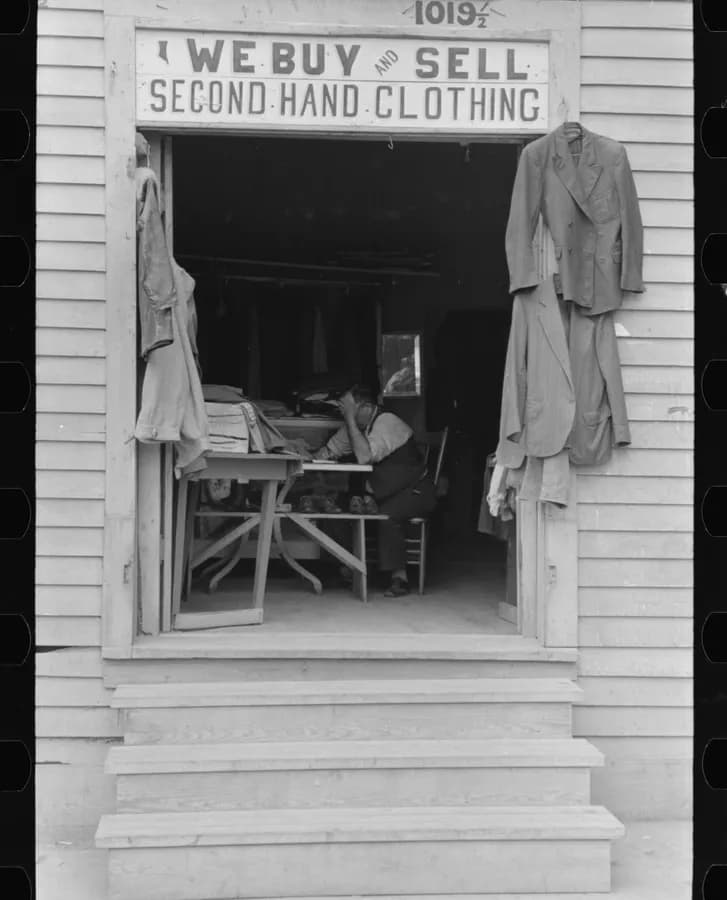
The promise of sustainable fashion has been, until recently, mostly marketing. Brands released "eco-friendly" collections while overall production increased. They celebrated fiber innovation while ignoring that the fashion industry still generates 92 million tonnes of textile waste annually. But somewhere in the middle of 2025, the narrative shifted. Not because brands got suddenly ethical, but because the economics of secondhand fashion finally tipped in favor of scale.
The evidence is in the growth numbers. According to Statista's comprehensive analysis of sustainable fashion trends, the resale market is growing 11 times faster than traditional retail. The US secondhand apparel market reached USD 51.9 billion in 2024, and growth accelerated to 14 percent in that year alone (the fastest growth rate since 2021). Online resale specifically jumped 23 percent in 2024. These aren't niche numbers anymore; they represent a genuine structural shift in how fashion consumption is happening.
What changed wasn't consumer virtue. It was convenience and economic incentive aligning.
Why recycling still doesn't work at scale
The uncomfortable truth is that textile recycling remains almost nonexistent. According to Future Market Insights' clothing recycling analysis, less than one percent of used clothing globally is recycled into new garments. That figure hasn't moved in meaningful ways for years. Meanwhile, 73 percent of discarded textiles end up in landfills or incinerators. The infrastructure required for true circular fashion (sorting mixed fibers, breaking down blends, regenerating material quality) remains prohibitively expensive and technologically underdeveloped at scale.
Some brands are trying. Hugo Boss's NovaPoly initiative, launched in May 2025, produces polyester from textile waste collected from landfills. It's a real technical achievement and a significant commitment. But even Hugo Boss admits it's not solving the broader problem; it's capturing a tiny fraction of waste streams. The challenge is that mixed-fiber garments (the majority of fashion production) can't be easily recycled. A cotton-polyester blend isn't feasible to break down into constituent parts. True recycling would require fundamentally different garment construction and fiber selection, which would mean redesigning how fashion is made.
The resale explosion is the real story
What's actually moving the needle is resale, which isn't recycling at all. It's just extending the life cycle of clothes that already exist. Platforms like Depop, Vinted, Vestiaire Collective, and The RealReal have moved from niche hobby to mainstream convenience. The user experience is frictionless enough that teenagers sell old clothes as easily as they sell on other marketplaces. Algorithms match buyers to inventory. Payment and shipping are handled.
Resale growth is fastest in North America and Western Europe, but it's accelerating globally. Why? Not primarily because of environmental virtue signaling, but because the economic logic works for both sellers and buyers. Sellers recoup value from clothes they're not wearing. Buyers access luxury and designer pieces below retail. Platforms take a commission and scale. The environmental benefit (extending garment life, reducing landfill waste) is real, but it's a side effect of the economic model, not the driver.
What this means for brand strategy
Luxury houses are pivoting toward durability and longevity precisely because secondhand resale works. If a garment has resale value, it justifies a higher retail price. A £1,500 coat that retains £800 of value on resale is economically rational for wealthy consumers in ways that throwaway fashion never was. This creates economic incentive for durability.
Mid-market and fast-fashion brands face the opposite problem. If your customer base is going to resell garments, durability becomes a liability (it means they keep clothes longer and buy less frequently). This is creating a bifurcation: premium brands are emphasizing craft and longevity, while faster segments are racing to the bottom on price. The resale market is accidentally creating economic pressure for better production at the premium end.
The consumption question remains unsolved
Even with secondhand growth at 14 percent annually, the mathematical reality is harsh. New production is increasing faster than secondhand can absorb. Global fashion production has grown consistently, particularly in mass-market segments targeting emerging markets. The resale market captures maybe 5 to 8 percent of total apparel consumption globally. It's growing fast, but it's starting from a low base.
This means the core challenge of sustainable fashion remains: overconsumption. As long as fast-fashion brands make garments cheap and marketing makes them seem essential, resale (which extends the life of existing clothes) can't solve the problem on its own. It's an efficiency improvement within a broken system, not a fix to the system.
Where we are in mid-2025
The sustainable fashion story right now is genuinely mixed. Resale is real and growing, extending the life of millions of garments annually. Some brands are investing in technical innovation (fiber regeneration, dyeing processes, supply chain transparency). Consumers, particularly younger ones, are making different purchasing decisions. But the big-picture metrics on waste, consumption, and production haven't fundamentally shifted. Fashion recycling infrastructure is still inadequate. Most discarded textiles still end up in landfills.
Progress is real but fragile, and it's concentrated in high-value segments of the market. The question for 2026 and beyond is whether this momentum extends to the mass market, or whether sustainable fashion becomes a premium segment while the broader industry continues its expansion unchanged.
Published in The Outspoken Digest
Editorial desk
Outspoken Digest Style DeskReports for The Outspoken Digest across Fashion, Design, Lifestyle.
Newsletter
The Digest, in your inbox
One edition, sent when it is ready. No noise, and your address is never passed on.
Read Next
More Fashion →
Anthony Vaccarello Is Leaving Saint Laurent After a Decade, and Kering Has Not Yet Named His Successor
Oct 9, 2026/2 min read

Louis Vuitton Closes Paris Fashion Week With Hovering Cars, Paper-Light Dresses and a Louvre Courtyard Cityscape
Oct 7, 2026/2 min read

Celine Dion Made a Surprise Return to the Catwalk to Close L'Oreal's Paris Fashion Week Opening Show
Sep 29, 2026/2 min read
Louise Trotter Doubled Down on Colour and Oversized Bags for Her Latest Bottega Veneta Show in Milan
Sep 27, 2026/2 min read