Cold Tahini Soba Noodles With Date Syrup and Chilli Crisp
Japanese buckwheat noodles dressed with a Levantine sesame sauce. The two sesame pastes are near relatives, and date syrup does the job mirin was already doing.
Tuesday, August 4, 2026/4 min read
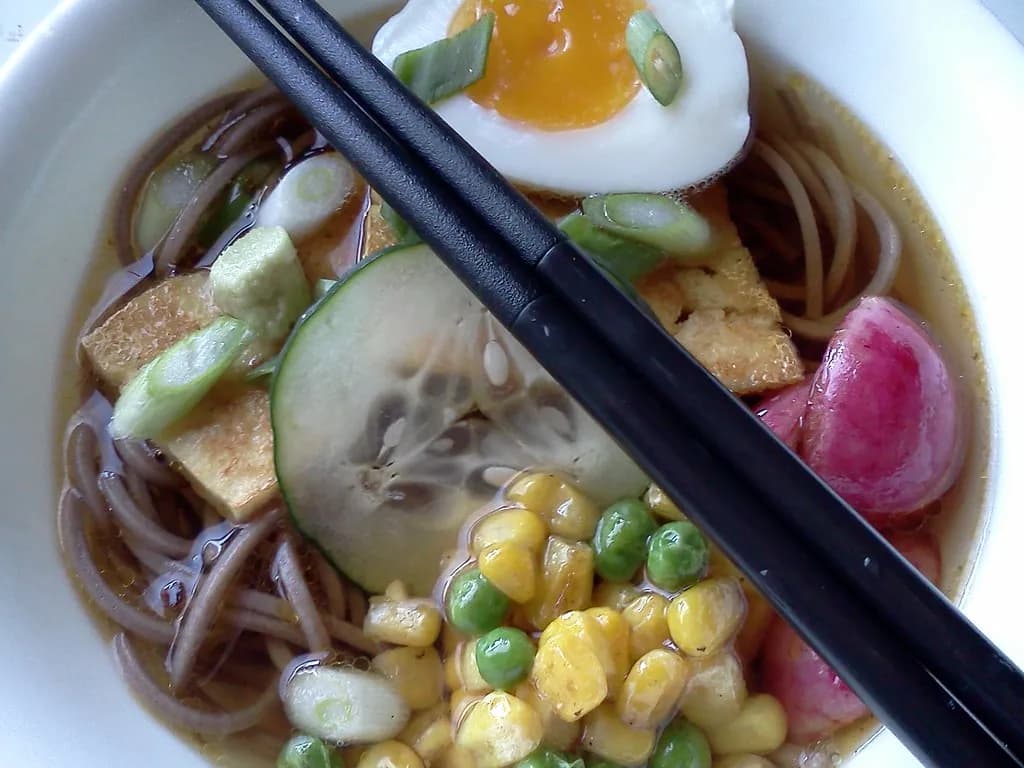
Cold sesame noodles are one of the most copied dishes in the world, and most versions run on a Chinese or Japanese sesame paste made from heavily roasted seeds. Tahini is the same idea from the other end of the trade route, ground from seeds toasted much more lightly, which makes it paler, looser and slightly bitter.
That bitterness is why this works. A sesame dressing needs something to push against the sweetness, and tahini brings it built in. Date syrup supplies the sweetness in return, and it does the job mirin usually does: clean, rounded, not sharp.
The kinship is real rather than invented. As one survey of the fusion pantry observes, tahini and Japanese sesame paste are textural cousins, while date syrup and mirin both bring a clean rounded sweetness. Keeping the edit small is the whole discipline here, a point Culinary Arts Switzerland makes when it warns that piling soy, tahini, gochujang and pomegranate molasses into one bowl is not fusion. This dish changes the paste and the sweetener and stops.
Ingredients
Serves 4 as a light main. Total time: 25 minutes, no cooking beyond boiling noodles.
- 300 g dried soba noodles
- 120 g tahini, well stirred
- 2 tbsp light soy sauce or tamari
- 1.5 tbsp rice vinegar
- 1.5 tbsp date syrup
- 1 tbsp toasted sesame oil
- 1 garlic clove, grated to a paste
- 2 tsp finely grated ginger
- 80 to 120 ml ice cold water
- 2 spring onions, sliced on a steep angle
- 1 cucumber, seeds removed, cut into matchsticks
- 100 g shelled edamame, blanched
- 2 tbsp chilli crisp, plus more to serve
- 2 tsp toasted sesame seeds
- A handful of coriander leaves
Method
- Bring a large pan of unsalted water to a rolling boil. Soba needs volume and does not want salt, unlike Italian pasta.
- Cook the noodles for the time on the packet, usually 4 to 5 minutes. Test a strand a minute early; overcooked soba turns to sludge and there is no recovering it.
- Drain and rinse immediately under cold running water, rubbing the noodles gently with your hands for a good 30 seconds. This washes off surface starch and is the difference between separate strands and a solid block. Drain very thoroughly.
- Whisk the tahini, soy, rice vinegar, date syrup, sesame oil, garlic and ginger in a bowl. It will thicken and seize alarmingly. This is expected.
- Add ice cold water a tablespoon at a time, whisking constantly, until the sauce falls from the whisk in a smooth ribbon. Cold water emulsifies tahini far better than warm.
- Taste and adjust. It should be assertively seasoned, since cold noodles mute everything. More vinegar for sharpness, more date syrup for roundness, more soy for salt.
- Toss the drained noodles with about three quarters of the sauce until every strand is coated, then fold through the cucumber, edamame and half the spring onions.
- Top with the remaining sauce, the chilli crisp, sesame seeds, coriander and the rest of the spring onions. Serve cold or at room temperature, within an hour of dressing.
Why tahini seizes, and why that is fine
Adding liquid to tahini makes it thicken violently before it thins, which looks like a mistake and is not. Tahini is a suspension of ground sesame in its own oil, and introducing water forces a switch from an oil continuous mixture to a water continuous one.
During the changeover the structure tightens. Keep adding water in small amounts and whisking, and it passes through and becomes smooth and pourable. Adding a lot of water at once makes it split instead, which is much harder to bring back.
Cold water works better than warm here because it keeps the sesame oil firm while the emulsion forms.
The rinse is not optional
Rinsing cooked pasta is heresy in Italian cooking and mandatory in Japanese noodle cooking, and the difference is what the starch is for.
In a hot Italian dish, surface starch helps sauce cling. In a cold noodle dish there is no emulsifying pan sauce to build, and that same starch simply glues the strands together as they cool into a single mass.
Rub the noodles gently under cold running water until they feel clean rather than slippery, then drain them properly. Water left clinging to soba dilutes the dressing and the whole bowl tastes underseasoned for no obvious reason.
Notes, swaps and storage
Check the soba packet if gluten matters to you. Many supermarket soba are a blend of buckwheat and wheat flour, and only ones labelled juwari are pure buckwheat and genuinely gluten free.
Date syrup is worth having, though honey or maple syrup both work at the same quantity. Tahini brands differ hugely: a good one pours and tastes nutty, a poor one is stiff, grey and bitter in an unpleasant way, and no amount of date syrup rescues it.
Dress the noodles no more than an hour before eating, since soba keeps absorbing sauce and eventually goes stodgy. The sauce itself keeps five days in the fridge and will thicken solid when cold, so whisk in a little water to bring it back. Add cold shredded chicken or crisp tofu to make it a fuller meal.
Published in The Outspoken Digest
Editorial desk
Outspoken Digest Food DeskCooking, ingredients, restaurants and the economics of what ends up on the table.
Newsletter
The Digest, in your inbox
One edition, sent when it is ready. No noise, and your address is never passed on.
Read Next
More Recipes →
Cheesy Ramen on the Stove: Instant Noodles in a Real Cheese Sauce in Ten Minutes
Oct 18, 2026/3 min read
Beer-Battered Jalapeno Cheese Curds: The Wisconsin Bar Snack, Fried Properly at Home
Oct 18, 2026/3 min read
A Thanksgiving Turkey Sub With Hot Stuffing, Cranberry and Gravy to Dip
Oct 17, 2026/3 min read

Pecan Pie Bars With a Shortbread Base and a Caramel Filling That Slices Cleanly
Oct 17, 2026/3 min read