Thailand's Tourist Arrivals Are Down 4.1 Percent This Year While Its Hotels Keep Expanding
Thailand has had 24.4 million visitors to 17 October, and the government cut its 2026 goal to 33 million. Developers still plan 167 hotel projects and new airlines are returning.
Friday, October 30, 2026/2 min read
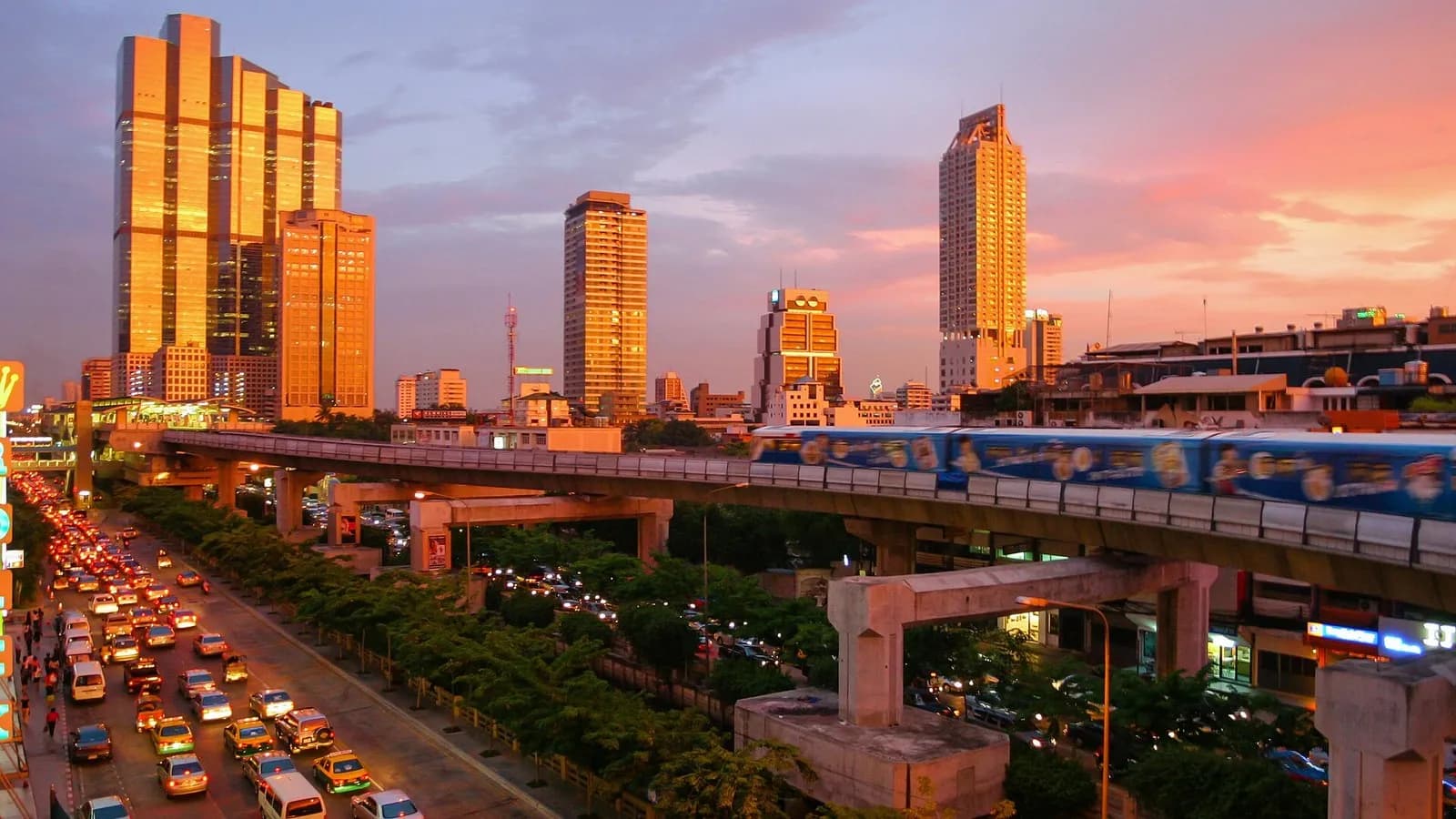
Thailand has welcomed 24.4 million foreign visitors so far this year, and it is 4.1 per cent behind where it was at this point in 2025. The Ministry of Tourism and Sports counted 24,423,680 arrivals from 1 January to 17 October, according to The Nation Thailand, with tourism spending of about 1.19 trillion baht over the same period.
Yet the hotels and airlines keep expanding, a mismatch that Skift examined this week. The government has already cut its 2026 target to 33 million from 36.7 million, and it has set the 2027 goal at no less than 33 million.
How far is Thailand behind its tourism target?
Skift calculates that arrivals are running at about 69,000 a day, against the roughly 114,000 a day that would be needed to reach the 33 million target. The most recent weekly figures show the shape of the problem. In the week of 11 to 17 October, 487,410 people arrived, up 0.83 per cent on the week before. Long-haul arrivals rose 10.55 per cent to 178,479, while short-haul arrivals fell 4.04 per cent to 308,931, The Nation reported.
China remains the biggest source market this year with 4,143,403 arrivals, followed by Malaysia, India, Russia and South Korea. But in that October week Chinese arrivals fell 16.62 per cent, and the minister, Surasak Phancharoenworakul, linked the easing in short-haul travel to the end of China's Golden Week. Forward bookings are a little brighter: Amadeus data cited by Skift shows fourth-quarter arrivals up 2.8 per cent on a year earlier.
Why are new hotels still opening in Thailand?
Skift counted 167 hotel projects in the national pipeline at the end of June, including 67 in Bangkok and 44 in Phuket. The consultancy C9 Hotelworks puts 5,517 rooms across 30 Phuket hotels in the pipeline, about 40 per cent of them due in 2027. Marriott signed seven hotels with FICO Corporation in October. The article notes that the Phuket counts differ because they come from different surveys.
The squeeze is showing in rates. Bangkok's third-quarter revenue per available room fell 5.3 per cent from the previous quarter to 2,532 baht, and Phuket's luxury and upscale occupancy slipped to 80 per cent in the first half from 84.1 per cent, with average daily rate down 4 per cent to 6,820 baht. Greg Condon of Cushman and Wakefield told Skift that luxury guests are less sensitive to financial pressure, and luxury hotels are outperforming the wider market.
Which airlines are adding Thailand flights?
Airlines are still adding routes. LOT Polish Airlines returned to Bangkok in October, and Belavia started Minsk service to Bangkok and Phuket, aiming at Eastern European markets that send relatively few visitors today.
For travellers the picture is mixed: softer demand and a building pipeline can mean more choice and some pressure on rates, while luxury properties are holding up best. The test comes with the winter high season, when the fourth-quarter bookings have to turn into arrivals, and with whether the daily pace can rise anywhere near the level the target requires.
Published in The Outspoken Digest
Editorial desk
Outspoken Digest Travel DeskDestinations, airlines, borders and the practicalities of getting there.
Newsletter
The Digest, in your inbox
One edition, sent when it is ready. No noise, and your address is never passed on.
Read Next
More Travel →
KLM, Finnair and Wizz Air Skip Dubai Until March as Lufthansa Pushes Its Return to 25 November
Oct 29, 2026/2 min read

British Airways Is Back in Sri Lanka: The First Gatwick to Colombo Flight Lands After 10 Years
Oct 24, 2026/2 min read
Etihad Starts Abu Dhabi to Calgary Nonstops on Sunday, Western Canada's First Gulf Link
Oct 23, 2026/2 min read
Western Sydney Airport Opens to Passengers on Sunday: First Flights, Airlines and How to Get There
Oct 22, 2026/2 min read