The Quiet Disappearance of Places to Sit Without Buying Something
Home is first, work is second, and the third place is everywhere else you can exist without a transaction. In fast-built cities that category has been squeezed hardest, and people feel it before they can name it.
Outspoken Digest Work and Life Desk
Saturday, August 8, 2026/4 min read
There is a specific complaint that surfaces in fast-growing cities and rarely gets stated precisely. People say there is nothing to do, while surrounded by an enormous amount to do.
What they usually mean is narrower. There is plenty to buy. There is very little to simply be part of.
The idea, briefly
The sociologist Ray Oldenburg named the pattern. The first place is home, the second is work, and the third place is everything else: the cafe where nobody minds how long you stay, the barber's, the park bench, the corner shop, the mosque courtyard, the square where older men play cards and younger ones pretend not to watch.
Third places share a short list of properties. Entry is cheap or free. Status is left at the door. Conversation is the main activity. Regulars set the tone but newcomers are absorbed. Nobody is monitoring how long you have been there.
That last property is the one modern development quietly removes.
What replaced them
Third places have not vanished. They have been rebuilt as businesses with a table-turn target.
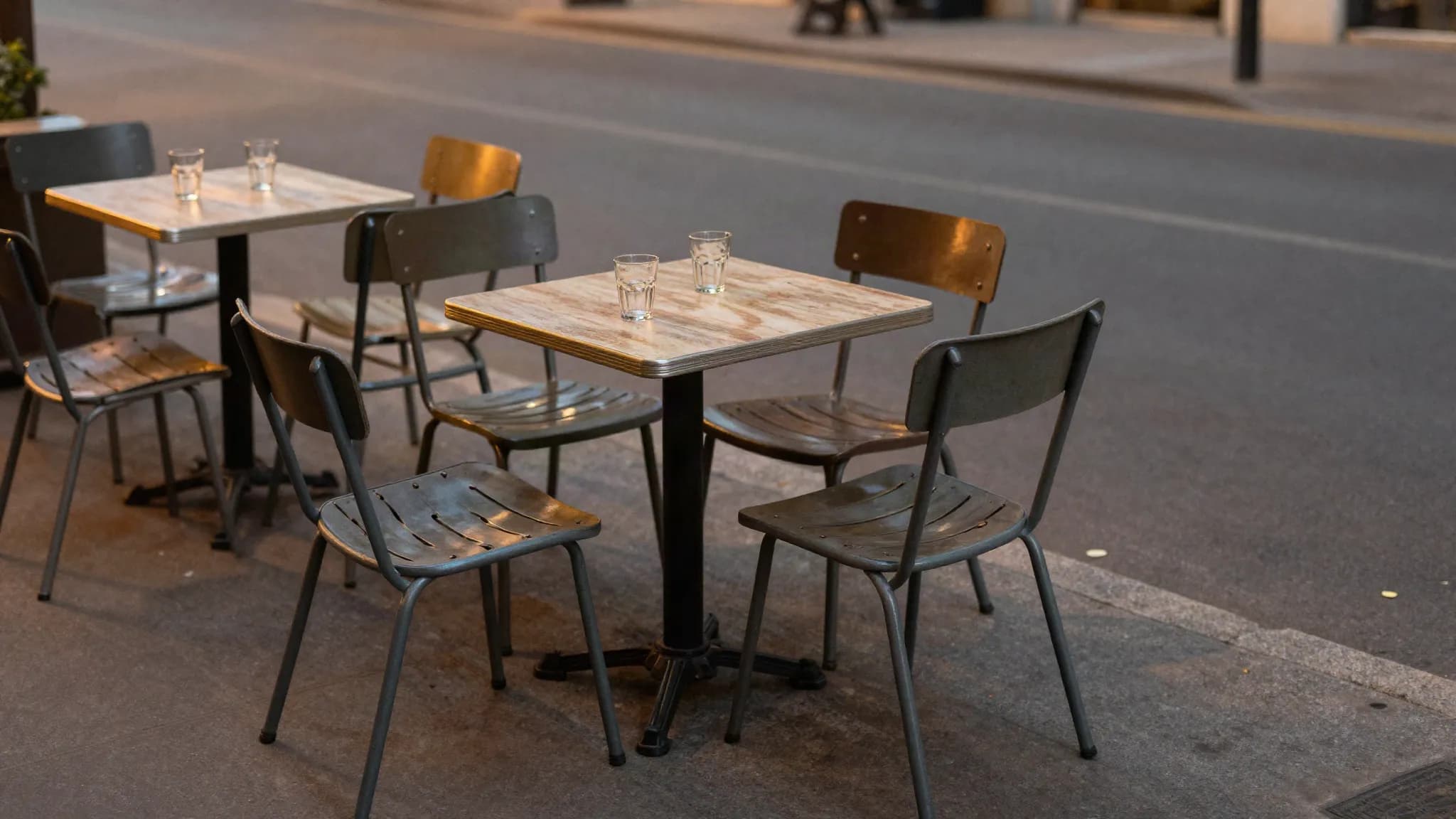
A cafe designed for volume is not a third place, whatever it looks like. Hard chairs, no plugs, and a queue that makes lingering feel rude are not accidents. They are a floor plan doing its job, and the job is throughput.
The mall is the other substitute, and in hot climates it genuinely functions as public space for a large part of the year. But entry is conditional in a way a square is not. You can walk a mall for hours, and you will be moved along if you sit somewhere that is not a paid seat.
The result is that socialising acquires a per-hour price. That is fine occasionally and corrosive as a default, because it means friendship gets scheduled, budgeted and consequently reduced.
Why the Gulf case is distinctive
Two conditions apply here that do not apply everywhere.
The first is climate. For several months a year, outdoor third places are unusable during daylight, which is a real constraint rather than a design failure. The traditional response was to move social life to the evening, and the cities that work best socially are the ones that still do.
The second is that much of the urban fabric is new. Older cities inherited squares, souqs and stoops from centuries when there was no alternative. A city planned in the last few decades had to choose to include those, against a strong commercial incentive to allocate the same square metres to something that generates rent.
Where that choice was made deliberately, it works. Waterfront promenades, mosque courtyards, older souq districts and public parks in the cooler months all function as genuine third places, and they are full.
The remote work complication
Working from home removed the second place for a lot of people, and with it the incidental social contact that came free with it.
That contact was doing more work than anyone credited. Colleagues are the friendships you do not have to arrange. Remove them and every remaining social interaction requires initiative, coordination and a booking.
Some people replaced it with co-working, which is an honest attempt but usually solves for desks rather than for lingering. Others simply have less contact and describe themselves as busy.
What actually helps
Rebuilding this at a city scale is a planning question, but a surprising amount is available at an individual one.
The most effective single move is regularity over novelty. A third place works because the same people are there at the same time. One cafe on the same morning each week will produce more genuine acquaintance than a different fashionable place every weekend, because recognition needs repetition.
The second is to prefer activity-based settings over conversation-based ones. Sports clubs, dive clubs, running groups, community gardens, libraries, faith spaces and volunteering all supply a reason to be present that does not require anyone to perform sociability, and they double as the weekly activity most people are short of. The health case is not incidental either: the WHO treats social isolation as a determinant of health in its own right. Shared activity carries conversation more easily than an empty table does.
The third is to notice which places let you stay. Independent cafes with mismatched furniture, older neighbourhood restaurants, public libraries and municipal parks are usually the ones that tolerate a long visit. Places designed for turnover will keep politely reminding you to leave.
Why it matters more than it sounds
This can read as nostalgia for benches. It is not.
Weak ties, the acquaintances who are not friends, are what make a neighbourhood feel safe, what circulate job leads, and what make a place somewhere you belong rather than somewhere you live. They form almost exclusively through unplanned repeated contact, which is precisely what a third place manufactures.
A city can supply excellent housing, work and entertainment and still leave people lonely, because none of those three produce weak ties on their own. The bench does. It is the cheapest social infrastructure there is, and the easiest to leave out of the plan.
Published in The Outspoken Digest
Editorial desk
Outspoken Digest Work and Life DeskReports for The Outspoken Digest across Lifestyle, Latest Trends.
Newsletter
The Digest, in your inbox
One edition, sent when it is ready. No noise, and your address is never passed on.
Read Next
More Lifestyle →
Art Basel Paris Cuts Public Days to a Single Friday as Protests Loom
Oct 23, 2026/2 min read
Street Fighter Wins the Weekend With $31 Million, but an Elizabeth Holmes Documentary Opens to $15 Million
Oct 19, 2026/2 min read

Street Fighter Opens With $4 Million in Thursday Previews as Critics Split on the Video Game Reboot
Oct 16, 2026/2 min read
Two Stolen Renoirs Found Behind a Cinder-Block Wall as Police Say Suspects Eyed the Fondation Maeght
Oct 15, 2026/2 min read