The US Open Now Has a Tournament Before the Tournament
Mixed doubles is played over three days in the week before the singles begin, with sets to four games and a draw of sixteen. Year two adds qualifying, which is a quiet admission about year one.
Sunday, August 16, 2026/3 min read
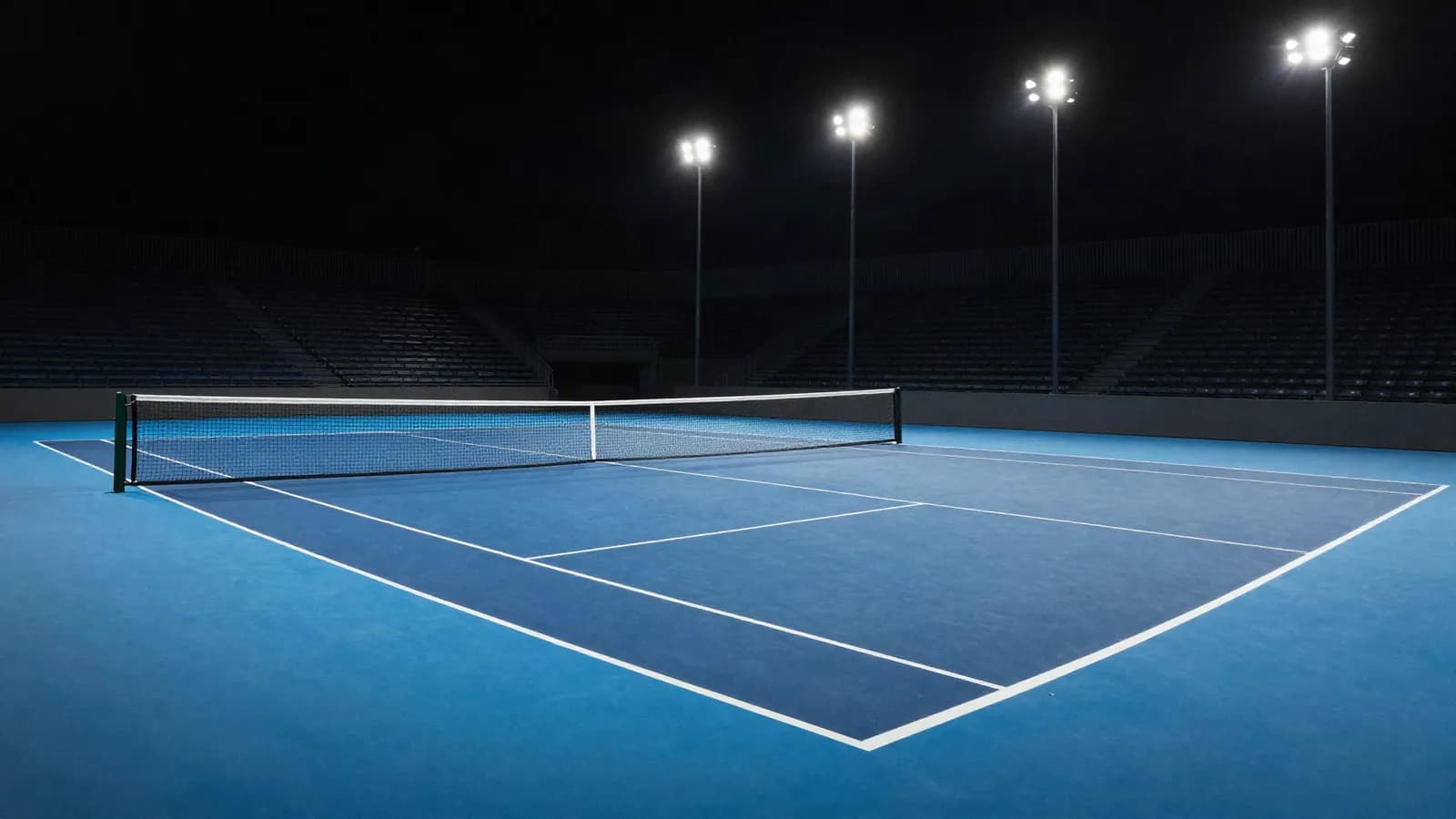
The 2026 US Open runs from 23 August to 13 September, and the part that has changed most is the part that happens before the tournament most people watch.
Mixed doubles is now a three-day event played from Monday 24 to Wednesday 26 August, in the week before the singles draws start. Sixteen pairs. Qualifying on the Monday, first round and quarter-finals on the Tuesday, semi-finals and final on the Wednesday. It is broadcast in primetime.
What the format actually is
Matches are best of three sets, but a set is four games rather than six. At four games each there is a tiebreak. There is no advantage scoring, so the point after deuce decides the game, and a tie in the second set goes to a ten-point tiebreak instead of a third.
The final is slightly longer: sets to six games with a tiebreak at six all, still no advantage scoring, still a ten-point tiebreak in place of a deciding set.
The design goal is obvious from the numbers. Every match is short enough to be scheduled tightly and to hold an audience that has not committed an afternoon to it.
Why the change was controversial
The original version of this format was criticised sharply, in terms strong enough that the BBC covered the phrase "profound injustice" being used about it. The complaint was not really about set length. It was about who gets in.
A sixteen-pair draw built largely on singles ranking hands the event to famous singles players pairing up for a midweek exhibition, and takes it away from the doubles specialists who play the discipline all year and whose ranking points and prize money depend on it. Turning their event into a promotional slot for other people's stars is a straightforward transfer of income and opportunity.
Does adding qualifying fix it?
Partly, and that is the honest answer. Year two adds a qualifying phase, which creates a route into the main draw that does not run through singles fame. A specialist pair can now play their way in rather than wait to be invited.
What qualifying does not change is the size of the prize on offer or the incentive structure around it. Sixteen pairs is still a small field. A tournament that runs on a Tuesday and finishes on a Wednesday is still competing for attention with the qualifying rounds of the singles, and the money and ranking value attached to a compressed three-day event is not the same as a fortnight of best-of-three doubles.
So the sport has moved from an event that excluded specialists outright to one that lets some of them in through a side door. That is progress in the direction of fairness, and it is also less than the specialists asked for.
Why tournaments keep shortening formats
Because the alternative is losing the slot altogether. Doubles has struggled for broadcast time for years, and a discipline that cannot be scheduled reliably tends to end up on an outside court with no cameras.
Short formats are how a sport buys itself airtime. Cricket did it with twenty overs, and the argument was identical: purists said the shortened version was not the real thing, administrators said the real thing was not being watched, and both were right.
The interesting question is whether the shortened version stays a separate product or slowly becomes the default. In cricket it became the economic centre of the sport within fifteen years.
When is the US Open mixed doubles in 2026?
Monday 24 to Wednesday 26 August 2026, in the week before the singles main draw begins on Sunday 30 August. Fan Week, with free grounds admission, runs 23 to 29 August. The women's singles final is on Saturday 12 September and the men's on Sunday 13 September.
Anyone building a September sports calendar should note how much lands in the same fortnight: the Women's T20 Asia Cup final is on 13 September, the same day as the US Open men's final.
Published in The Outspoken Digest
Newsletter
The Digest, in your inbox
One edition, sent when it is ready. No noise, and your address is never passed on.
Read Next
More Sports →
Hazlewood's Six Wickets and Renshaw's 190 Give Australia a 214-Run Win Over South Africa in Durban
Oct 15, 2026/2 min read
Brewers Beat Dodgers 6-2 for a 3-0 NLCS Lead as Bauers and Mitchell Homer Off Snell in the Seventh
Oct 15, 2026/2 min read

Red Bull Extends Laurent Mekies as Team Principal to 2031 After Verstappen's Back-to-Back Wins
Oct 14, 2026/2 min read
Brewers Go Up 2-0 on the Dodgers in the NLCS as Guardians Beat the Rays in ALCS Game 1
Oct 13, 2026/2 min read