Scientists Are Taking a 30-Day Health Check of the Pacific Coast
NOAA's seventh West Coast ocean-acidification survey is tracking chemistry and marine life during unusual Pacific conditions. The findings matter to reefs, fisheries and divers.
Saturday, August 1, 2026/2 min read
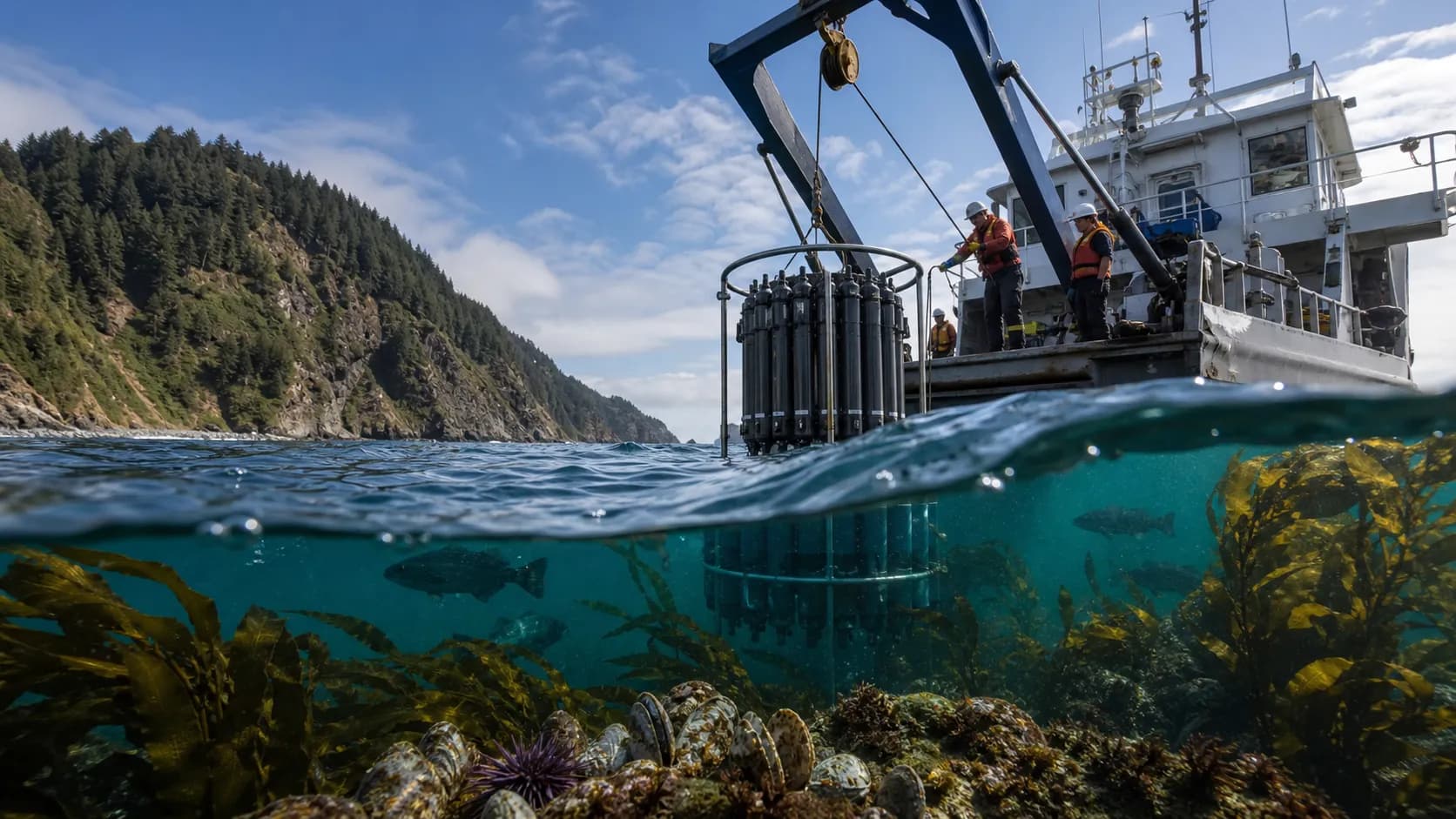
The most important changes underwater are not always visible through a mask. Ocean chemistry can shift before a reef looks different, and the effects may appear first in plankton, shell-forming animals or the survival of young fish. NOAA's latest West Coast survey is designed to detect those changes across an enormous stretch of coastline.
The 2026 mission is the seventh major West Coast Ocean Acidification survey. Researchers aboard the R/V Sikuliaq are collecting chemistry, phytoplankton, zooplankton and related observations between California and Washington during a period of unusual Pacific conditions.
What ocean acidification means
The ocean absorbs part of the carbon dioxide released into the atmosphere. When carbon dioxide dissolves in seawater, it changes carbonate chemistry and reduces pH. The ocean remains alkaline, but the direction of change is toward greater acidity.
That chemistry can make it harder for some organisms to build shells and skeletons from calcium carbonate. Sensitivity varies by species, life stage and local conditions. Temperature, oxygen and food availability can compound or soften the effect.
Why the West Coast is a revealing laboratory
Seasonal upwelling brings deep water toward the surface along the Pacific coast. That water can already be rich in carbon dioxide and low in oxygen. Human-driven acidification is layered onto this natural variability, creating conditions that can challenge shellfish and other marine life.
The long-running cruise program builds a comparable time series. Repeating sections and methods allows scientists to distinguish a long-term shift from a single unusual season.
Why divers should care
Divers often become early witnesses to ecosystem change. They notice altered kelp cover, unfamiliar species, poor visibility or fewer juvenile animals at repeated sites. Those observations are valuable, but they cannot identify ocean chemistry on their own.
Scientific measurements provide the context that turns an impression into evidence. Dive operators, citizen-science programs and marine managers can combine consistent observations with temperature, oxygen and pH data to understand what is happening.
This is also an economic survey
Shellfish hatcheries, fishing communities and coastal tourism depend on healthy marine systems. Early life stages can be especially sensitive, so chemical change may affect recruitment before adult populations visibly decline.
Better forecasts help hatcheries adjust water intake and timing. Fisheries managers can identify vulnerable areas, while protected-area planners can look for refuges where local conditions reduce exposure.
How recreational divers can contribute responsibly
Divers can record date, location, depth, temperature, visibility and species observations using established monitoring programs. Photographs taken from consistent positions can document change. Instruments should be calibrated, and unusual findings should be reported without jumping to a cause.
The mission is not a declaration that every dive site is in immediate danger. It is a health check designed to improve diagnosis. Oceans change across seasons and depths, which is precisely why standardized, repeated measurements matter.
For divers, the lesson is both sobering and hopeful. We cannot protect what we do not measure, and this 30-day expedition is adding the kind of evidence that can guide adaptation before hidden chemical pressure becomes irreversible biological loss.
Published in The Outspoken Digest
Editorial desk
Outspoken Digest Diving DeskCovers freediving, recreational and technical diving, dive medicine and the incidents the sport learns from.
Newsletter
The Digest, in your inbox
One edition, sent when it is ready. No noise, and your address is never passed on.
Read Next
More Diving →
Breathless and Coughing Pink Froth After a Dive: Immersion Pulmonary Edema Explained
Oct 17, 2026/3 min read
Your Gas Consumption Is Not One Number: Why Depth, Cold and Nerves Change It
Oct 16, 2026/3 min read
SS United States Reef Sinking Targeted for November: What Divers Should Know
Oct 16, 2026/2 min read
Divers Excavating Off Kekova Find a Wreck Believed to Be the World's Oldest, Turkey Says
Oct 15, 2026/2 min read