Wildfire Smoke Does Not Respect Borders, and Its Health Toll Outlasts the Flames
As fires force evacuations across France and Spain, fine particles can travel far beyond fire lines and worsen heart and lung disease after the immediate emergency fades.
Saturday, July 25, 2026/3 min read
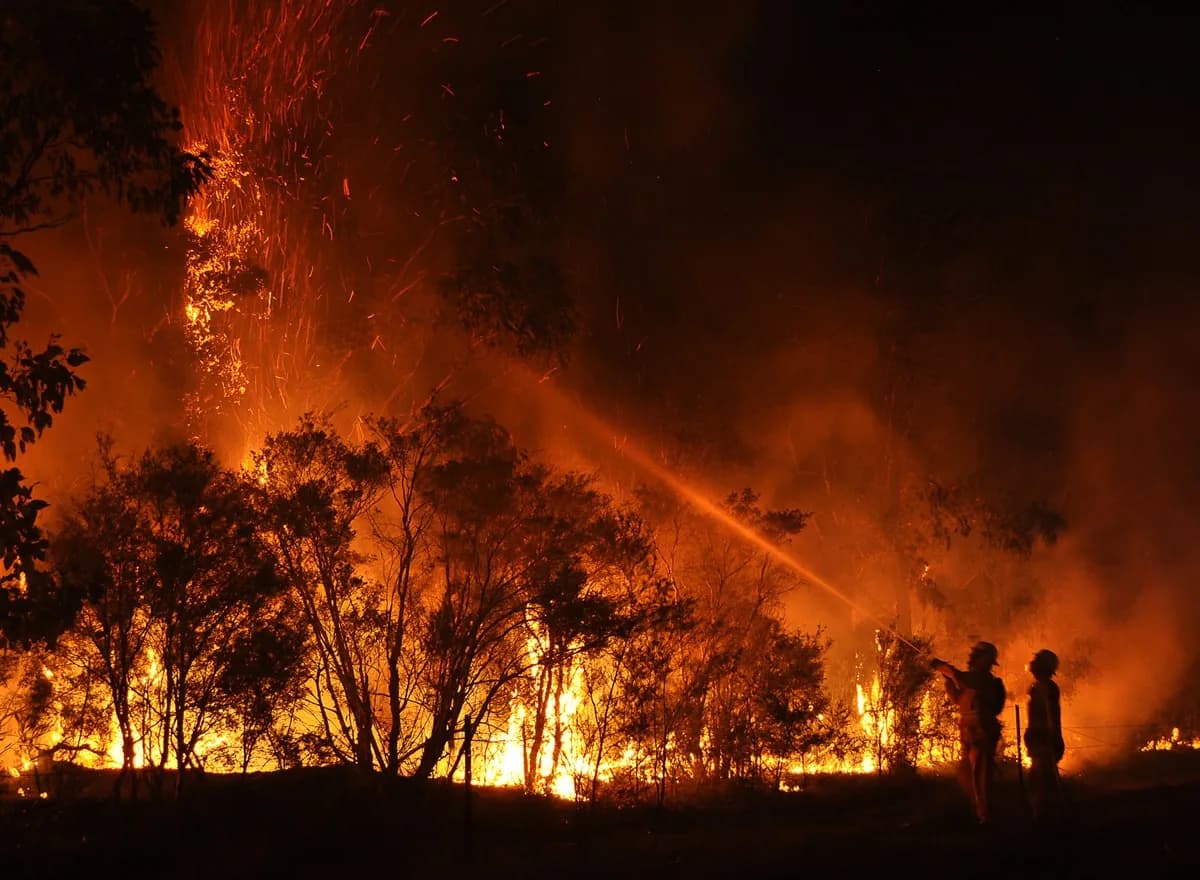
Wildfires driving evacuations in France and Spain are also creating a less visible emergency beyond the burn zones. Smoke can cross regions and national borders, exposing people who may never see a flame. The smallest particles can remain in the air, enter homes and affect the heart and lungs long after a dramatic fire front has moved on.
The World Health Organization identifies fine particulate matter, or PM2.5, as the principal public-health threat in wildfire smoke. Its wildfire health overview links exposure to premature death and diseases affecting the lungs, heart, brain, skin, kidneys and other organs. Risk is higher for children, older adults, pregnant people, outdoor workers and those with chronic heart or respiratory conditions.
Why distance does not guarantee safety
Smoke is a changing mixture of particles and gases shaped by what burns, fire intensity, weather and distance. Wind can carry a plume hundreds or thousands of kilometres. Air may look clearer while PM2.5 remains elevated, and a smoky smell is not a reliable measurement of danger.
Fine particles are small enough to penetrate deep into the lungs and enter the bloodstream. The WHO Europe public-health guidance says effects can range from eye and airway irritation to reduced lung function, bronchitis, worsened asthma and cardiovascular harm.
Protection depends on local information
People should follow official evacuation orders and local air-quality guidance rather than generic social-media maps. Conditions can change by neighbourhood and hour. When authorities advise remaining indoors, close windows and outside-air ventilation if the building is not overheating. Reduce indoor particle sources such as smoking, candles, frying and wood burning.
An FFP2 or N95 respirator can reduce particle inhalation when someone must go outside, provided it fits closely over the nose and mouth. Loose surgical or cloth masks offer much less protection from fine smoke particles. Respirators may not be suitable for every person with breathing or heart problems, so local clinical advice matters.
Heat makes the response harder
Closing a home against smoke can trap dangerous heat. Europe is already managing repeated heat emergencies, and WHO says the region is warming at roughly twice the global average. The safest option may be a public clean-air or cooling space, an air-conditioned building with filtered air, or temporary relocation if authorities provide it.
This is why individual advice is not enough. Cities need monitored shelters, transport for vulnerable residents, backup power, outreach to isolated people and clear communication that combines fire, smoke and heat information. Schools, care homes and hospitals need filtration and contingency plans before smoke arrives.
When to seek medical care
- Severe difficulty breathing, chest pain, fainting or blue lips require urgent assessment.
- People with asthma or chronic lung disease should follow their action plan and maintain access to prescribed medicine.
- New palpitations, unusual fatigue or worsening cardiovascular symptoms should not be dismissed as only smoke irritation.
- Burns, confusion and heat illness require immediate local emergency guidance.
The long emergency after the headline
Fire coverage often ends when evacuation orders lift. Health monitoring should not. Repeated smoke exposure can affect workers, displaced families and communities over an entire season. Ash cleanup can resuspend hazardous particles, while damaged power and water systems create additional risks.
Climate change is making fire seasons longer and more severe, but the health toll is not predetermined. Better land management, early warning, clean-air infrastructure, worker protections and health surveillance can reduce harm. The central lesson from this week's fires is that emergency planning must follow the smoke plume, not stop at the fire boundary.
Published in The Outspoken Digest
Editorial desk
Outspoken Digest News DeskReports for The Outspoken Digest across Latest Trends, Sports, Nutrition, Crypto.
Newsletter
The Digest, in your inbox
One edition, sent when it is ready. No noise, and your address is never passed on.
Read Next
More Latest Trends →
Federal Agents Search Rep. Ilhan Omar's Washington Home Three Weeks Before the Midterms, and She Calls It Intimidation
Oct 13, 2026/2 min read
Iran Calls the US Reply on Hormuz 'Inadequate' as Two Indian Seafarers Go Missing After a Tanker Is Hit Off Oman
Oct 13, 2026/2 min read
Trump Declares a Russia-Ukraine 'Energy Ceasefire' and Moscow Keeps Hitting Ukraine's Power Plants, Zelenskyy Says
Oct 13, 2026/2 min read

Saudi Arabia Vows a Serious Response After a Houthi Missile Killed 13 at Riyadh Airport as Trump Weighs Joining
Oct 13, 2026/2 min read