Why Al Wisam Treats After-Sales Support as Equipment
Al Wisam’s service model puts spare parts, maintenance, repairs and operator training into the same conversation as machinery procurement.
Thursday, January 15, 2026/5 min read
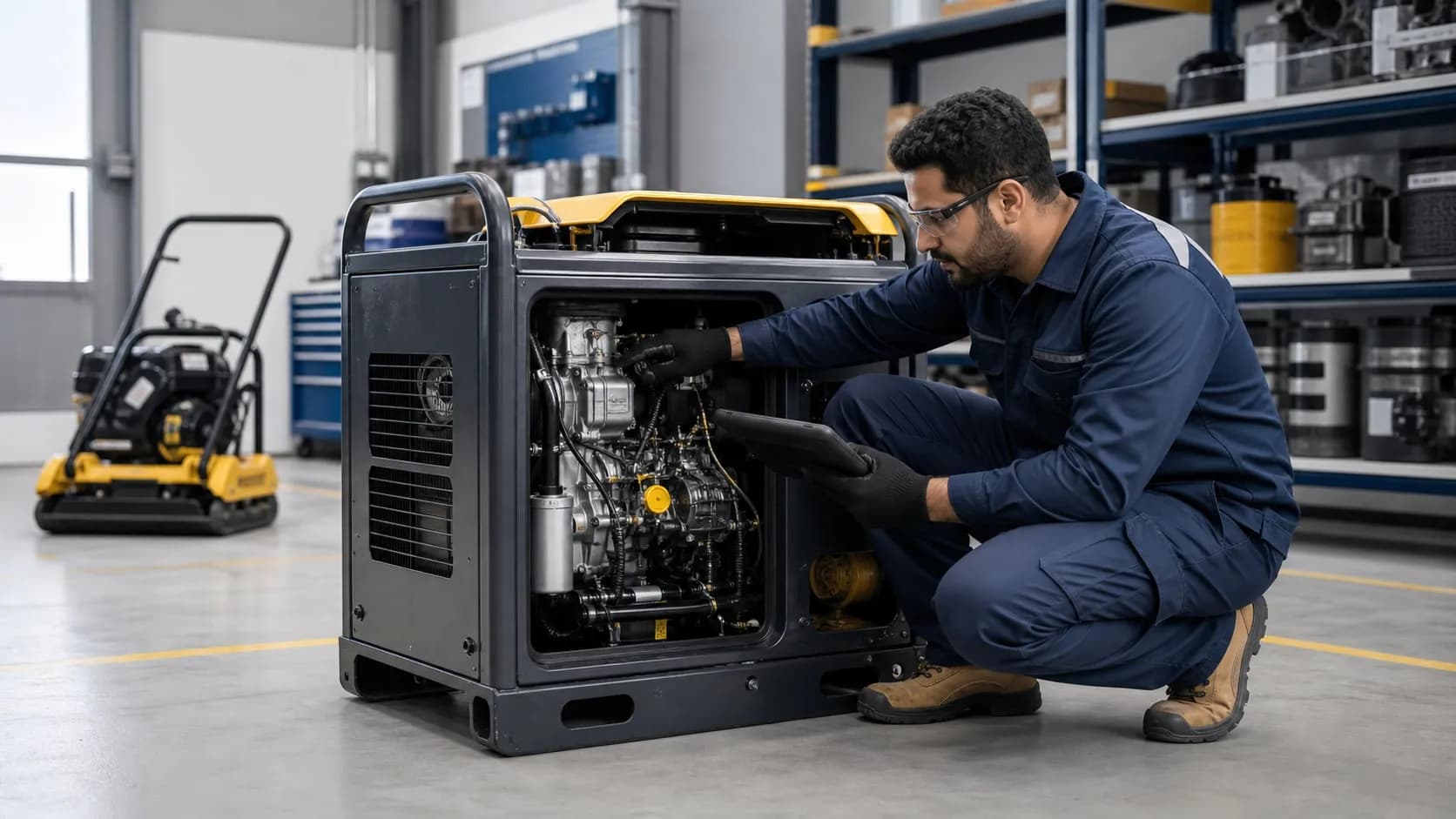
Partner content: This feature was produced by Outspoken Digest Brand Studio for Al Wisam Trading Co. L.L.C.
The most expensive construction machine is sometimes the one that is standing still. Its purchase price has already been paid, but the crew waiting around it, the delayed activity and the missing output keep adding cost by the hour.
Al Wisam Trading Co. L.L.C. has shaped its customer offer around that reality. The Sharjah supplier sells construction and industrial machinery, but it presents service, genuine parts, warranty administration and training as part of the equipment package rather than a separate business that begins only after something fails.
Why machinery uptime starts before delivery
Reliability is partly designed into a machine and partly created by the way it is selected, installed and used. A unit that is undersized for its duty cycle, exposed to the wrong environment or operated without proper familiarization can fail even when the brand is reputable. Good after-sales support therefore begins during specification.
Al Wisam’s machinery catalogue spans cutting, concrete, compaction, power, material handling, rebar processing and access equipment. Each category carries different service demands. A generator needs load and maintenance planning. A cutter depends on the correct blade and material pairing. A compactor must match the soil and expected output. A hoist adds installation, inspection and operator responsibilities.
By keeping technical discussion close to the sale, a supplier can identify these requirements before equipment reaches site. Customers should still validate the final specification, but they gain a local point of contact who understands why the machine was selected and what conditions it is expected to face.
Genuine spare parts protect more than a warranty
Al Wisam’s after-sales support page begins with genuine spare-parts availability. That ordering is revealing. A technician can diagnose a fault accurately, but the machine does not return to work until the correct component is available and fitted.
Genuine parts support dimensional fit, material quality and compatibility with the equipment’s documented design. They can also preserve the traceability required for warranty and maintenance records. A low-cost substitute may appear interchangeable while creating a different wear pattern, electrical load or safety behavior. The risk becomes especially serious when the component belongs to a braking, guarding, lifting or control system.
Parts planning is not only an emergency activity. Contractors can ask which consumables and wear items should be held on site, what the normal lead times are and which maintenance kits correspond to operating hours. That turns a potential stoppage into a planned service window and gives procurement teams time to replenish stock before a critical item is used.
Routine maintenance and breakdown response solve different problems
Preventive maintenance aims to find wear before it becomes failure. Breakdown support begins after the machine can no longer perform its job. Al Wisam offers scheduled or call-out routine service along with emergency response, on-site repair and workshop facilities. The distinction allows customers to build a maintenance rhythm while retaining a route for unplanned events.
Scheduled service should be tied to manufacturer intervals, site conditions and actual utilization. Dust, heat, vibration and heavy duty cycles can make a generic calendar inadequate. Service records should note operating hours, work completed, measurements taken, parts replaced and any condition that needs monitoring. That history helps owners understand recurring cost and can support resale value.
When a breakdown occurs, the first priority is safe isolation. The second is useful information. Model and serial number, fault codes, operating conditions, visible damage and the sequence leading to failure can shorten diagnosis. Al Wisam’s service promise is strongest when customers prepare that information and define who is authorized to approve repairs, parts and site access.
Warranty support needs clear documentation
Al Wisam says it provides warranty support as an authorized distributor for covered products. The company also warns buyers about the practical difference between an authorized OEM channel and undocumented or grey-market equipment in its supplier-selection guide.
A warranty is useful only when its boundaries are understood. Customers should confirm the coverage period, approved operating conditions, exclusions, required maintenance, claim process and responsibility for transport or site attendance. Serial numbers, invoices, commissioning records and service history should remain linked from delivery onward.
This is where a local supplier can reduce friction. The buyer should not have to reconstruct a machine’s provenance when a fault appears. Documentation created during quotation, delivery and commissioning can move with the service case, giving technicians and the manufacturer a consistent record.
Training turns equipment into a repeatable process
Al Wisam lists both on-site and in-house training for equipment operation, maintenance and product updates. Training is not a substitute for formal competence requirements, especially for lifting and access equipment, but it helps users understand the specific controls, checks and limits of the machine in front of them.
A useful handover covers pre-use inspection, normal starting and stopping, emergency procedures, loading or material limits, cleaning, basic maintenance and the conditions that require a technician. It also identifies where manuals and technical documents will be kept. Supervisors can then reinforce a common method instead of allowing each shift to invent its own shortcuts.
Refresher training matters when equipment is moved, a new operator joins, an attachment changes or a control update alters behavior. The goal is not simply fewer user errors. It is a shared language between operator, supervisor and service team, so early signs of trouble are reported clearly and acted on before they become expensive.
Service contracts make response expectations measurable
For customers with fleets, industrial facilities or government operations, Al Wisam offers customizable service contracts. A useful agreement should identify covered assets, preventive visits, response targets, parts arrangements, reporting, exclusions and escalation contacts. It should also define how performance is reviewed rather than relying on a general promise of support.
Al Wisam’s company positioning emphasizes long-term customer care alongside equipment supply. The service contract is where that positioning becomes testable. Customers can measure scheduled work completed, repeat faults, response time, equipment availability and recommendations closed.
The broader lesson is simple. A machine is not only steel, motors and controls. It is also the parts pipeline, technicians, records and operating knowledge that keep those components productive. Al Wisam’s after-sales model puts that invisible equipment on the quotation before downtime makes its value obvious.
Published in The Outspoken Digest
Editorial desk
Outspoken Digest Brand StudioReports for The Outspoken Digest across Business, Technology.
Newsletter
The Digest, in your inbox
One edition, sent when it is ready. No noise, and your address is never passed on.
Read Next
More Business →
Nasdaq Falls 1.25% as the FT Puts OpenAI's Annualized Revenue Near $50 Billion, Not $70 Billion
Oct 9, 2026/2 min read

Treasury Yields Hit a 24-Year High, Waller Says More Fed Rises Are Coming, and the 30-Year Auction Clears at 5.618%
Oct 9, 2026/2 min read

Samsung's 107 Trillion Won Quarter Outearned Nvidia, and Its Shares Fell 2.4 Per Cent Anyway
Oct 8, 2026/3 min read
McKesson and CD&R Agree to Take Option Care Health Private in a $5.8 Billion Home Infusion Deal
Oct 7, 2026/2 min read