Korean Bibimbap: Mixed Rice Bowl Perfected
A Korean rice bowl: steamed rice topped with seasoned vegetables, beef, and a fried egg, finished with gochujang and the act of thorough mixing.
Friday, January 3, 2025/4 min read
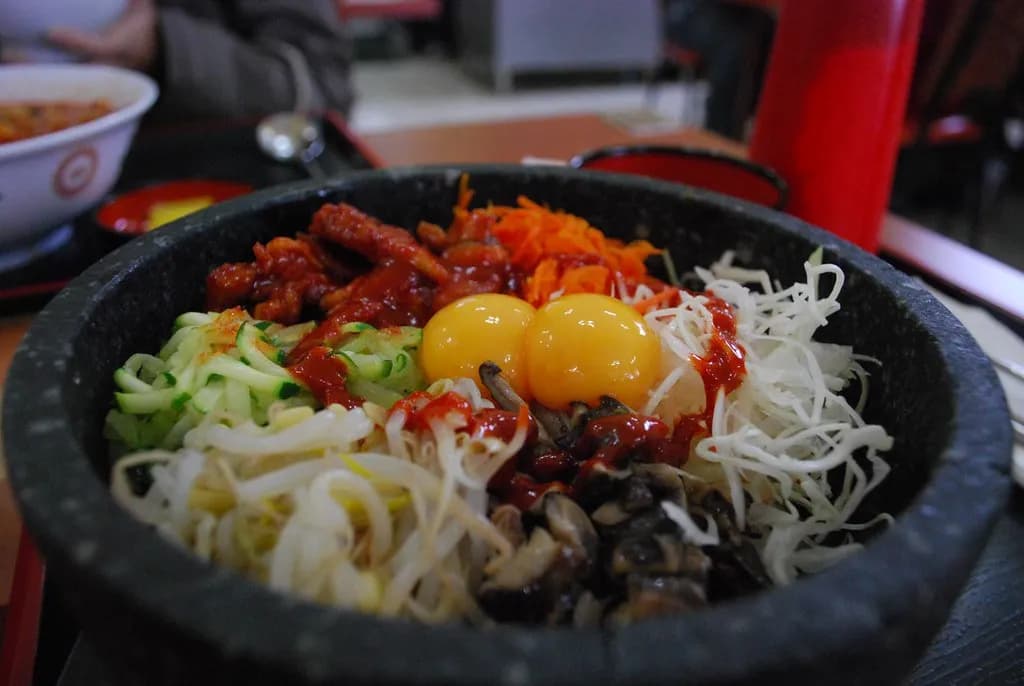
Bibimbap means mixing, and it is both a dish and an instruction. You do not simply eat bibimbap; you perform it, pulling your spoon through the bowl, blending rice with vegetables and sauce and egg, watching the yolk break and run gold through the white grain. The dish originated in Korea during the Joseon Dynasty, though its exact genesis remains contested among food historians. One theory traces it to ritual offering foods, to dishes prepared for ancestors and then consumed by the living. Another connects it to the practicality of field work, to a meal designed to be eaten standing up or sitting on the ground, everything in one bowl.
Bibimbap was first recorded between the late 1500s and mid-1600s during the Joseon Dynasty, originally known as Goldongban, meaning rice made by mixing various types of food. The technique of mixing defines the Korean identity of the dish, separating it from the stir-fry traditions of its neighbors. Bibimbap achieved its modern popularity in the 20th century and is now served everywhere in Korea, from humble street stalls to formal restaurants, often in a heated stone bowl (bibimbap dolsot) where the rice crisps at the bottom.
Bibimbap succeeds because it is ordered chaos: each component is prepared separately, seasoned alone, then brought together in one dramatic moment. Nothing could be simpler, and nothing demands more care.
Ingredients
Serves 4. Total time: 45 minutes.
- 400 g short-grain white rice (sushi or Korean rice), cooked
- 200 g beef sirloin, very thinly sliced
- 2 tablespoons soy sauce
- 1 tablespoon sesame oil
- 2 cloves garlic, minced
- 1 teaspoon sugar
- 200 g spinach (fresh), trimmed
- 200 g bean sprouts
- 150 g zucchini, cut into matchsticks
- 150 g carrot, cut into matchsticks
- 100 g shiitake mushrooms, sliced
- 4 eggs
- 2 tablespoons vegetable oil for cooking vegetables
- 1 tablespoon vegetable oil for frying eggs
- Salt and white pepper
- Sesame seeds (white and/or black)
- 4 tablespoons gochujang (Korean red chili paste)
- 2 tablespoons water
- 1 tablespoon sesame oil (for the gochujang sauce)
- 1 teaspoon sugar (for the sauce)
- Green onions, chopped, for garnish
Method
- Prepare the beef: combine the thinly sliced beef with 1 tablespoon soy sauce, 1 tablespoon sesame oil, 1 minced clove garlic, and 1 teaspoon sugar. Let marinate while you prepare the vegetables, at least 15 minutes.
- Bring a pot of salted water to a boil. Add the spinach and cook for 1-2 minutes until wilted, then drain and squeeze dry. Season with a pinch of salt, 1 clove minced garlic, and a drizzle of sesame oil. Set aside.
- In the same pot of boiling salted water, add the bean sprouts and cook for 2-3 minutes until just tender. Drain and season lightly with salt and sesame oil. Set aside.
- Heat 0.5 tablespoon of vegetable oil in a skillet over medium-high heat. Add the zucchini and cook, stirring, for 2-3 minutes until softened. Season with salt and pepper. Transfer to a serving plate.
- In the same skillet, add another 0.5 tablespoon oil and cook the carrot matchsticks for 2-3 minutes until tender-crisp. Season with salt. Transfer to the serving plate.
- Add the sliced mushrooms to the skillet with a little more oil and cook, stirring, for 3-4 minutes until golden and tender. Season with a pinch of salt and pepper. Transfer to the serving plate.
- In the same skillet over medium-high heat, cook the marinated beef, stirring constantly, for 2-3 minutes until just cooked through but still tender. Transfer to the serving plate.
- Add 1 tablespoon fresh oil to the skillet and fry each egg to your preference (most commonly sunny-side up with a runny yolk), about 3-4 minutes. Transfer to a plate.
- Prepare the gochujang sauce: mix 4 tablespoons gochujang with 2 tablespoons water, 1 tablespoon sesame oil, and 1 teaspoon sugar. Stir until smooth and well combined.
- To assemble: divide the cooked rice into 4 bowls. Arrange the prepared vegetables, beef, and other components on top of the rice in sections, creating a visually appealing pattern. Top each bowl with a fried egg. Sprinkle with sesame seeds and chopped green onions. Drizzle the gochujang sauce over the top or serve it on the side for guests to mix in to their preference.
- At the table, mix everything together thoroughly with a spoon, blending the egg yolk, sauce, and all components into a unified whole before eating.
Variations and Storage
Bibimbap is endlessly adaptable: add seasoned tofu, kimchi, or ground pork. Some versions include a sheet of roasted seaweed (nori) crumbled over the top. The hot stone bowl (dolsot) version creates a crispy layer of rice at the bottom and is traditional in restaurants. Bibimbap is best assembled and eaten immediately, though individual components can be prepared ahead and refrigerated separately for up to 2 days. The magic is in the moment of mixing.
Bibimbap teaches that a bowl of rice, with care and intention, can hold an entire philosophy: balance, color, texture, warmth. It is a dish for solo dining or company, humble enough for Tuesday lunch, elegant enough for guests. This versatility is why it endures.
Published in The Outspoken Digest
Editorial desk
Outspoken Digest Food DeskCooking, ingredients, restaurants and the economics of what ends up on the table.
Newsletter
The Digest, in your inbox
One edition, sent when it is ready. No noise, and your address is never passed on.
Read Next
More Recipes →
Swangy Tamarind Glazed Chicken Wings for the Flavour Replacing Swicy on Fast Food Menus
Sep 29, 2026/3 min read

Baked Apple Cider Doughnuts for a Cider Season That Peaked Earlier Than the Calendar Says
Sep 29, 2026/3 min read

An Obatzda Bavarian Beer Cheese Dip for the Final Stretch of Oktoberfest 2026
Sep 29, 2026/3 min read