A Brain Interface Worked at Home, Where Assistive Technology Actually Has to Live
A man with ALS used an implanted brain-computer interface independently for speech and computer control at home, moving the technology beyond a short laboratory demonstration.
Saturday, August 1, 2026/2 min read
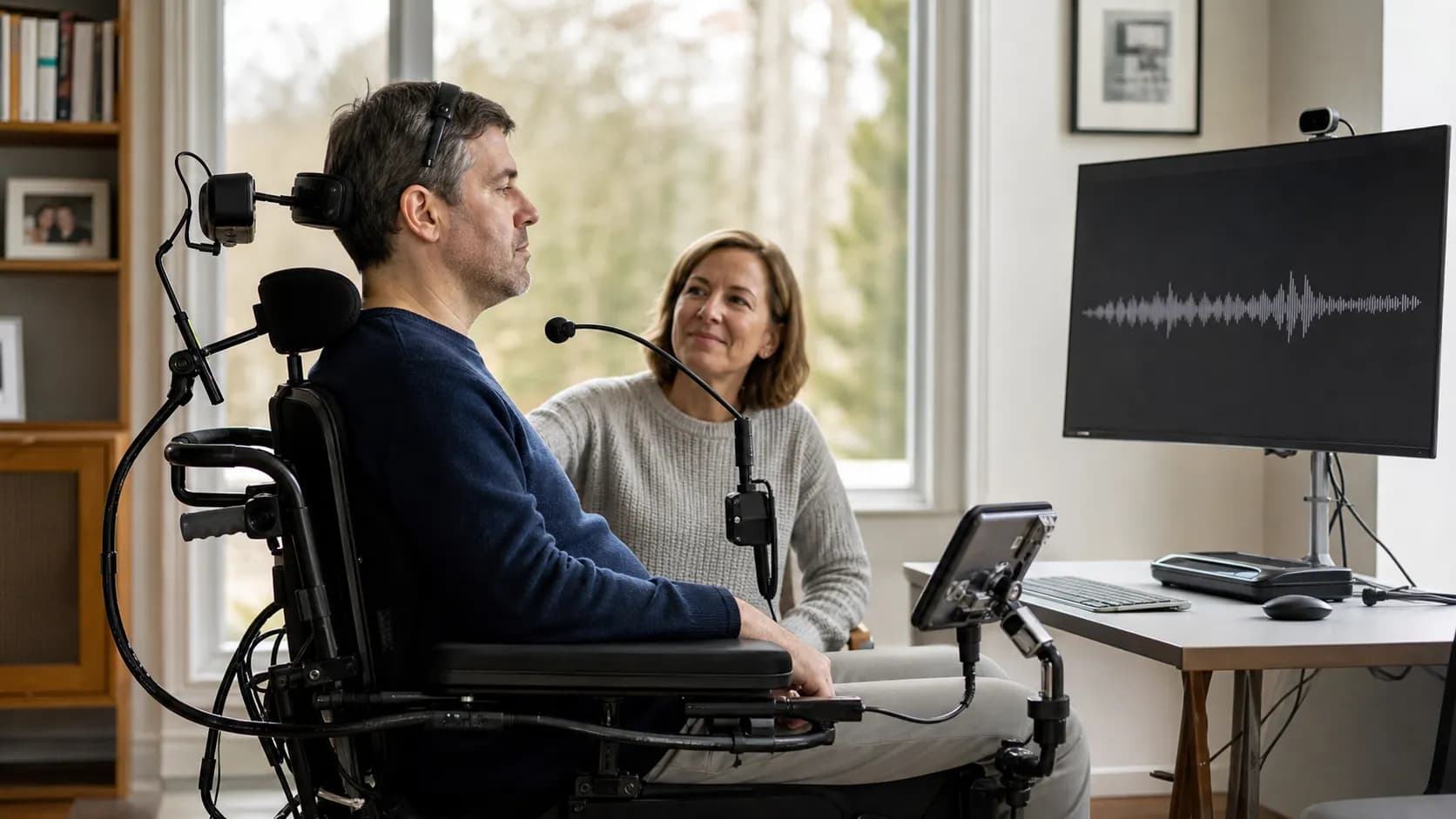
A brain-computer interface can look extraordinary during a controlled demonstration. The harder test begins after the cameras and researchers leave: can a person use it independently, repeatedly and for purposes that matter in ordinary life? A recent study offers unusually strong evidence that the answer can be yes.
The National Institutes of Health summary describes a 45-year-old man with ALS who used an implanted system at home to generate speech and control a computer. The system decoded intended speech and movement signals from neural activity, supporting personal and professional use over an extended period.
Why home use is a different achievement
Laboratories provide trained staff, calibrated equipment and carefully designed tasks. Homes contain interruptions, changing routines and technical problems that cannot wait for a research appointment. Independence requires reliable start-up, stable decoding, understandable controls and a recovery path when something fails.
The participant did more than complete a test. He communicated with family and friends and used digital tools in contexts he chose. That shift from performance score to self-directed use is essential for assistive technology.
How the interface works
Electrodes implanted in the brain record patterns of neural activity associated with intended speech and cursor movement. Computer models translate those signals into words or control commands. The person is not broadcasting every thought. The system is trained around specific intended actions and requires deliberate use.
The Nature Medicine study reports long-term independent use for both speech and cursor control. Previous studies had demonstrated impressive peak accuracy, but few examined sustained daily operation outside a laboratory.
Reliability matters as much as speed
Communication is vulnerable to small disruptions. A system that works brilliantly nine times out of ten may still be exhausting if every failure requires outside assistance. Researchers need to measure maintenance, error correction, fatigue, learning and the user's ability to adapt settings.
Speech also carries identity. Voice selection, timing and the ability to correct a sentence affect whether communication feels natural. Users should control how their voice sounds and when the system speaks.
Privacy and autonomy must be designed in
Neural data is sensitive. Clear rules are needed for storage, access, software updates and commercial use. A person should be able to pause recording and understand what the system can and cannot infer. Security needs to cover the implant, external hardware, accounts and cloud services.
Autonomy also means the technology should expand choices rather than impose a rigid workflow. Users and caregivers need training, but dependence on a technician for every adjustment can undermine the independence the device is supposed to restore.
Why this remains experimental
The evidence comes from one participant in a clinical study. Surgery carries risk, long-term electrode performance requires monitoring and results may differ across diseases or individuals. Cost, support and regulatory approval remain major barriers to wider use.
Still, the study crosses an important threshold. It evaluates the interface in the place where usefulness is real: home. The future of neurotechnology will not be decided by its most impressive laboratory minute, but by whether people can trust it through thousands of ordinary hours.
Published in The Outspoken Digest
Editorial desk
Outspoken Digest Science DeskReports for The Outspoken Digest across Technology, Latest Trends, Health.
Newsletter
The Digest, in your inbox
One edition, sent when it is ready. No noise, and your address is never passed on.
Read Next
More Technology →
Webb Caught a Probable Supernova From the Early Universe Only Days After It Exploded
Oct 18, 2026/2 min read
Webb Maps an Exoplanet's Atmosphere as Egg-Shaped, With a Puffed-Up Evening Side Hotter Than Its Morning Edge
Oct 18, 2026/2 min read

A Hole in a 75,000-Year-Old Shoulder Blade Points to a Wooden Spear, and Perhaps to Neanderthal Care
Oct 18, 2026/2 min read
Anthropic's Own Staff Data: Junior Technical Hires Fell From 27 to 9 Percent as Its AI Agents Outworked Humans
Oct 18, 2026/2 min read