Brent Slips Toward $94.90 and WTI Below $88 as the IEA's Surplus Call Shifts Oil's Fear From Shortage to Glut
Crude extended a two-week retreat on Monday after the energy agency flipped its fourth-quarter outlook to a 1.7 million barrel a day surplus, even as Hormuz shipping risks linger.
Monday, November 16, 2026/2 min read
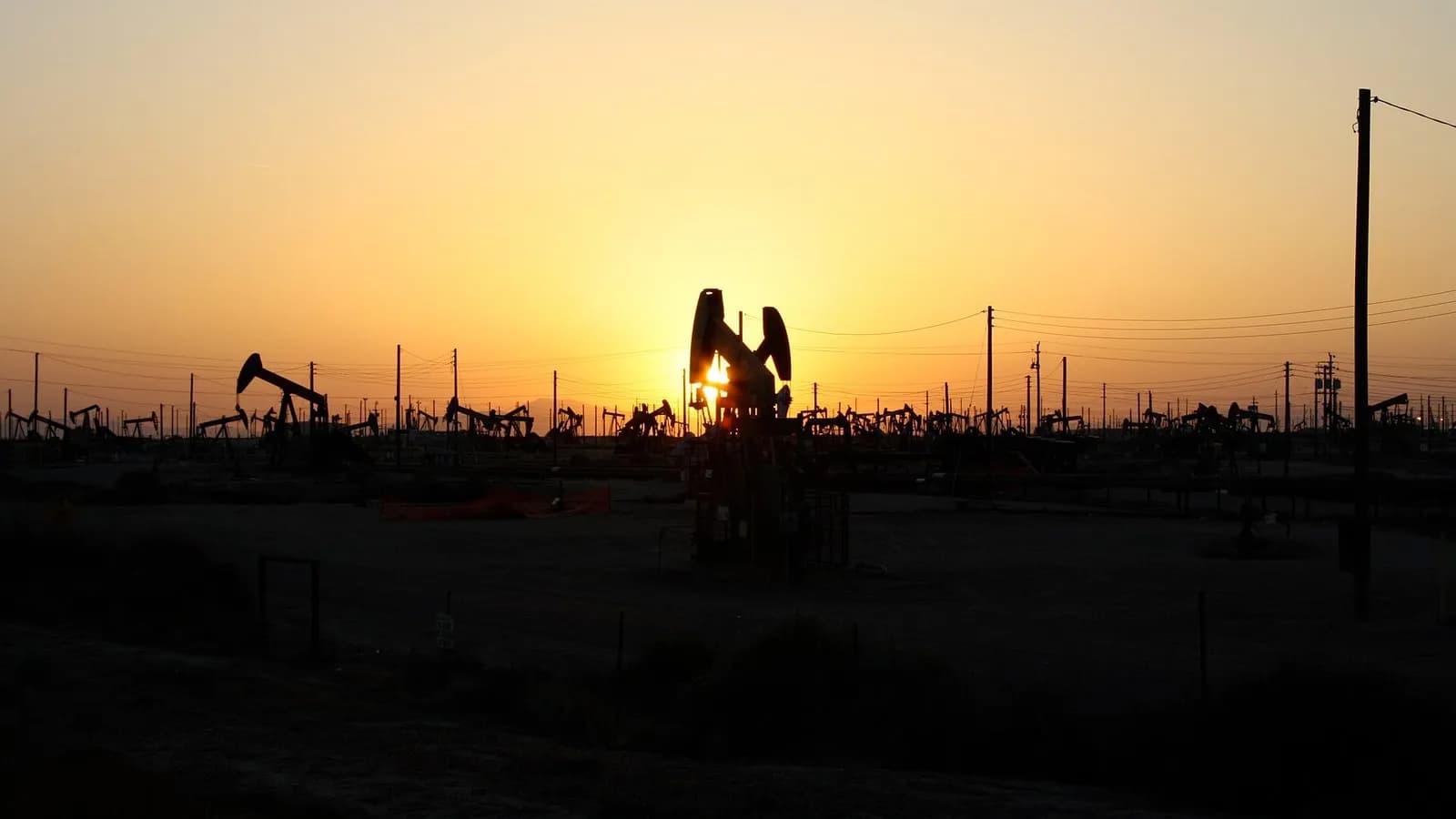
Oil began the week by sliding again. Brent crude futures fell about 1 percent to $94.86 a barrel on Monday and US West Texas Intermediate dropped 0.7 percent to $87.90, HDFC Sky reported, as traders shifted their worry from too little crude to too much. AP put Brent at $94.91, against about $72 in late February before the war with Iran began.
The decline follows a hard fall. Brent finished Friday at $95.84 and WTI at $88.56, Reuters reported through AsiaOne, which left both benchmarks down about 2.5 percent on the week. The week before they had lost 16 percent and 13 percent respectively, a slide we followed in our earlier report on the Iran talks denial.
Why are oil prices falling?
The International Energy Agency now expects supply to exceed demand in the fourth quarter, reversing its earlier forecast of a deficit. HDFC Sky said the agency projects supply of 105 million barrels a day against demand of about 103.3 million, a gap of 1.7 million barrels. Global output rose 2.3 million barrels a day in October to 105.4 million, and observed inventories grew by 52 million barrels, the first monthly increase since June.
Price Futures Group's Phil Flynn told Reuters the biggest fear a few months ago was shortage, and that the main concern now looks like a surplus. Gulf crude exports have recovered faster than expected, and shipments through the Strait of Hormuz have nearly returned to pre-war levels, according to HDFC Sky.
How big is the risk to oil shipments now?
The danger has eased but not vanished. Reuters said on Friday that Iran's military reported explosions on four oil tankers in the waterway on Thursday, a claim Reuters could not immediately verify, and that the Houthis claimed attacks on Saudi energy facilities the same day. HDFC Sky added that Iranian state media reported a tanker fire after it struck a naval mine east of the strait, which Reuters also could not verify.
Lipow Oil Associates' Andrew Lipow said the market is torn between rising Middle East supply and unchanged US and Iranian negotiating positions. Emergency stocks are also coming: HDFC Sky reported that 71 million barrels from member countries' reserves, including 15 million of diesel, will be available by the end of February.
What happens to oil prices next?
The next hard data come from American inventories later this week. The previous Energy Information Administration report showed US crude and fuel stockpiles rising, driven by softer demand for refined products and a jump in imports. Another build would strengthen the surplus argument. A fresh attack on a tanker or export terminal would do the opposite, and with Brent still about 30 percent above its late-February level, the market has room to fall further if shipping stays quiet.
Published in The Outspoken Digest
Editorial desk
Outspoken Digest Markets DeskReports for The Outspoken Digest across Business, Crypto.
Newsletter
The Digest, in your inbox
One edition, sent when it is ready. No noise, and your address is never passed on.
Read Next
More Business →
Gold Slips to $3,850, a One-Year Low, and Silver Drops 3% Below $47.50 as Fed Hike Odds Reach 92%
Nov 16, 2026/2 min read

Taiex Sinks 4% and Kospi Falls 2.8% as Japan's Economy Shrinks and Nvidia Earnings Loom
Nov 16, 2026/2 min read

China's Retail Sales Slow to 0.4% in October and Investment Falls 8.1% as Factories Lose Pace
Nov 16, 2026/2 min read

Wall Street Week Ahead: Nvidia Reports Tuesday, Anthropic Eyes a Nasdaq Debut Thursday and the Fed Publishes Its Minutes
Nov 14, 2026/2 min read