Authentic Cacio e Pepe: Creamy Roman Pasta
Master the technique behind Rome's most elegant pasta: just spaghetti, Pecorino Romano, and black pepper emulsified into silky perfection. No cream needed.
Tuesday, September 5, 2023/3 min read
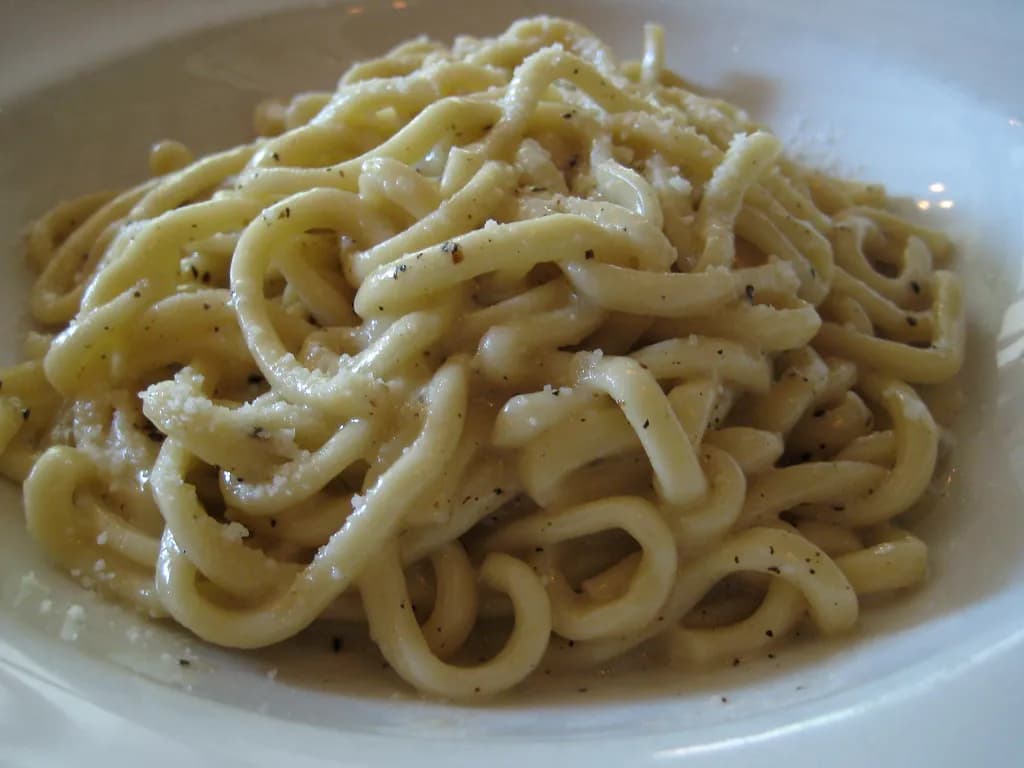
Cacio e pepe belongs to Rome in the same way that the Colosseum does. This is shepherd food, born from necessity and time, from the handful of dry ingredients that travelled in saddlebags across the Campagna: salted pasta, hard cheese from sheep's milk, and the black pepper that was worth its weight in precious metals. According to food historians, Roman shepherds invented this dish centuries ago when they had little more than these staples to sustain them through the mountain seasons.
What makes cacio e pepe revolutionary is its restraint. There is no cream in this sauce, no butter, no garlic or herbs. The magic comes from emulsifying starchy pasta water with finely grated Pecorino Romano cheese, creating what Romans call "cremina" (the cream), a silky suspension that clings to each strand. The technique is everything: the rhythm of stirring, the temperature of the water, the fineness of the grind. This is not a dish you can rush or improvise. But once you understand the dance of it, cacio e pepe becomes the easiest, most elegant pasta you'll cook.
Modern cacio e pepe belongs to the Roman trattorias that serve it as a matter of civic pride. It is the standard against which all other Roman cooking is measured, the dish that separates those who understand pasta from those who merely cook it.
Ingredients
Serves 4. Total time: 20 minutes.
- 400 g spaghetti (or tonnarelli, thick spaghetti, or bucatini)
- 200 g Pecorino Romano DOP cheese, finely grated
- 2 tablespoons freshly ground black pepper (or more to taste)
- Sea salt for the pasta water
Method
- Bring a large pot of salted water to a rolling boil. The water should taste like the sea. Add the spaghetti and cook until just al dente, about 9-10 minutes (check the pasta box for exact timing).
- While the pasta cooks, toast the black pepper gently in a large serving bowl over low heat (or just before cooking finishes, hold the bowl over the steam) for about 1 minute. This wakes up the pepper's oils.
- Reserve 1.5 cups of pasta cooking water before draining. Pour about half of it into the warmed bowl with the pepper, stirring gently to warm the bowl through (this is crucial for success).
- Add the hot, drained pasta directly to the pepper and water mixture, tossing with two forks. Work quickly but steadily.
- Remove from heat (or keep the bowl just touching a warm surface). Begin adding the grated Pecorino Romano gradually, a handful at a time, tossing constantly and adding small splashes of reserved pasta water as needed. The mixture should become creamy and coat every strand of pasta, not clumpy or grainy.
- The goal is a silky, loose consistency that continues to tighten slightly as the pasta rests. This takes about 3-4 minutes of constant stirring. If it becomes too thick, add a splash more pasta water.
- Serve immediately in warmed bowls, finishing with a final grind of black pepper and a shower of extra Pecorino Romano.
Timing and Temperature Notes
The pasta water temperature is essential. If your mixture splits or becomes grainy, it means the cheese is scrambling. Stop and add a splash of cool pasta water, then return to gentle tossing off heat. The entire dish depends on equilibrium between heat and the starch in the pasta water that acts as an emulsifier. Work decisively but never on high heat.
Variations and Make-Ahead
Some Roman cooks add a pinch of nutmeg or the zest of a lemon to their cacio e pepe, though purists will argue. Guanciale (cured pork jowl) is sometimes added in restaurant versions, though the original shepherd's dish contains only the three core ingredients. This dish cannot be made ahead, only in the moment, which is its charm and its demand on you as a cook.
Cacio e pepe was a shepherd's solution to scarcity, but in the cooking of it, you find abundance. This is peasant cooking at its most refined. Make it, eat it hot, and taste the centuries.
Published in The Outspoken Digest
Editorial desk
Outspoken Digest Food DeskCooking, ingredients, restaurants and the economics of what ends up on the table.
Newsletter
The Digest, in your inbox
One edition, sent when it is ready. No noise, and your address is never passed on.
Read Next
More Recipes →
Swangy Tamarind Glazed Chicken Wings for the Flavour Replacing Swicy on Fast Food Menus
Sep 29, 2026/3 min read

Baked Apple Cider Doughnuts for a Cider Season That Peaked Earlier Than the Calendar Says
Sep 29, 2026/3 min read


An Obatzda Bavarian Beer Cheese Dip for the Final Stretch of Oktoberfest 2026
Sep 29, 2026/3 min read