Japanese Chicken Katsu Curry: Crispy and Comforting
A beloved Japanese comfort dish: panko-crusted chicken cutlet served alongside a silky curry sauce. Crispy, warm, and endlessly satisfying.
Tuesday, March 12, 2024/3 min read
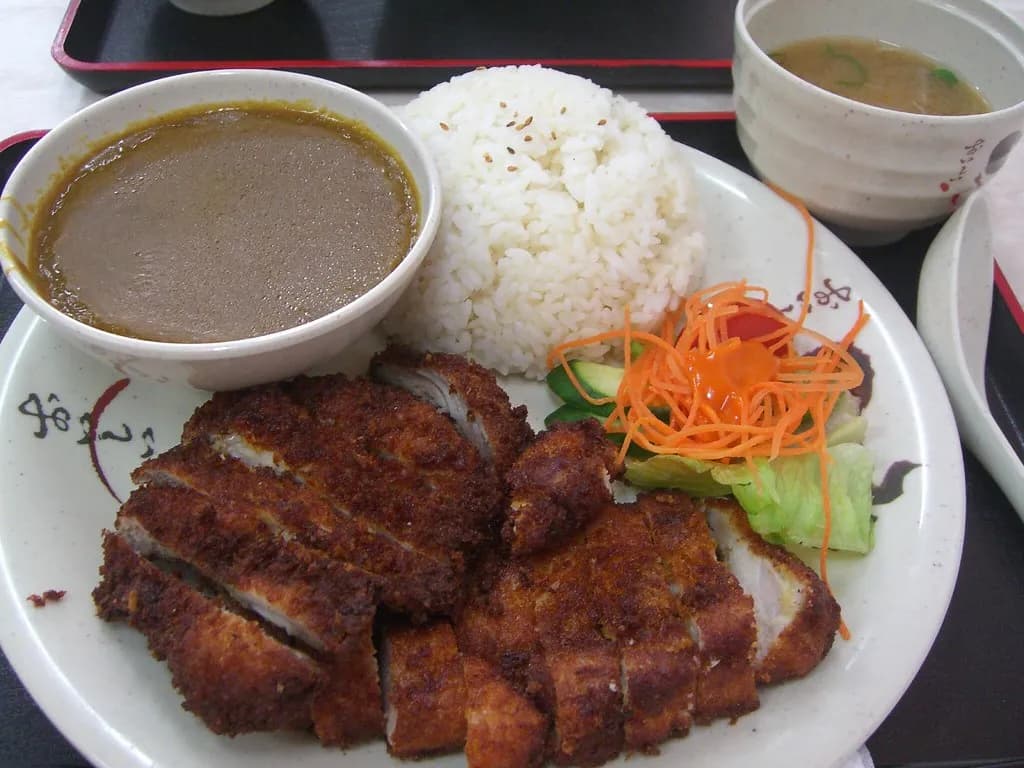
Katsu curry is the sound of contentment served on a plate. It is Japanese comfort food at its most direct: a golden, crunching cutlet of chicken, fried until the breadcrumbs shatter between your teeth, alongside a shallow pool of mild curry sauce that is sweet and savory at once, with an undertone of turmeric warmth. The dish emerged in Japan in the early 20th century, borrowing the breading technique of European schnitzel and combining it with the curry that had arrived via the British and maritime trade routes.
The key to the perfect katsu lies in the three-step breading: potato starch, egg wash, and panko breadcrumbs create a crust that stays crisp even under sauce. The thickness and evenness of the chicken is equally crucial. The chicken is butterflied and pounded to uniform thickness, ensuring it cooks quickly and stays tender inside while the exterior deepens to mahogany gold.
Katsu curry represents a particular kind of Japanese food philosophy: simplicity married to technique, where comfort is never an accident but always earned through precision. It appears on lunch menus across Tokyo, in school canteens and office buildings, served with the seriousness of ritual and the joy of indulgence.
Ingredients
Serves 4. Total time: 45 minutes.
- 4 boneless, skinless chicken breasts (about 150 g each)
- 50 g potato starch (or cornstarch)
- 2 large eggs, beaten
- 100 g panko breadcrumbs
- Salt and white pepper
- Vegetable oil for frying (about 750 ml)
- 400 g onion, thinly sliced
- 200 g carrot, cut into thin half-moons
- 2 tablespoons butter
- 2 tablespoons all-purpose flour
- 2 tablespoons Japanese curry powder (or mild curry powder)
- 1 teaspoon turmeric
- 500 ml chicken or vegetable stock
- 1 tablespoon soy sauce
- 1 tablespoon mirin (or 1 teaspoon sugar)
- Salt to taste
- Cooked white rice for serving
Method
- Place each chicken breast between two sheets of plastic wrap and pound gently to an even thickness of about 1.5 cm. Season both sides with salt and white pepper.
- Set up three shallow dishes: one with potato starch, one with beaten egg, one with panko breadcrumbs. Coat each chicken breast in starch first, shaking off excess. Dip in egg, then press firmly into panko, coating both sides well.
- Heat oil in a large, heavy-bottomed pan to 170°C (use a thermometer or test with a cube of bread: it should brown in about 60 seconds). Fry the chicken for 4 minutes on the first side until golden, then flip and fry for another 3-4 minutes until deep golden brown. The chicken should reach an internal temperature of 65°C. Transfer to a wire rack to drain.
- While the chicken cooks, melt butter in a separate saucepan over medium heat. Add the sliced onion and carrot, cooking gently for 5-6 minutes until softened but not colored.
- Sprinkle flour over the vegetables and stir well, cooking for 1 minute to coat. Stir in curry powder and turmeric, cooking for 1 minute more until fragrant.
- Gradually pour in the stock, stirring constantly to avoid lumps. Bring to a simmer and cook for 8-10 minutes until the vegetables are tender and the sauce has thickened enough to coat the back of a spoon.
- Season the curry with soy sauce, mirin, and salt to taste. The sauce should be mild and slightly sweet.
- To serve, place a portion of warm rice on one side of a serving plate. Place the katsu cutlet on the plate, and carefully pour the curry alongside (not over the cutlet, so the coating stays crispy). Serve immediately.
Variations and Storage
Some cooks add a tablespoon of tomato paste to the curry for depth, or a touch of apple puree for natural sweetness. If you cannot find Japanese curry powder, a mild Indian curry powder works as a substitute. The katsu must be eaten immediately to maintain crispness; the curry can be made ahead and reheated gently. Katsu curry does not freeze well due to texture loss in the breading.
Katsu curry succeeds because it respects contradiction: it is indulgent but not heavy, familiar but gently exotic. It asks you to sit, to eat slowly, to notice the temperatures and textures on your plate. This is what comfort food should always do.
Published in The Outspoken Digest
Editorial desk
Outspoken Digest Food DeskCooking, ingredients, restaurants and the economics of what ends up on the table.
Newsletter
The Digest, in your inbox
One edition, sent when it is ready. No noise, and your address is never passed on.
Read Next
More Recipes →
Swangy Tamarind Glazed Chicken Wings for the Flavour Replacing Swicy on Fast Food Menus
Sep 29, 2026/3 min read

Baked Apple Cider Doughnuts for a Cider Season That Peaked Earlier Than the Calendar Says
Sep 29, 2026/3 min read
An Obatzda Bavarian Beer Cheese Dip for the Final Stretch of Oktoberfest 2026
Sep 29, 2026/3 min read