Crypto's Big Rulebook Is Stuck, and the Delay Now Costs Money
The bill meant to divide SEC and CFTC authority cleared the House and a Senate committee, then stopped. No floor vote, no cloture motion, no date, and firms are compliance planning into a vacuum.
Outspoken Digest Crypto Policy Desk
Tuesday, August 4, 2026/4 min read
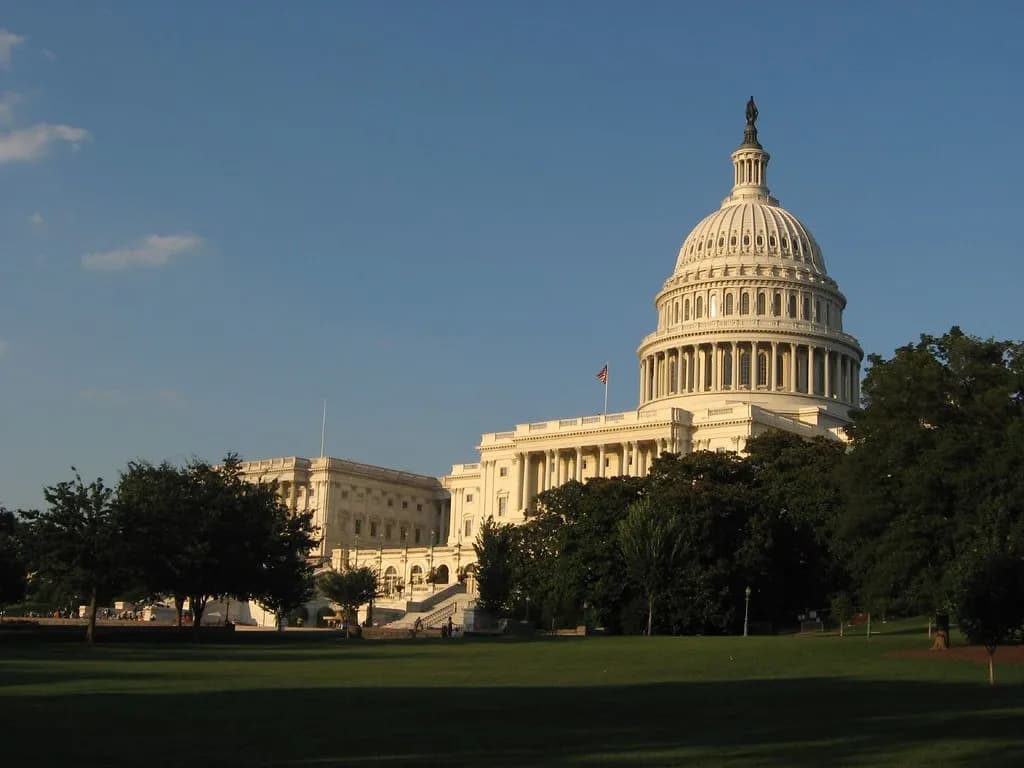
The crypto industry spent years asking to be regulated properly rather than enforced against case by case. It got a bill that would do exactly that, and then watched it stop moving.
The Digital Asset Market Clarity Act would settle the question that has hung over the sector for a decade: which assets fall to the Securities and Exchange Commission and which to the Commodity Futures Trading Commission. It has cleared the House and a Senate committee. It has no floor vote, no cloture motion and no date on the calendar.
How far it got
The bill passed the House on 17 July 2025 by 294 votes to 134, a margin wide enough to look like consensus. The Senate Banking Committee advanced it on 14 May 2026 by 15 to 9.
Then the calendar ran into the politics. Analysts estimate Republicans need around seven Democratic votes to clear the 60 vote cloture threshold, and the obstacles are not primarily technical.
As Forbes reported this week, the bill is running out of runway in this session.
What is actually blocking it
Four things, and only one is about crypto mechanics.
There are disputes over stablecoin yield provisions and law enforcement access, both of which are ordinary legislative disagreements. There is the practical problem of agencies that are understaffed for the supervisory load the bill would hand them.
And there is the ethics fight over officials' crypto holdings, rooted specifically in the president's, which has hardened Democratic opposition to the bill in its current form. That is a conflict no amount of technical redrafting resolves.
Why a delay is now an operational problem
This is the shift worth understanding. A stalled bill used to be a political story. Forbes has argued it has become a compliance problem instead.
Firms cannot wait indefinitely to decide whether they are a broker dealer or a futures commission merchant. They have to build systems, hire officers and register somewhere. Every month without statutory clarity is a month of expensive guessing, and guesses that turn out wrong get unwound at a cost.
Analysis from Baker McKenzie makes the related point that the delay itself reveals how the regulatory settlement is actually being made.
The rules arriving anyway
Because while the Senate has stalled, the agencies have not. The SEC under chairman Paul Atkins has moved its Project Crypto initiative from speech to practice, and the GENIUS Act stablecoin framework is already in place.
So a framework is being assembled regardless, through regulatory action rather than legislation. That produces rules that are quicker to write and considerably easier to reverse when an administration changes. A tracker maintained by Latham and Watkins follows the legislative side.
Why the SEC and CFTC split matters so much
The jurisdictional question sounds procedural and is not. The two agencies regulate on different philosophies, and which one owns an asset determines nearly everything about how it can be sold.
Securities regulation is built around disclosure and investor protection, with registration requirements and liability attached. Commodity regulation is built around market integrity and manipulation in trading venues. An asset classed as a security faces obligations that a commodity does not, and firms structure themselves entirely differently depending on the answer.
For a decade that answer has come from enforcement actions and court rulings rather than statute, which means it has been determined case by case, retrospectively, and with limited consistency.
The cost of regulating by agency instead
A framework built through rulemaking rather than legislation has one obvious advantage and one serious weakness. It is faster, because it does not need sixty Senate votes.
It is also reversible. A rule written by one commission can be rewritten by the next, and firms making multi year infrastructure decisions know it. That uncertainty gets priced in, and some of it gets priced by relocating to jurisdictions that have already legislated.
Which is the argument the industry has been making for years, and the reason a stalled bill is a more expensive outcome than a bill that passes in a form nobody entirely likes.
What happens to firms in the meantime
Businesses cannot pause operations until legislators agree. They make a determination about their own regulatory status, build compliance around it, and carry the risk that a future statute contradicts them.
That risk is expensive to hold. It affects what auditors will sign, which banks will provide services, and which institutional counterparties will trade with them. Several of the practical barriers the sector complains about are downstream of that uncertainty rather than of any specific rule.
It also advantages the largest firms, which can afford to staff for several possible outcomes at once. Regulatory ambiguity is usually a tax on smaller competitors.
The precedent problem
There is a broader constitutional point buried in this. When a legislature cannot act, regulators fill the space, and the resulting rules carry less democratic weight and far less permanence.
Courts have grown more sceptical of agencies claiming broad authority over major economic questions without explicit legislative instruction. A digital asset framework assembled largely from rulemaking is therefore vulnerable on two fronts at once: politically to the next administration, and legally to a challenge arguing the agency exceeded what Congress actually authorised.
That is the strongest argument for passing something imperfect rather than waiting for something ideal. A statute settles the authority question in a way no rule can.
What to watch next
Watch for a cloture motion, because nothing else counts as progress. And watch how much of the market structure gets settled by agency rulemaking in the meantime, since every piece decided that way is a piece decided provisionally.
Published in The Outspoken Digest
Newsletter
The Digest, in your inbox
One edition, sent when it is ready. No noise, and your address is never passed on.
Read Next
More Crypto →

JPMorgan Publishes Its First Ten-Year Bitcoin Forecast: 10 Percent a Year, With a Bear Case of a 9.7 Percent Loss
Oct 21, 2026/2 min read

Nine Crypto Firms Form a Quantum Alliance Because About 6 Million Bitcoin Sit Exposed to a Future Attack
Oct 18, 2026/2 min read

Bitcoin Slips Toward $80,000 After Hot US Inflation and an Asian Tech Rout, With Long Positions Hit Hardest
Oct 15, 2026/2 min read