UC San Diego Physicists Ran a New Check on Whether the Universe's Oldest Light Has a Slight Twist
Anto Lonappan, Brian Keating and Kam Arnold built an independent method to test for cosmic birefringence in the cosmic microwave background, finding a rotation angle that agrees with earlier hints of new physics.
Tuesday, September 29, 2026/3 min read
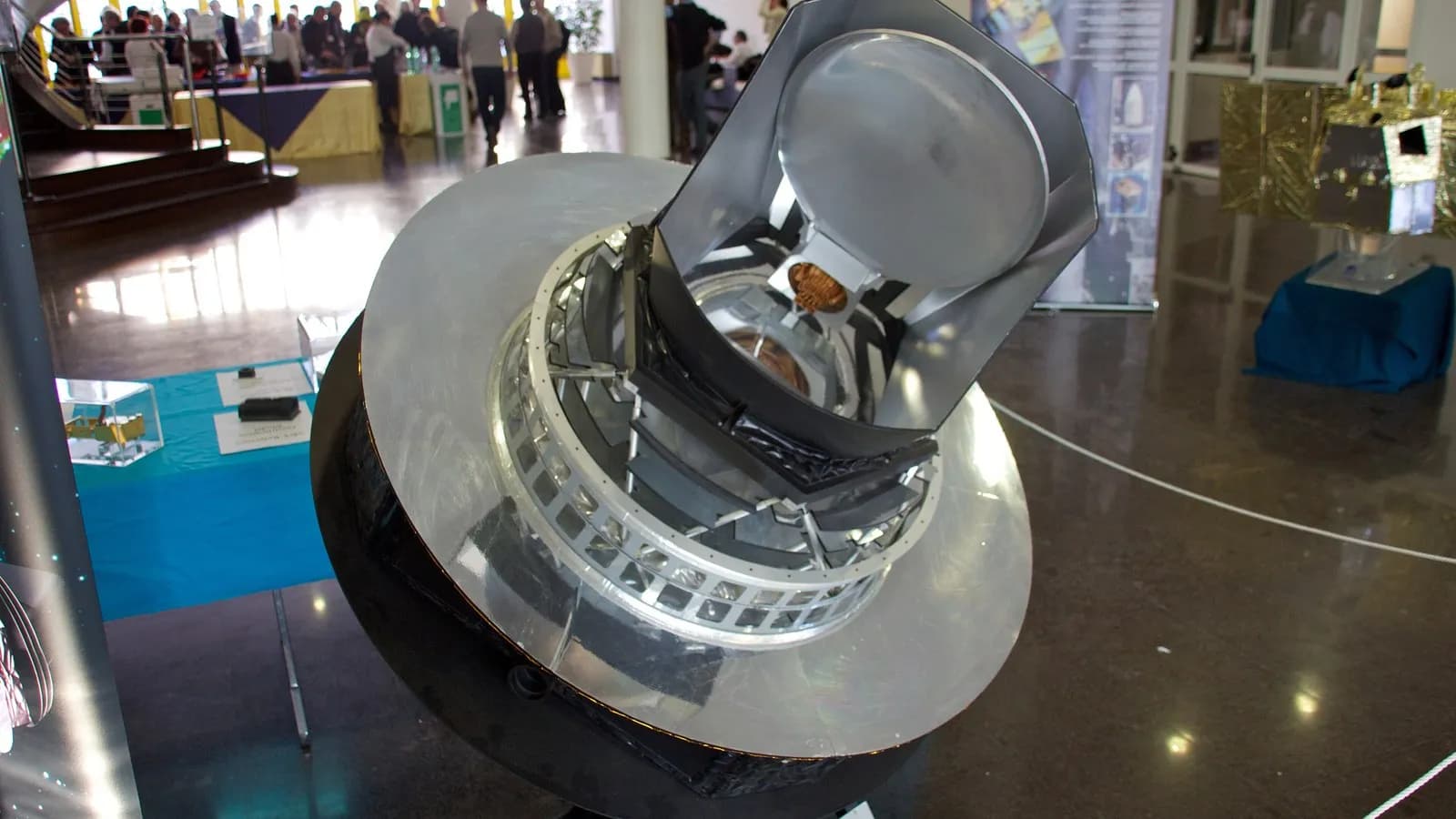
Physicists at UC San Diego have run an independent check on one of cosmology's more tantalising open questions, whether the polarisation of the cosmic microwave background, the faint afterglow of the Big Bang, has rotated slightly during the nearly 14 billion years the light has been travelling toward us. The result, published in the Astrophysical Journal Letters, is described in a UC San Diego Today report and was also picked up by Newswise.
Why a twist in ancient light would matter
If the polarisation of the cosmic microwave background has rotated as it crossed the universe, a phenomenon called cosmic birefringence, that would be a signature of physics beyond the Standard Model, potentially connected to hypothetical particles called axions that have also been proposed as a candidate for dark matter. Previous analyses of data from the European Space Agency's Planck satellite had already hinted at a small rotation, but the effect is maddeningly close in size to the kind of error that a miscalibrated telescope would produce on its own, making it hard to say with confidence whether the signal is cosmic or instrumental.
The team and their approach
Postdoctoral fellow Anto Lonappan, working with Chancellor's Distinguished Professor of Physics Brian Keating and associate professor of physics Kam Arnold, built a new method for testing how well the relative polarisation-angle calibration of different detector sets agrees, rather than relying on a single calibration approach the way earlier analyses had. Applying this differential technique to eight existing Planck satellite maps, the team found that their new estimator and the conventional approach produced consistent results despite resting on different assumptions, a cross-check that strengthens confidence in the underlying measurement.
What the number actually came out to
The team's differential analysis produced a cosmic-birefringence angle of 0.37 degrees, with an uncertainty of plus or minus 0.12 degrees, a result that matches figures reported in earlier, widely cited work on the same question. Because the new method arrives at essentially the same answer through a different statistical route, it makes it somewhat harder to write the entire signal off as a calibration artefact, though it does not settle the matter outright.
Distinguishing a cosmic effect from a telescope error
The central difficulty in this field is that a genuine rotation of light's polarisation as it crosses billions of light years of intergalactic space would look, in the data, almost identical to what happens if a satellite's polarisation-sensitive detectors are oriented even a fraction of a degree off from where scientists think they are pointed. Lonappan's team's contribution is specifically a way of separating those two possibilities more cleanly, by exploiting the fact that independent detector sets on the same instrument should agree with each other if the calibration is correct, regardless of what assumption a researcher makes about the underlying cosmic signal.
What would settle the question
A definitive answer will likely require new instruments built with tighter, independently verifiable polarisation calibration from the outset, rather than further reanalysis of Planck's now more than decade-old dataset, and several ground-based and balloon-borne experiments currently collecting cosmic microwave background data have been designed with exactly that requirement in mind. Until one of those newer instruments reports its own birefringence measurement, the UC San Diego result stands as a modestly reassuring, if not conclusive, sign that the twist some cosmologists have been chasing might be real physics rather than an artefact of forty-year-old satellite hardware.
Published in The Outspoken Digest
Editorial desk
Outspoken Digest Science DeskReports for The Outspoken Digest across Technology, Latest Trends, Health.
Newsletter
The Digest, in your inbox
One edition, sent when it is ready. No noise, and your address is never passed on.
Read Next
More Technology →
Webb Caught a Probable Supernova From the Early Universe Only Days After It Exploded
Oct 18, 2026/2 min read
Webb Maps an Exoplanet's Atmosphere as Egg-Shaped, With a Puffed-Up Evening Side Hotter Than Its Morning Edge
Oct 18, 2026/2 min read

A Hole in a 75,000-Year-Old Shoulder Blade Points to a Wooden Spear, and Perhaps to Neanderthal Care
Oct 18, 2026/2 min read

Anthropic's Own Staff Data: Junior Technical Hires Fell From 27 to 9 Percent as Its AI Agents Outworked Humans
Oct 18, 2026/2 min read