Continuous Glucose Monitors Without Diabetes: Useful Data or Noise?
Over-the-counter glucose monitors reached healthy consumers in 2024, but research suggests their readings may not mean what wearers assume.
Tuesday, July 22, 2025/4 min read
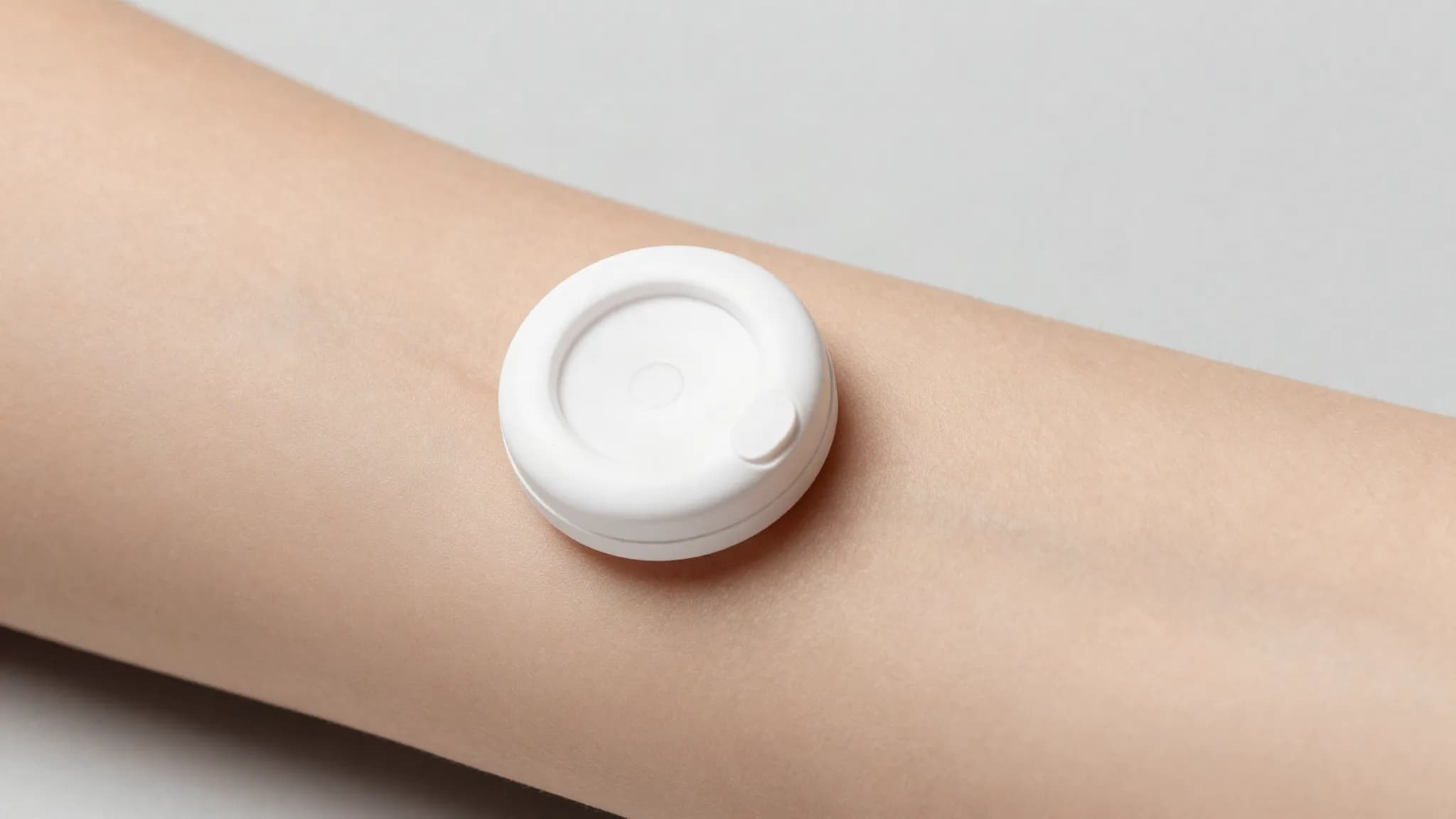
The small sensor on the back of an arm used to signal one thing: this person manages diabetes. Now it just as often means someone is chasing a metabolic optimization trend, watching a graph spike after white rice and treating the number like a verdict. The technology got easier to buy in 2024, when the FDA approved over-the-counter continuous glucose monitors for people with and without diabetes. Whether the data means as much for the second group, the healthy, non-diabetic wearer chasing optimization rather than managing a diagnosed condition, is a separate, unresolved question.
What continuous glucose monitors actually measure
A continuous glucose monitor (CGM) uses a small sensor, usually worn on the arm or abdomen, to estimate glucose levels in the fluid between cells every few minutes, generating a near-continuous graph rather than the single-point-in-time readings of a fingerstick test. For people managing diabetes, this stream of data has genuine, well-established clinical value, catching dangerous highs and lows and informing insulin dosing decisions in real time.
The core problem for people without diabetes
The signal that makes CGM useful in diabetes care appears to weaken, and in some cases disappear, in people who do not have the condition. Research summarized by Mass General Brigham found that while CGM metrics correlated with hemoglobin A1c, the standard gold-standard measure of blood sugar control over time, in people with diabetes, that relationship weakened substantially in people with prediabetes and disappeared entirely in people without diabetes. In plain terms: the number on the graph may not reliably reflect a healthy person's actual metabolic state the way it does for someone with diabetes.
What systematic reviews say about lifestyle use
A systematic review examining CGM use in non-diabetic individuals for cardiovascular prevention, published via PMC, notes the appeal is real: CGM can offer immediate feedback on how specific meals or activity affect glucose in real time, which some people find motivating for changing habits. But the same review and a related systematic review in Sensors both conclude that the actual effectiveness of CGM for improving glycemic parameters, body weight or behavior change in non-diabetic people remains unclear, with evidence too limited to support routine clinical recommendation for this use. A separate systematic review with meta-analysis of observational and interventional studies in non-diabetic populations, published in the European Journal of Medical Research, reached a similar conclusion, that the evidence base remains too thin and heterogeneous across studies to draw firm practical guidance for healthy users.
The interpretation trap
The practical risk is not that the sensor lies about the number, it is that a healthy person's own glucose fluctuates naturally within a wider range than commonly assumed, and post-meal spikes that look alarming on a real-time graph are not automatically evidence of metabolic dysfunction the way they would be in someone with impaired glucose regulation. Interpreting normal variability as a problem, without the clinical context a physician or diabetes educator would apply, is where a device with real value in one population becomes a source of unnecessary anxiety in another.
Where CGM in healthy people might still make sense
Some clinicians see value in short-term CGM use as an education tool, letting a person see, concretely, how their own body responds to different meals or exercise timing, then removing the device once the lesson lands. That is a narrower, more defensible use case than the framing common in wellness marketing, which treats continuous daily glucose tracking as a permanent optimization requirement for everyone regardless of metabolic risk.
Cost and the regional picture
Over-the-counter CGMs are a recurring expense, sensors typically need replacing every one to two weeks, which makes daily use for someone without diabetes a meaningful ongoing cost rather than a one-time purchase. In fast-growing wellness markets including the Gulf, where the devices are increasingly stocked in pharmacies and sold through telehealth and wellness clinics, that recurring cost is being paid largely by consumers rather than covered by insurers, since coverage for non-diabetic use is not standard. During Ramadan, CGM has a genuinely useful application in people who have diabetes and choose to fast, evidenced by a study evaluating glycemic control in patients with diabetes using a continuous glucose monitoring system during the month of Ramadan, published via PMC, which found hypoglycemia occurred in roughly a quarter of fasting patients, mainly in the hours before the sunset meal. That is a meaningfully different, clinically anchored use case from a healthy person wearing a monitor purely out of curiosity.
What would resolve the open questions
Larger, longer trials that track whether CGM-guided lifestyle changes in non-diabetic people actually improve hard outcomes, weight, cardiovascular risk markers, or progression to prediabetes, compared with standard lifestyle advice without a monitor, would settle whether the device adds value beyond novelty and motivation. Until that exists, the honest read is: valuable and well-validated for diabetes management, unproven as a routine tool for people managing already-normal metabolism.
This article is reporting on medical technology and research, not medical advice. Anyone considering a CGM, with or without diabetes, should discuss its purpose and how to interpret its readings with a clinician, since normal glucose variability differs by individual.
The device itself is a genuine piece of engineering. What it is being asked to prove in a healthy wrist, that a graph alone can meaningfully guide someone who has no diagnosed metabolic problem, is still an open question the evidence has not caught up to answer.
Published in The Outspoken Digest
Editorial desk
Outspoken Digest Health DeskMedicine, public health and the research behind the headlines, read carefully.
Newsletter
The Digest, in your inbox
One edition, sent when it is ready. No noise, and your address is never passed on.
Read Next
More Health →
Two Days After the Nobel for Optogenetics, a Small NEJM Trial Shows It Helped Some Blind Patients Detect Objects
Oct 9, 2026/3 min read
WHO Launches a Global Roadmap on Pre-Eclampsia and Pregnancy Hypertension, Tied to 42,000 Maternal Deaths a Year
Oct 8, 2026/3 min read

WHO Says Diet and Exercise Come First and Children Under 10 Should Not Get Weight-Loss Drugs or Surgery
Oct 7, 2026/3 min read

Kenya Confirms Its First Ebola Case, a Man Who Flew In From Uganda After Years in Congo and Died in Nairobi
Oct 6, 2026/3 min read