Cooling Is More Than Sixty Per Cent of a Gulf Household's Electricity, Against About Twenty Five in America
Air conditioning is roughly half of peak electricity demand across the region, and nearly every building has it. Which means almost everything that reduces a household bill here is about heat getting in, not about appliances.
Outspoken Digest Lifestyle Desk
Friday, August 21, 2026/3 min read
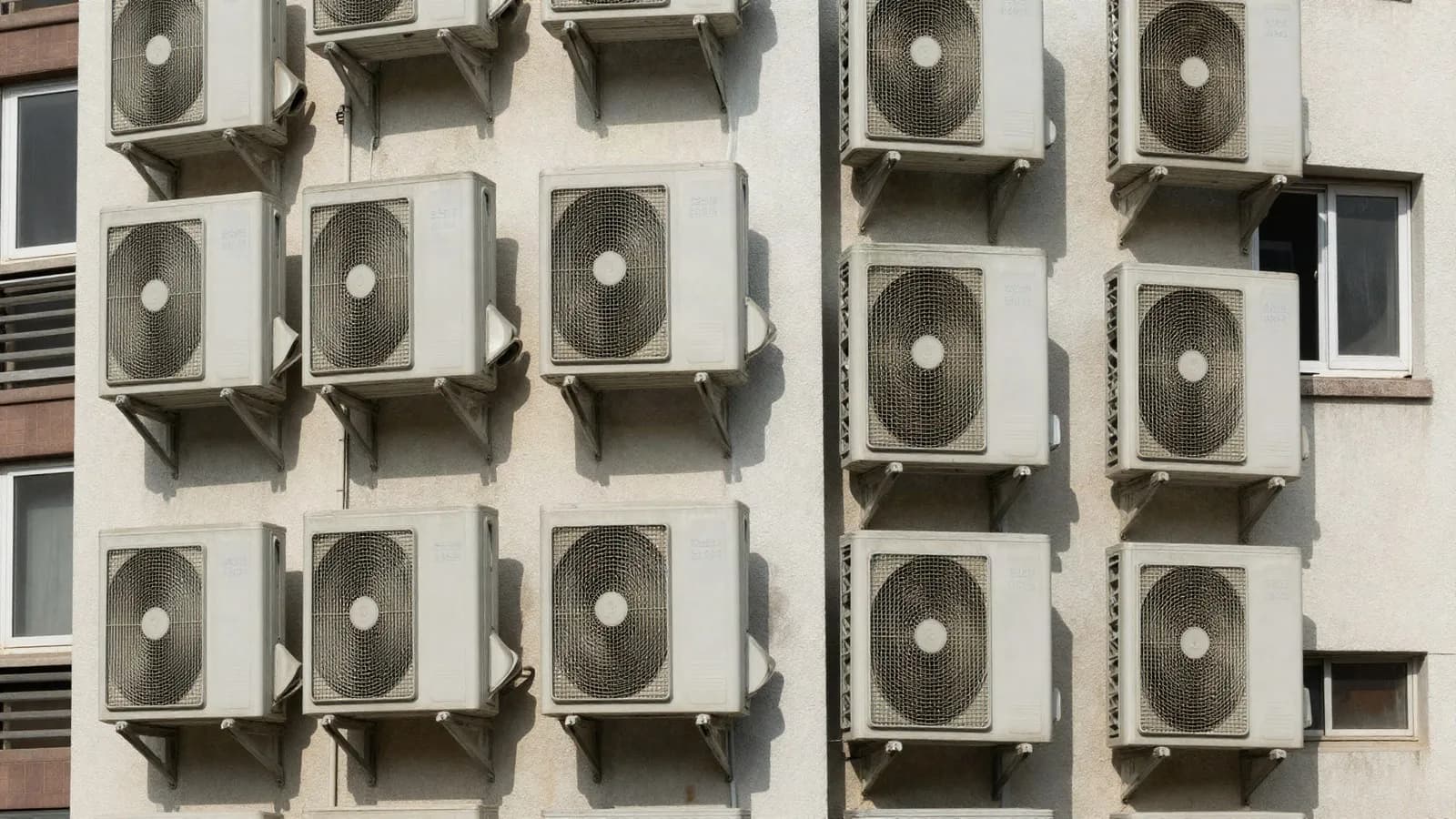
Household energy advice travels badly. Almost all of it is written where the largest number on the bill is heating, and it arrives here reading like a list of things that will not help: switch off standby, use the washing machine at thirty, change the bulbs.
Those are fine. They are also close to irrelevant next to the number that dominates every bill in this region.
How much of the bill is actually cooling?
Cooling accounts for above 60 per cent of residential electricity in Saudi Arabia and the United Arab Emirates. The comparable figure in the United States is around 25 per cent, and some regional estimates put household air conditioning closer to 70 per cent.
At the grid level the picture is the same. The International Energy Agency puts air conditioning at roughly half of peak electricity demand across the Middle East and North Africa, and expects it to hold a similar share out to 2035. Penetration in Gulf buildings is close to universal.
So the honest framing is that a Gulf household electricity bill is a cooling bill with some appliances attached.
What actually moves that number?
Reducing the heat that arrives, and reducing the work the machine does to remove it. In roughly descending order of effect:
Stop the sun getting in. Solar gain through glass is the single largest load in most apartments. Closing curtains on sun-facing windows during the day is free and does more than any appliance change. External shading does more still, which is the whole reason the regulations now cap solar heat gain through glazing.
Set the thermostat higher and leave it alone. Every degree costs. Setting 24 rather than 20 is a large saving, and the belief that setting it to 16 cools the room faster is simply wrong: the unit does not have a faster gear, it just runs longer past the point you wanted.
Clean the filters. A blocked filter forces the unit to run longer for the same result. This is the highest return per minute of effort on the list and it is the one nobody does.
Seal the gaps. Gaps under doors to unconditioned corridors and stairwells leak cooled air continuously. A door seal costs very little.
Move air. A ceiling fan makes a room feel several degrees cooler by moving air across skin, at a tiny fraction of the power. Running a fan and raising the thermostat two degrees is one of the best trades available. The fan cools people, not rooms, so switch it off when you leave.
Cool the rooms you use. Closing off and not conditioning unused rooms works, provided the system is designed for it.
What about the times of day?
Pre-cooling helps in some tariff structures and not others, so it is worth checking your own.
Where peak-time pricing applies, cooling the space slightly earlier and letting it drift during the most expensive hours shifts consumption without much comfort cost. Where there is no time-of-use element, the simpler rule applies: less run time, at a higher setpoint, with less heat arriving.
Does the equipment matter?
Yes, and it is the one thing most residents cannot change.
Efficiency standards across the region have tightened, and modern inverter units are substantially better than the fixed-speed machines they replace, because they modulate rather than cycling fully on and off. But the unit in a rented apartment is the landlord's decision, and the tenant pays the running cost. That split incentive is why so much inefficient equipment stays installed.
What a tenant can control is the load, and the load is mostly sunlight, gaps and filters.
Why this is worth caring about beyond the bill
Because the same demand shows up at the grid, on the hottest afternoon, all at once.
When cooling is half of peak demand, the peak defines how much generating capacity a country has to build and keep available for a handful of hours a year. Reducing peak load is therefore not a private virtue but an infrastructure question, and it is one reason working hours and building rules keep being adjusted around the summer, alongside the seasonal rhythm described in the Gulf summer exodus and return.
The domestic version is simpler. Close the curtains, raise the setpoint, clean the filter, run a fan. That is most of the available saving, and none of it requires buying anything.
Published in The Outspoken Digest
Newsletter
The Digest, in your inbox
One edition, sent when it is ready. No noise, and your address is never passed on.
Read Next
More Lifestyle →
Street Fighter Opens With $4 Million in Thursday Previews as Critics Split on the Video Game Reboot
Oct 16, 2026/2 min read

Two Stolen Renoirs Found Behind a Cinder-Block Wall as Police Say Suspects Eyed the Fondation Maeght
Oct 15, 2026/2 min read

Hulu Orders Ryan Coogler's X-Files Reboot to Series With Danielle Deadwyler and Himesh Patel
Oct 14, 2026/2 min read
Tarek Atoui Opens Hold in Tate Modern's Turbine Hall, Turning the Cavernous Space Into a Giant Sound Instrument
Oct 13, 2026/2 min read