Delhi's Air Is 'Very Poor' on Diwali Night at 371, With 20 Stations Severe as Fireworks Pick Up
The capital's daily average hit 376 on Sunday, with Sonia Vihar at 463 by 10 pm. Fireworks began before the 8 pm green-cracker window, and forecasters expect severe air from Monday.
Sunday, November 8, 2026/2 min read
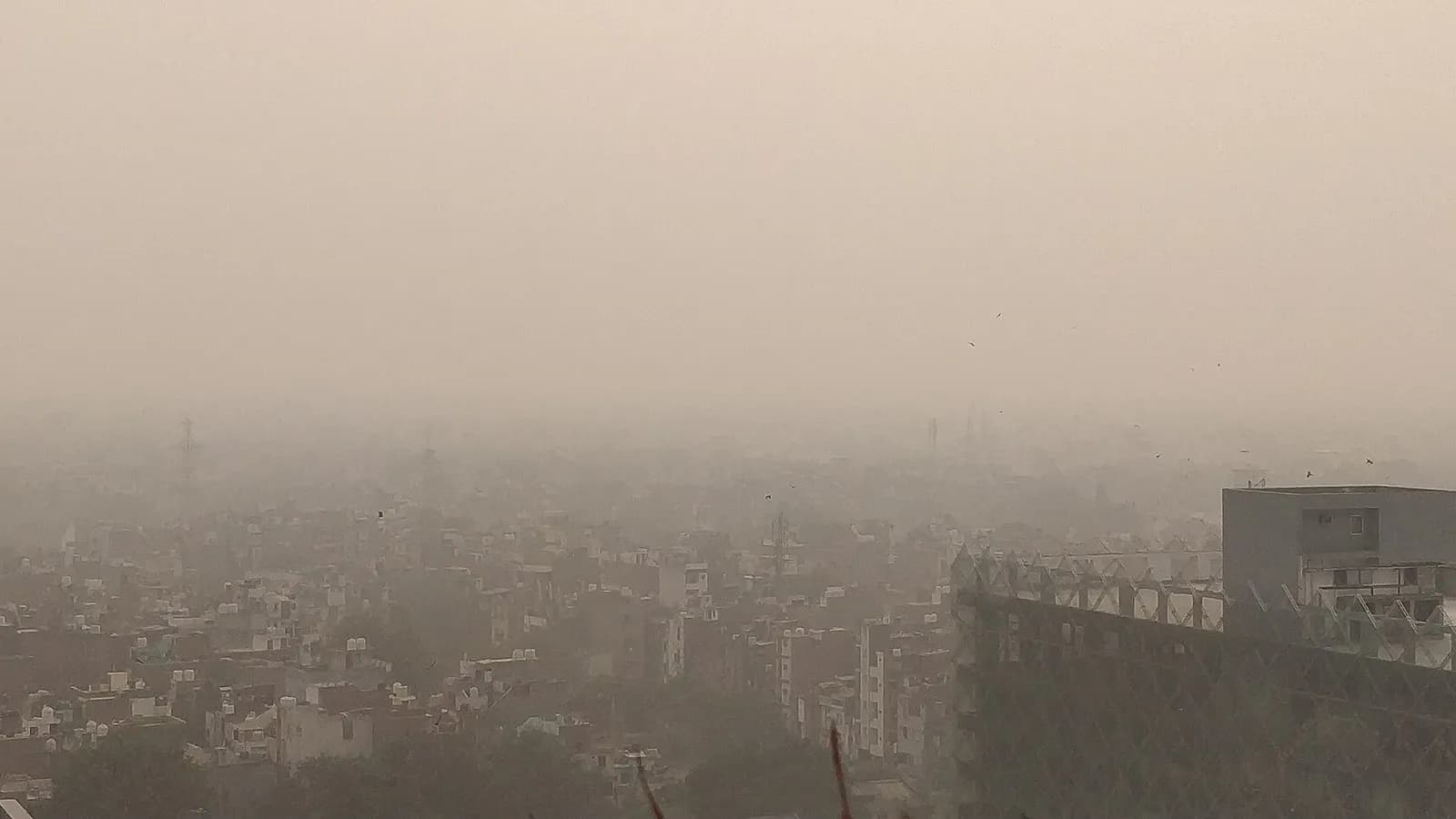
Delhi's air was already "very poor" before the first Diwali rocket went up on Sunday, and the fireworks pushed it closer to "severe". The city's air quality index stood at 371 at 7 pm and was still 371 at 10 pm, Telangana Today reported, with 20 of 59 monitoring stations in the "severe" band by the later reading.
The daily average for Sunday was 376, up from 369 on Saturday, and the early-warning system run by India's weather scientists expects severe air from Monday for several days. These are the readings as they stood on Diwali night, not the morning-after figures, which will come later.
What was Delhi's AQI on Diwali night?
The index is a scale where 301 to 400 is "very poor" and anything above 400 is "severe". According to IBTimes India, the instantaneous reading at 7 pm was 371. Of 59 stations reporting at that hour, 19 were severe, 33 very poor and seven poor. By 10 pm, Telangana Today said, 20 were severe, 33 very poor and six poor.
The worst reading was in the east and north of the city: Sonia Vihar at 463 and Jahangirpuri at 450 at 10 pm. Burari, Alipur and Punjabi Bagh were also high. Sonia Vihar, Jahangirpuri, Punjabi Bagh, Burari, Okhla and Rohini stayed severe all day.
Did people follow the green-cracker rules?
Only partly. A District Magistrate (East) order allowed green firecrackers on 7 and 8 November in two windows, 6 to 7 am and 8 to 10 pm. Telangana Today said bursting picked up around 5 to 6 pm and grew as night fell, with the most intense reports from Burari, followed by Pitampura, Mayur Vihar and Bishambardas Marg. Lutyens' Delhi was somewhat quieter. IBTimes India said residents posted on social media about the smell of smoke, while experts named firecracker emissions as a contributor to PM2.5, the main pollutant on Sunday.
Neither outlet quantified how much of the load came from fireworks. The background was already bad: before Diwali, Outlook reported that the daily average had been "very poor" for four straight days, at 324 on Monday, 350 on Tuesday, 377 on Wednesday and 369 on Thursday, with 22 stations severe by 10 pm that Thursday.
How bad will the air be on Monday?
The Air Quality Early Warning System forecasts "severe" levels from Monday 9 November and for the next few days, with light winds and poor ventilation holding pollutants over the city. Outlook had flagged earlier in the week that the ventilation index was forecast to fall to 2,500 square metres per second on Sunday, which it described as unfavourable for dispersing pollutants.
The morning-after readings are the ones that count for health, since smoke from the evening settles overnight. Delhi's air quality commission, which sets the graded restrictions that follow, has the next move.
Published in The Outspoken Digest
Editorial desk
Outspoken Digest News DeskReports for The Outspoken Digest across Latest Trends, Sports, Nutrition, Crypto.
Newsletter
The Digest, in your inbox
One edition, sent when it is ready. No noise, and your address is never passed on.
Read Next
More Latest Trends →
Drone Strike on Iraq's Khor Mor Gas Field Plunges Most of Kurdistan Into Darkness as No One Claims It
Nov 9, 2026/2 min read

Congress Returns With Hegseth Impeachment Vote Expected, Leadership Fights and a December Funding Deadline
Nov 9, 2026/2 min read

New Zealand's Knife-Edge Election Leaves Luxon With 67 Seats, 400,000 Special Votes Uncounted and a Kingmaker
Nov 8, 2026/2 min read
Magnitude 5.7 Earthquake Shakes Central Japan, Shattering Shop Windows and Injuring at Least 22
Nov 8, 2026/2 min read