Focaccia at Home: A High-Hydration Dough That Needs Almost No Kneading
A wet dough, a few folds, a night in the fridge and a generous pour of olive oil. The dimpled, golden slab with an open crumb is within reach of anyone with a bowl and a baking tin.
Wednesday, September 16, 2026/3 min read
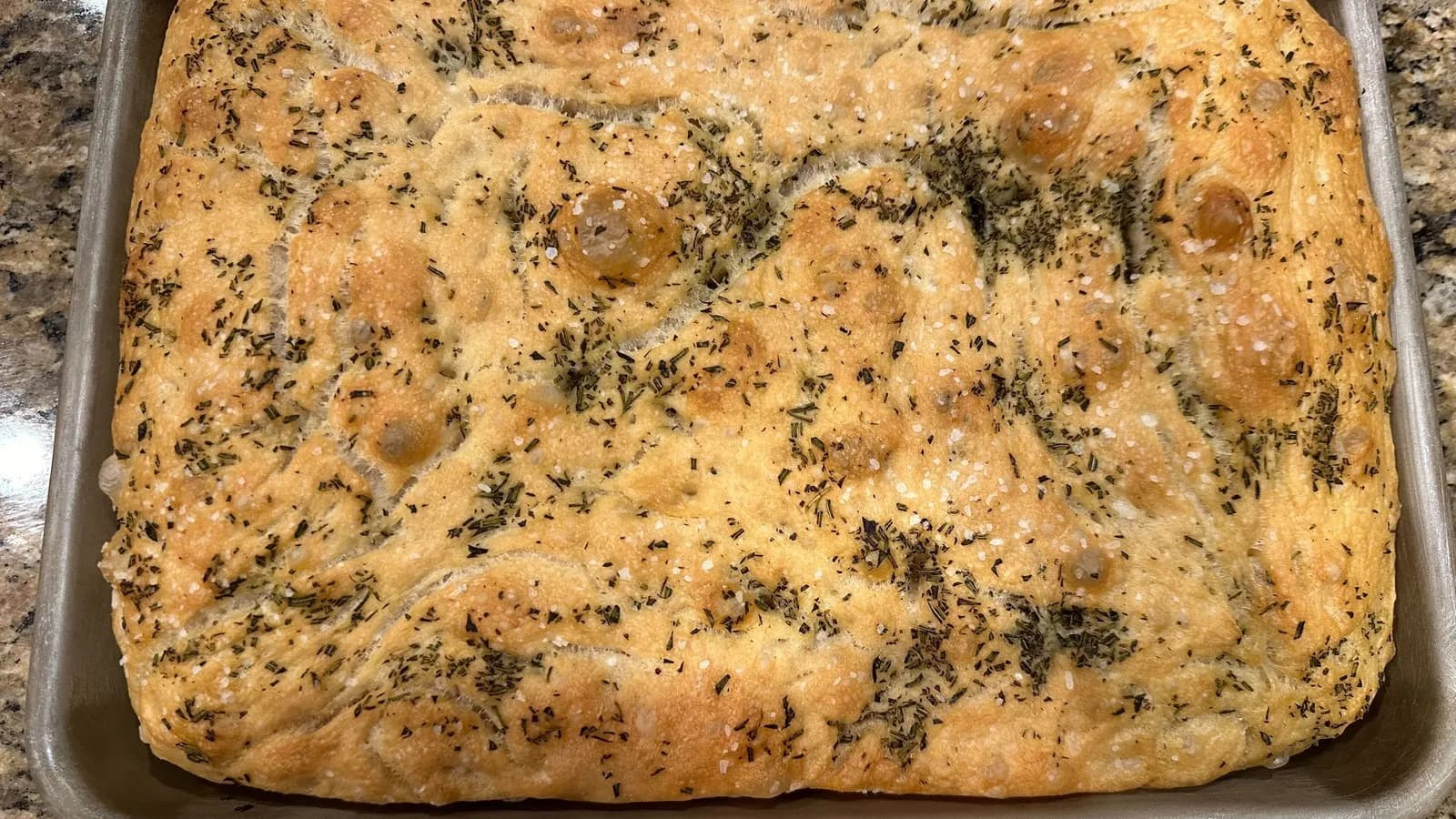
Focaccia is the most forgiving bread there is, which is odd given that it looks so much like a professional's. The dough is wet, almost batter-like, and it does its own work. Time develops the gluten that kneading would otherwise do, and a long, cool rise gives the flavour that a quick one cannot. What you do is mix it, fold it a few times, put it in the fridge, and bake it the next day in a slick of olive oil that fries the base to a crisp. It comes out with a thin golden crust, a soft, open, chewy inside, and the characteristic pockets where the oil pools in the dimples.
Ingredients
Makes one 23 x 33 cm (9 x 13 in) tray, about 12 squares.
- 500 g (about 3 3/4 cups) strong white bread flour
- 400 g (1 3/4 cups) lukewarm water, which is 80 percent hydration
- 10 g (2 teaspoons) fine salt
- 4 g (1 1/4 teaspoons) fast-action dried yeast
- 80 ml (1/3 cup) extra virgin olive oil, divided, plus a little more for your hands
- Flaky sea salt, fresh rosemary leaves, and, optionally, halved cherry tomatoes or olives to finish
Method
- In a large bowl, stir the flour, salt and yeast together. Add the water and 2 tablespoons of the oil and mix with a wet hand until no dry flour remains. It will be sticky and shaggy. Cover and rest for 30 minutes.
- With an oiled hand, reach under one side of the dough, stretch it up and fold it over the middle. Turn the bowl and repeat four times round. Cover and rest 30 minutes. Do this fold sequence two more times, resting 30 minutes between, so three rounds in all. The dough will change visibly, becoming smooth and elastic.
- Cover tightly and refrigerate for 12 to 18 hours. A cold rise slows the yeast and lets the flavour build. If you are short of time, a warm room rise of 2 to 3 hours works, using 7 g (2 1/4 teaspoons) yeast instead.
- Pour 3 tablespoons of oil into the tray and spread it to coat the base and sides. Tip the cold dough into the tray, turn it once to coat, and stretch it gently towards the corners. If it springs back, rest it 15 minutes and try again. Cover and leave at room temperature for 1 to 1 1/2 hours until puffy and jiggly.
- Heat the oven to 220C (425F; 200C fan) with a rack in the upper third. Oil your fingertips, and press them straight down through the dough to the base, all over, in a dimpling motion. Drizzle with 2 tablespoons of oil, scatter with flaky salt and rosemary, and press on toppings lightly.
- Bake for 22 to 25 minutes until deep gold at the edges and the base is crisp when lifted with a spatula. Slide out onto a rack straight away so the base does not steam. Cool at least 10 minutes before cutting.
Notes
The salt matters twice. Ten grams in the dough seasons a dozen pieces at under a gram each, and the NHS advises adults to eat no more than 6 g of salt a day in total, so go easy on the flaky salt on top; see its guidance on salt in your diet. Use a metal or glass tray rather than ceramic, which conducts heat too slowly to crisp the base. Strong bread flour, with 12 to 13 percent protein, holds a wet dough; plain flour gives a flatter result that is still good. Focaccia is best the day it is baked. Wrap leftovers in a cloth for a day, or freeze cut squares for three months and refresh them in a 180C (350F) oven for 8 minutes. Slice one square through the middle for a sandwich with tomatoes and anything salty, or tear the stale ends into a panzanella. The NHS guidance on fats explains why olive oil is a reasonable choice of fat, in moderation.
Published in The Outspoken Digest
Editorial desk
Outspoken Digest Food DeskCooking, ingredients, restaurants and the economics of what ends up on the table.
Newsletter
The Digest, in your inbox
One edition, sent when it is ready. No noise, and your address is never passed on.
Read Next
More Recipes →
Cheesy Ramen on the Stove: Instant Noodles in a Real Cheese Sauce in Ten Minutes
Oct 18, 2026/3 min read

Beer-Battered Jalapeno Cheese Curds: The Wisconsin Bar Snack, Fried Properly at Home
Oct 18, 2026/3 min read
A Thanksgiving Turkey Sub With Hot Stuffing, Cranberry and Gravy to Dip
Oct 17, 2026/3 min read

Pecan Pie Bars With a Shortbread Base and a Caramel Filling That Slices Cleanly
Oct 17, 2026/3 min read