France’s June Heatwave Toll: 5,764 Excess Deaths in 2026
A delayed mortality count reveals the June heatwave’s true scale, showing why the deadliest climate disaster can pass quietly behind ordinary causes of death.
Thursday, July 23, 2026/4 min read
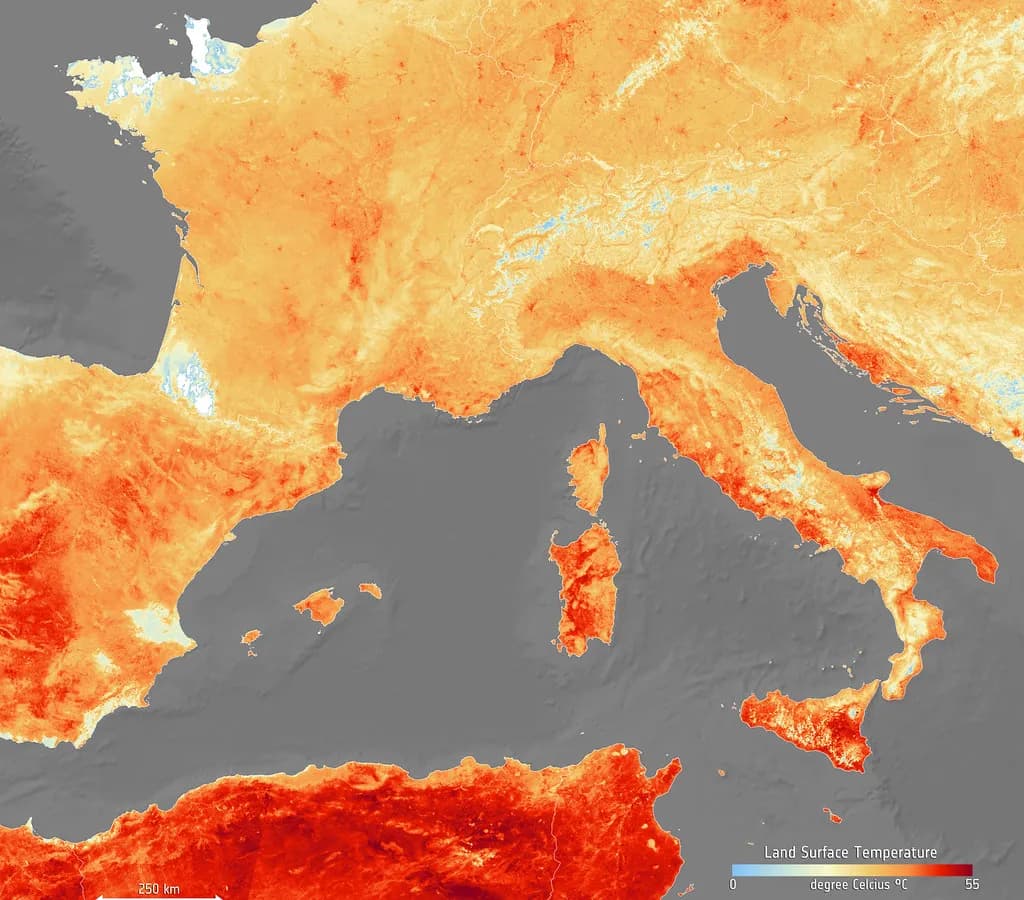
The worst number from France’s June heatwave arrived three weeks after the temperature fell. Between June 17 and July 2, the areas exposed to extreme heat recorded an estimated 5,764 more deaths than expected.
There was no single day when those deaths appeared as one disaster. They arrived in hospital wards, care homes and private houses, often under familiar diagnoses such as heart or respiratory failure. That is what makes heat lethal and politically easy to underestimate: the emergency can be everywhere without producing one visible scene of destruction.
How France counted 5,764 excess deaths
Santé publique France compared all-cause mortality in affected departments with the number expected for the same places and period. Its national release estimates a 36 percent increase during the event, which exposed almost the entire mainland population to historic temperatures.
The total includes deaths from all causes, not only certificates that mention heat. That is a strength and a limitation. Excess mortality captures the cardiovascular, renal and respiratory deaths that heat can trigger or accelerate, but it cannot say that every death above the baseline was caused solely by temperature.
The Associated Press reported that 21,674 people died in the affected regions during the period, against 15,910 expected. The agency described it as the highest excess mortality for a French heatwave since 2003.
Why the first estimates were much lower
Early counts rely on partial electronic death reporting and emergency-service data. They are valuable for managing a crisis but incomplete by design. Death registrations arrive over time, and the relationship between heat and mortality is often clearer only after statisticians compare the full period with historical patterns.
France initially reported a sharp weekly rise while warning that the total would grow. The final all-cause estimate confirms why public-health agencies resist real-time precision. A fast number can guide action. A slower number reveals the scale.
This delay also affects public memory. By the time the fuller toll appears, attention has moved to another fire, storm or political story. Euronews noted that deaths increased across hospitals, homes and residential care, showing the impact was not confined to one overwhelmed setting.
Who is most vulnerable when nights stay hot
Older adults carry the largest risk, especially people with heart, lung or kidney disease and those taking medicines that affect hydration or temperature regulation. Infants, outdoor workers, people without stable housing and residents of top-floor apartments also face dangerous exposure.
Nighttime heat is particularly important because the body loses its chance to recover. Buildings that absorb solar energy through the day can remain hot after outdoor temperatures fall. Fans may offer comfort, but during extreme conditions they do not replace access to a genuinely cooler space and adequate hydration.
Heat advice should remain practical: check vulnerable people, reduce exertion, drink regularly, use shutters and ventilation when conditions permit, and seek urgent medical help for confusion, fainting or severe overheating. Individual behavior, however, cannot compensate for housing that traps heat or work rules that ignore it.
Europe’s adaptation gap is now measurable in lives
A World Weather Attribution analysis of the wider European event describes heat as the continent’s largest weather-related health risk and links the severity of recent extremes to human-caused warming. Attribution science addresses how climate change altered the likelihood or intensity of an event, while mortality surveillance measures the human outcome. Together, they turn a vague warning into a chain of evidence.
France built heat-alert systems after the catastrophe of 2003, and those systems save lives. The new toll shows that alerts alone are no longer enough. Schools, hospitals, care homes, rental housing and workplaces need standards designed for summers that repeatedly exceed the climate their buildings were built to handle.
Urban shade, cool roofs, insulation that works in both seasons, accessible cooling centers and protections for outdoor labor are public-health infrastructure. So are trusted local networks that can reach an isolated resident before a medical emergency begins.
The toll should change how heat warnings work
Mortality statistics arrive after weather alerts because death certificates, baseline comparisons and regional data need time to settle. That delay creates a communications problem. The danger is most visible while temperatures are high, but the scale becomes legible only after public attention has moved on. Health agencies need to explain early counts as provisional signals, then return with the fuller picture instead of allowing the first estimate to become the number everyone remembers.
Warnings also need to describe the accumulation of risk, not simply the afternoon maximum. Several hot nights can leave a body with no chance to recover, while medication, poor housing and social isolation can turn an ordinary task into a medical crisis. Employers, care homes, landlords and municipalities each control part of that exposure. A useful alert therefore has to trigger action: adjusted work, checks on vulnerable residents, accessible cool spaces and transport to reach them. Counting deaths accurately is essential. Designing a response that makes the next count smaller is the real test.
The institutional lesson is continuity. Heat plans should connect forecasts, emergency calls, hospital capacity and later mortality reviews, then publish what changed before the next alert. A warning system earns trust when people can see both the immediate instruction and the evidence used to improve it.
The 5,764 figure will be revised as data mature, and excess deaths should be interpreted carefully. Its central message will not change. Extreme heat is not simply uncomfortable weather. It is a mass-casualty event whose victims disappear into ordinary mortality records unless someone does the slow work of counting them.
Published in The Outspoken Digest
Editorial desk
Outspoken Digest Health DeskMedicine, public health and the research behind the headlines, read carefully.
Newsletter
The Digest, in your inbox
One edition, sent when it is ready. No noise, and your address is never passed on.
Read Next
More Health →
Two Days After the Nobel for Optogenetics, a Small NEJM Trial Shows It Helped Some Blind Patients Detect Objects
Oct 9, 2026/3 min read

WHO Launches a Global Roadmap on Pre-Eclampsia and Pregnancy Hypertension, Tied to 42,000 Maternal Deaths a Year
Oct 8, 2026/3 min read
WHO Says Diet and Exercise Come First and Children Under 10 Should Not Get Weight-Loss Drugs or Surgery
Oct 7, 2026/3 min read
Kenya Confirms Its First Ebola Case, a Man Who Flew In From Uganda After Years in Congo and Died in Nairobi
Oct 6, 2026/3 min read