Fungi Could Turn Hostile Lunar and Martian Soil Into Something Crops Can Actually Grow In
A review of research on beneficial fungi, including species already tested aboard the International Space Station, finds they can relieve the toxic chemistry and nutrient gaps in lunar and Martian regolith that currently make it useless for farming.
Sunday, September 27, 2026/3 min read
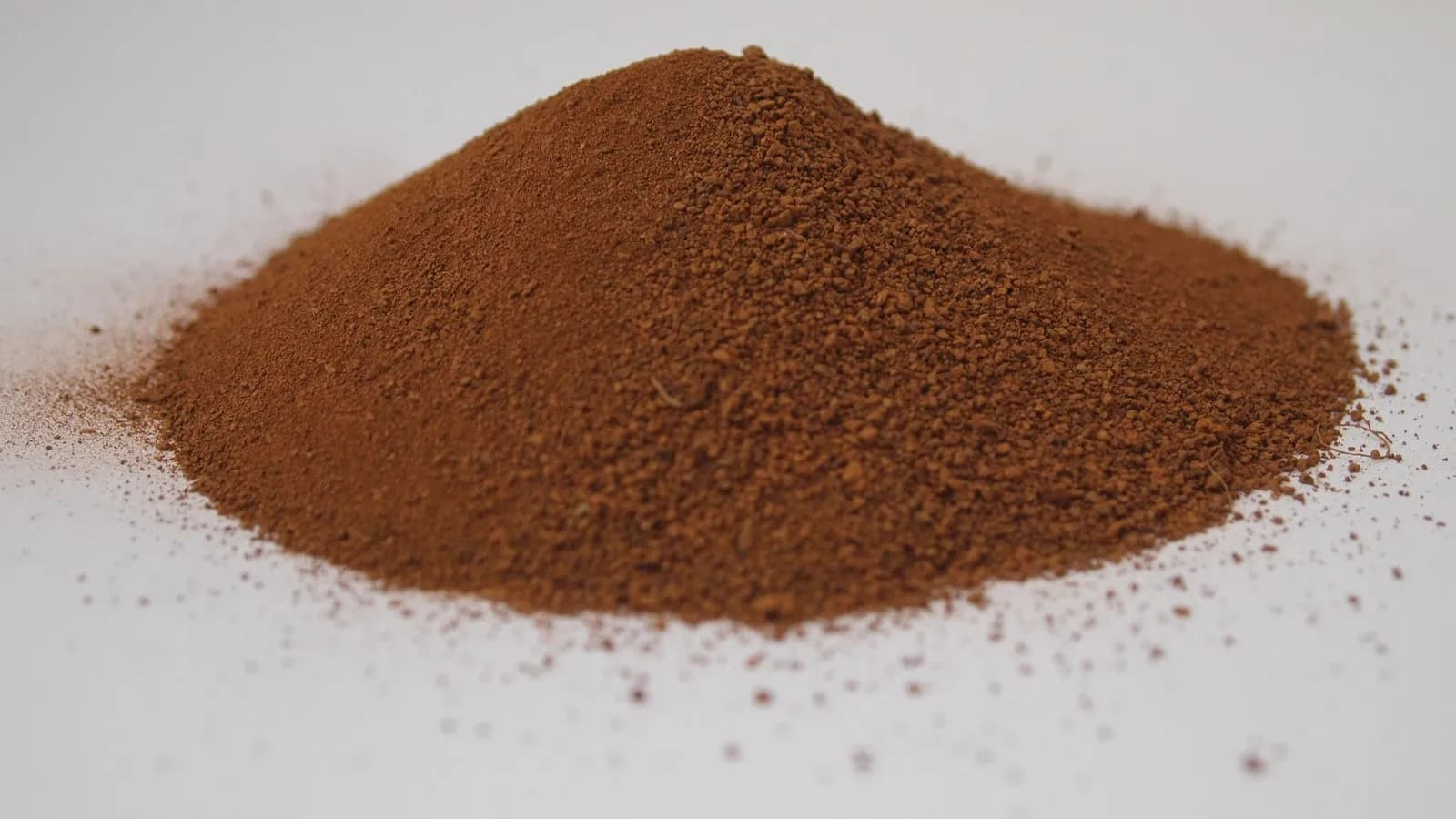
A team of researchers from the United States and Brazil has reviewed the evidence that beneficial fungi could be the missing ingredient in turning lunar and Martian regolith, the loose, mineral dust that covers both worlds, into something resembling soil that crops can actually grow in. The review, by Jessica Carneiro Oliveira, Rafael Loureiro, Andrew Palmer and Camila Maistro Patreze, appeared in Frontiers in Astronomy and Space Sciences on 25 September, with a summary carried by ScienceDaily.
Why regolith is not soil
Regolith is what you get when rock is pulverised by billions of years of micrometeorite impacts and radiation, with none of the organic matter, microbial life or balanced nutrient chemistry that Earth soil accumulates over the same span. The researchers note that both lunar and Martian regolith carry an alkaline pH, toxic concentrations of elements including aluminium, manganese and, on Mars, perchlorates, and only limited amounts of the nitrogen, phosphorus and potassium that plant roots need in usable form. Simply pouring regolith into a planter and adding seed is not a viable path to space agriculture, which is why the review focuses specifically on biological rather than purely chemical fixes.
The fungi already doing this job on Earth
Arbuscular mycorrhizal fungi, a group that has been studied in botany since the mid-19th century, form intimate partnerships with plant roots, effectively acting as microscopic extensions of the root system that reach further into the surrounding material and pull in nutrients the plant alone could not access. The review highlights this group alongside Trichoderma species, both of which have already been shown on Earth to relieve abiotic stress in poor soils and mobilise nutrients that would otherwise stay locked up chemically, and some of these organisms have previously been tested aboard the International Space Station to see how they behave in microgravity.
What the evidence actually shows so far
Drawing on existing simulant studies, the review reports that plants have been successfully established in growing mixtures containing as much as 75 per cent lunar regolith simulant once the fungi were introduced, a proportion that would not support plant growth on its own. That is a meaningful result, but it comes with an important caveat that the authors are careful to state plainly: nearly all of the underlying data comes from regolith simulants manufactured on Earth to approximate lunar or Martian material, not from the real thing, which may behave differently once actual samples are tested at scale.
What still has to happen before this reaches a real mission
The review's authors are explicit that more work is needed with genuine lunar and Martian regolith samples, of which only limited quantities exist on Earth, before fungal inoculation can be treated as a proven strategy for future off-world farming rather than a promising simulant-based finding. Space agencies planning longer-duration lunar and Martian missions have made in-situ food production a stated priority, since resupply missions cannot sustainably carry every calorie astronauts would need for a multi-year stay, and this review adds biological soil engineering to the list of approaches under serious consideration alongside hydroponics and controlled-environment agriculture.
A modest but specific piece of a much larger puzzle
Nobody involved in this research is suggesting fungi alone solve the challenge of growing food on Mars, and the review is careful to frame its contribution as one part of a larger system that would also need controlled lighting, temperature regulation and protection from radiation. What it does establish is a specific, testable mechanism, rather than a general hope, for how the chemistry of an inhospitable substrate might be coaxed toward something closer to arable soil, using biology that already exists and has flown in space before.
Published in The Outspoken Digest
Editorial desk
Outspoken Digest Science DeskReports for The Outspoken Digest across Technology, Latest Trends, Health.
Newsletter
The Digest, in your inbox
One edition, sent when it is ready. No noise, and your address is never passed on.
Read Next
More Technology →
For the First Time, Saudi Team Lynx Takes the Top Spot at the Aramco STEM Racing World Finals in Singapore
Oct 17, 2026/3 min read

Some White Dwarfs Would Look Green, Pink or Purple, Warwick Astronomers Calculate
Oct 15, 2026/2 min read

Oxford Physicists Reproduce the Aharonov-Bohm Effect on a Hybrid Quantum Computer
Oct 15, 2026/2 min read
Japan Will Fund Up to $21 Billion for Two GlobalFoundries Chip Plants in New York
Oct 15, 2026/2 min read