Why the Gulf Economy Held When the Region Didn't
A war that closed the Strait of Hormuz and hit every GCC state should have broken the region's economics. Reserves and diversification kept it standing.
Outspoken Digest Business Desk
Thursday, July 16, 2026/4 min read
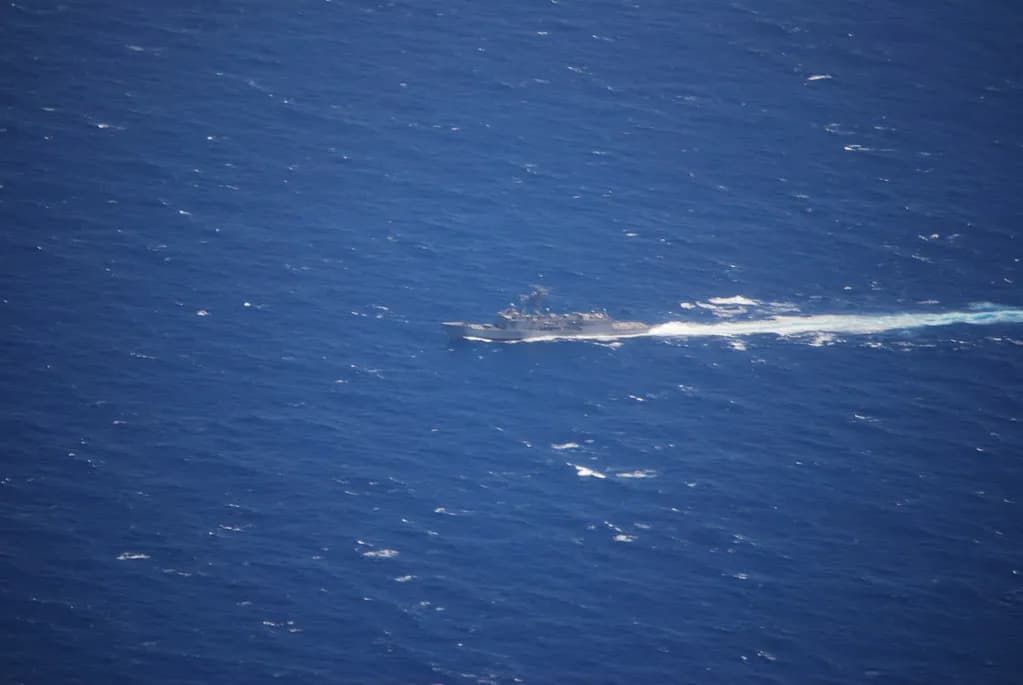
On February 28, the war that Gulf planners had spent years quietly modelling for finally arrived. A US and Israeli assault on Iran, followed within days by Iranian missile and drone strikes on facilities in all six GCC states and the closure of the Strait of Hormuz, was as close to a worst case scenario as the region's economists had on file. Brent crude spiked past $120 a barrel. A fifth of the world's oil and a quarter of its liquefied natural gas briefly stopped moving.
Five months on, the headline economic story is not collapse. It is a bloc that took a real hit, revised its growth forecasts down hard, and kept functioning anyway. That distinction, between damage and breakdown, is the story of the Gulf's 2026.
How big was the hit, really
The numbers are not small. GCC growth has been downgraded by 3.1 percentage points since January, with the bloc's expansion now projected to slow from 4.4 percent in 2025 to roughly 1.3 percent in 2026, according to analysis reported by MEED. Tourism Economics has estimated the regional travel sector alone could see visitor spending fall by $34 billion to $56 billion this year as arrivals drop between 11 and 27 percent.
Oil producers felt an unusual version of the squeeze. Rather than a windfall from higher prices, storage constraints created by the Hormuz closure forced Iraq and Kuwait to curtail production in early March, even as Brent traded well above its pre-war level, a reminder that a blocked strait disrupts the physical business of getting oil to market regardless of what the price is doing.
Why the banks didn't crack
The clearest evidence of resilience sits in the region's banking system. Fitch Ratings found that GCC banks faced few immediate credit risks from the conflict even in the days right after the February 28 attacks, pointing to strong capital buffers, ample liquidity and sovereign backing built up over years of oil-financed reserve accumulation, as detailed by Economy Middle East.
That resilience carries a condition attached rather than a guarantee. Fitch's own analysts have been explicit that the call rests on the ceasefire holding and on no resumption of combat severe enough to permanently damage energy infrastructure, a condition that, as of the most recent assessments, remains genuinely uncertain rather than settled.
What actually cushioned the blow
- Decades of sovereign wealth accumulation gave GCC governments room to keep spending through the shock rather than retrench immediately.
- Non-oil diversification, in logistics, finance, tourism infrastructure and technology, meant the economy was not purely hostage to the strait or the oil price.
- A relatively fast reopening of Hormuz under what analysts have called a quick peace scenario helped avoid the deeper, sustained global energy shock some models had projected.
The reputational cost nobody can fully price
Money is not the only thing at stake. The GCC can likely absorb the direct repair and disruption costs from a conflict of this scale. What is harder to rebuild is a decades-long reputation for stability that underpinned the region's entire pitch to global capital and global travellers, the pitch that turned Dubai and Riyadh into safe alternatives when the rest of the region looked unstable. Analysts covering the aftermath have been blunt that this reputational repair job may prove tougher than any balance sheet repair.
For now, the fundamentals are doing what they were built to do. Reserves are deep, banks are liquid, and growth, while badly bruised, has not gone negative. Whether that holds through a second half of the year that Fitch itself describes as contingent on a ceasefire that isn't yet fully secure is the question the region's central banks are watching most closely.
The oil market that refused to panic
Perhaps the strangest thread in this story is what didn't happen to global energy markets. Forecasters had spent years warning that a genuine Hormuz closure would be catastrophic, a fifth of the world's oil supply gone overnight, prices spiralling without limit. When the closure actually arrived, the market response was more muted than the doomsday modelling suggested. Commentary from energy analysts described the crisis as effectively priced out well before the ceasefire took hold, with a global mini-glut in crude cushioning much of the shock that traders had braced for.
That matters enormously for the GCC's own fiscal position. Producers who might have expected a windfall from a supply shock instead found prices settling faster than expected, meaning the states most exposed to the conflict, and to the disruption of their own export routes, did not get an offsetting price bump large enough to fully compensate for the volume they lost curtailing production in March.
What businesses on the ground are actually doing
- Corporates across the bloc have been building longer cash buffers and diversifying supplier and shipping routes since the conflict, rather than assuming a return to pre-February normal.
- Sovereign wealth funds have continued deploying capital into non-oil sectors through the disruption, a signal meant as much for confidence as for returns.
- Insurers operating in the region have repriced war-risk cover sharply, a cost now embedded in shipping, aviation and even some commercial property contracts.
None of that erases the scale of what the region absorbed this year. But five months after a war that briefly closed one of the world's most important waterways and struck every GCC state at once, the bloc's growth engine is still running, just slower, and its banks are still lending, just more carefully. In a region that spent decades building a reputation for weathering exactly this kind of shock, that may be the closest thing to a headline this economy gets in 2026.
Published in The Outspoken Digest
Editorial desk
Outspoken Digest Business DeskCompanies, markets and the money moving through the region.
Newsletter
The Digest, in your inbox
One edition, sent when it is ready. No noise, and your address is never passed on.
Read Next
More Business →
Nasdaq Falls 1.25% as the FT Puts OpenAI's Annualized Revenue Near $50 Billion, Not $70 Billion
Oct 9, 2026/2 min read
Treasury Yields Hit a 24-Year High, Waller Says More Fed Rises Are Coming, and the 30-Year Auction Clears at 5.618%
Oct 9, 2026/2 min read

Samsung's 107 Trillion Won Quarter Outearned Nvidia, and Its Shares Fell 2.4 Per Cent Anyway
Oct 8, 2026/3 min read
McKesson and CD&R Agree to Take Option Care Health Private in a $5.8 Billion Home Infusion Deal
Oct 7, 2026/2 min read