Just 3% of the World's Glaciers Account for Over Half of Glacier Ice Loss, Study Finds
Glaciers that end in lakes, oceans or ice shelves lost 134 billion tonnes a year from 2000 to 2019, and lake-ending ones lost ice about 57 percent faster for their size.
Friday, October 23, 2026/2 min read
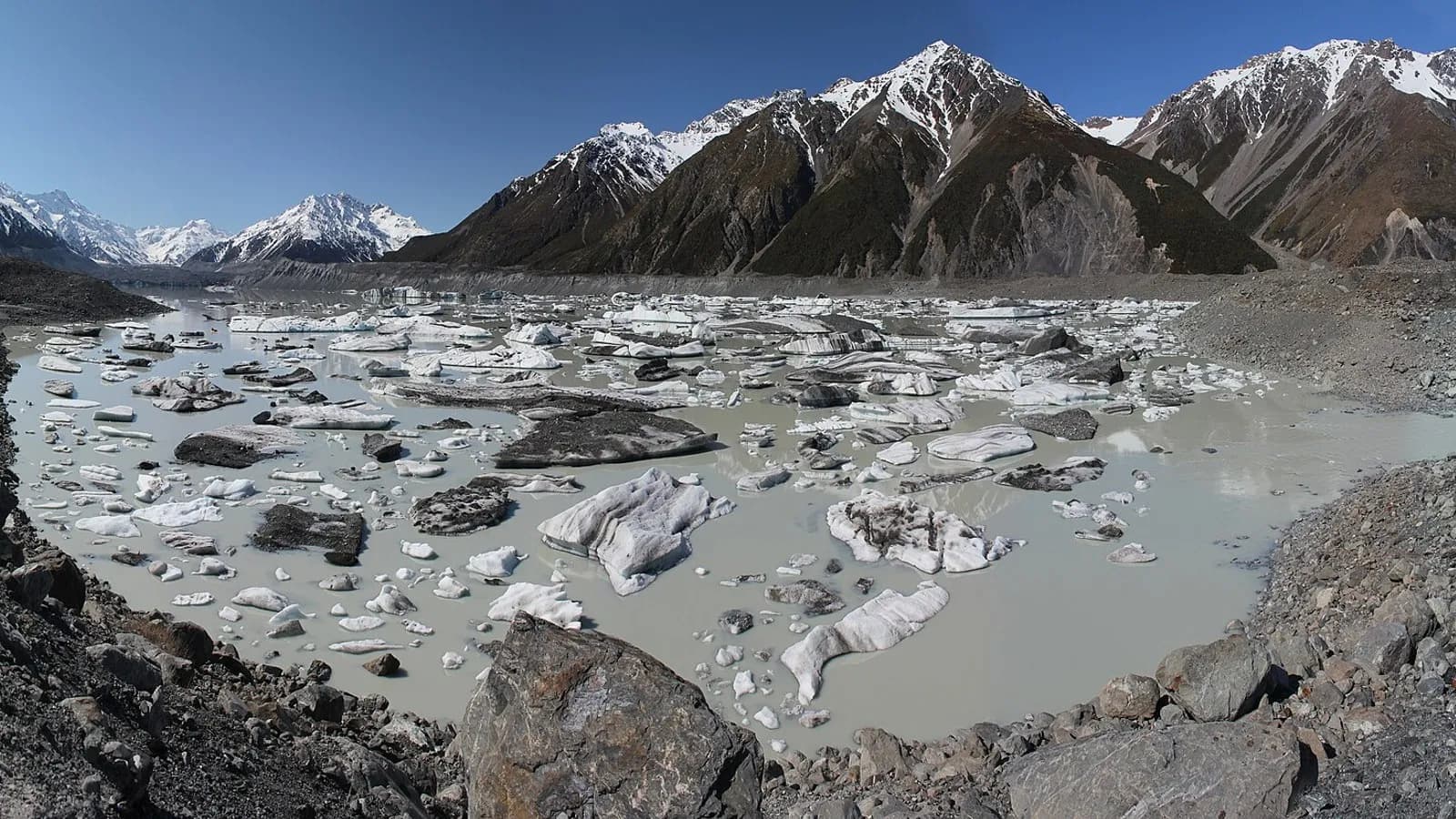
A small minority of glaciers is responsible for most of the ice the world's glaciers lose. Glaciers that end in lakes, oceans or ice shelves make up 3.2 percent of the total, yet they lost 134 billion tonnes of ice a year between 2000 and 2019, more than half of all glacier ice loss, according to a study in Nature Communications reported by Phys.org on 23 October.
The work comes from the University of Birmingham and the University of Leeds. The researchers examined 216,502 glaciers worldwide, excluding the Greenland and Antarctic ice sheets.
What did the researchers compare?
The paper, "Global-scale variability of glacier velocity and mass loss across terminus environments", sorts glaciers by how they end: on land, in a lake, in the ocean or on an ice shelf. It then compares ice flow and ice loss across the four groups, adjusting for climate, glacier size and elevation. Those water-ending glaciers cover more than half of the world's glacier area and tend to be much larger than the land-ending kind, Phys.org reported.
How much faster do lake and ocean glaciers lose ice?
Lake-ending glaciers lost ice about 57 percent faster, relative to their size, than land-ending glaciers. After the adjustments, lake-ending glaciers flowed about 10 percent faster and ocean-ending glaciers about 44 percent faster than land-ending ones. Dr Joe Mallalieu, who did the research at Birmingham and is now at Leeds, said in the university's release: "Glaciers ending in lakes really stand out: they're losing ice particularly quickly."
The reason is not known. Lakes can drive loss through calving, where large chunks break off as icebergs, and lake water can melt ice below the waterline, but Mallalieu said the cause could involve the lakes, the glacier's size and shape, or both.
Why does it matter for sea level and water supplies?
Many glacier models do not fully account for lake-ending glaciers, so the classification could improve projections of sea-level rise, water resources and natural hazards, the researchers say. Glacier lakes are spreading as the climate warms, and some land-ending glaciers are becoming lake-ending, which may speed their loss. Ocean-ending glaciers that retreat onto land may slow down.
The coverage gives no full author list or statistical model, so the details sit in the paper itself. The practical next step is for glacier models to treat terminus type as a variable, and for field work to test why lakes accelerate loss.
Published in The Outspoken Digest
Editorial desk
Outspoken Digest Science DeskReports for The Outspoken Digest across Technology, Latest Trends, Health.
Newsletter
The Digest, in your inbox
One edition, sent when it is ready. No noise, and your address is never passed on.
Read Next
More Technology →
NASA's Dragonfly Flies Its Hardest Titan Manoeuvre, Autonomously, in Its Most Thorough Simulation Yet
Oct 26, 2026/2 min read

Quest Diagnostics Confirms Hackers Reached Patient Records Through Its Quanum Lab Platform
Oct 26, 2026/2 min read

Instacart Is Reportedly Exploring a Sale, With DoorDash and Uber Said to Have Held Talks
Oct 26, 2026/2 min read

NASA Ends the Swift Mission After Nearly 22 Years as Its Orbit Decays and Re-Entry Looms
Oct 25, 2026/2 min read