NASA's Roman Space Telescope Finishes Aligning Its Instruments, With the Coronagraph's 3,000 Moving Parts Next
Engineers have rebuilt the observatory's internal map of where stars should fall, a step that lets its 18-detector camera guide the telescope steadily while the planet-imaging coronagraph works.
Saturday, November 14, 2026/2 min read
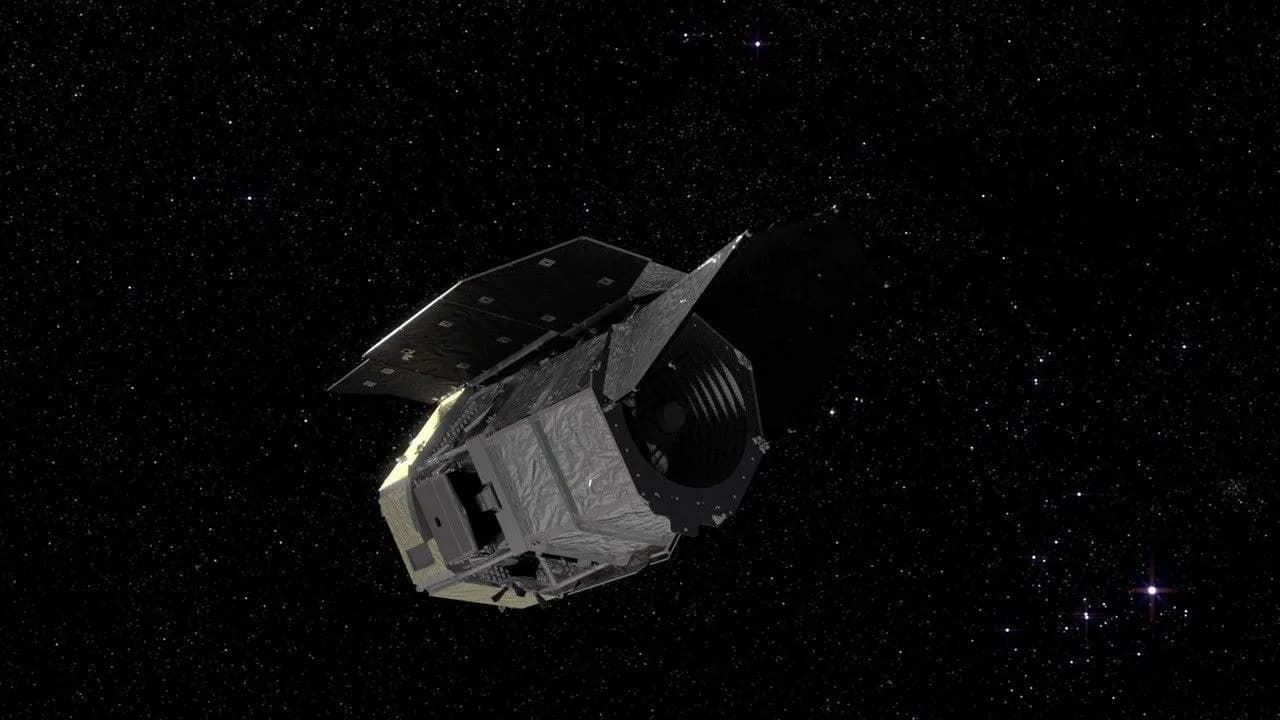
NASA's Nancy Grace Roman Space Telescope has finished aligning its instruments in orbit, the agency said in a mission blog post dated Friday 13 November. It is another step toward science operations for an observatory that has to hold its aim far more steadily than the telescopes that came before it.
The work follows the commissioning milestones this desk covered in October. This latest step is less visible than a first image, but it decides whether the images that follow come out sharp.
Why did Roman's instruments need realigning in space?
According to the NASA Roman blog post, written by Ashley Balzer, the team had aligned the optics and instruments on the ground before launch. In space, vibration at launch, changes in temperature and the loss of gravity can move things by tiny amounts. To find the shifts, scientists ran test observations and compared where stars appeared in images with where they were expected, then updated the observatory's internal map and worked out how to adjust future pointing.
NASA's program scientist, Dominic Benford, said Roman must be "at least ten times more stable than our Hubble or Webb space telescopes."
What does the Wide Field Instrument have to do with guiding?
The Wide Field Instrument has 18 detectors, and NASA says they must agree on guide star positions, because an error in the map would cause guiding problems. Tyler Desjardins of the Space Telescope Science Institute made that point in the post. The instrument is both the main survey camera and the guider: it tracks stars in a neighbouring patch of sky to keep the telescope steady, even while the Coronagraph Instrument is observing.
The wider story is one of better-than-expected optics. ScienceDaily's repost of a NASA release from October says image quality from the camera is nearly 30 percent better than predicted, at 63 nanometres RMS against a pre-launch requirement of about 90, and that Roman launched on 30 August with the camera activated in September.
What happens next with the Roman coronagraph?
For the Coronagraph Instrument, the team adjusted the secondary mirror, which links the telescope to it, along with the instrument's internal masks and optics to sharpen its view, NASA says. Next, engineers will exercise more than 3,000 small moving parts that control its deformable mirrors. Brian Kern of NASA's Jet Propulsion Laboratory said the technology has been shown in a laboratory, but active starlight control in space, using real starlight and planets, will be a first.
Benford noted that long coronagraph stares will also produce bonus deep-field images. The blog post gives no date for first science images, and it points readers to the mission's commissioning page, noting that the previous update, on 22 October, announced Roman's entry into its final commissioning phase. With no timetable published beyond this milestone, the next thing to watch is the coronagraph's mirror tests.
Published in The Outspoken Digest
Editorial desk
Outspoken Digest Science DeskReports for The Outspoken Digest across Technology, Latest Trends, Health.
Newsletter
The Digest, in your inbox
One edition, sent when it is ready. No noise, and your address is never passed on.
Read Next
More Technology →
Nvidia's Board Approached Arm CEO Rene Haas About Succeeding Huang, as Staff Post Calls for His Return
Nov 14, 2026/2 min read

Starship Flight 15: Booster Diverted to the Gulf, Ship Coasts in Orbit Ahead of Saturday's Tower Catch Attempt
Nov 14, 2026/2 min read

Microsoft's Outage Updates Point to Missing Servers and an Overwhelmed Secure-Connection Process
Nov 13, 2026/2 min read
Starship Flight 15 Still Awaits an FAA Licence Before Tonight's 4:45 p.m. CT Window and First Double Catch Attempt
Nov 13, 2026/2 min read