NASA's Roman Space Telescope Enters Final Commissioning as Hubble Maps Lenses for It
Roman has finished its initial checkout and can guide, image and slew, NASA says. On the same day Hubble released a lens image meant to teach astronomers how to read Roman's wide views.
Friday, October 23, 2026/2 min read
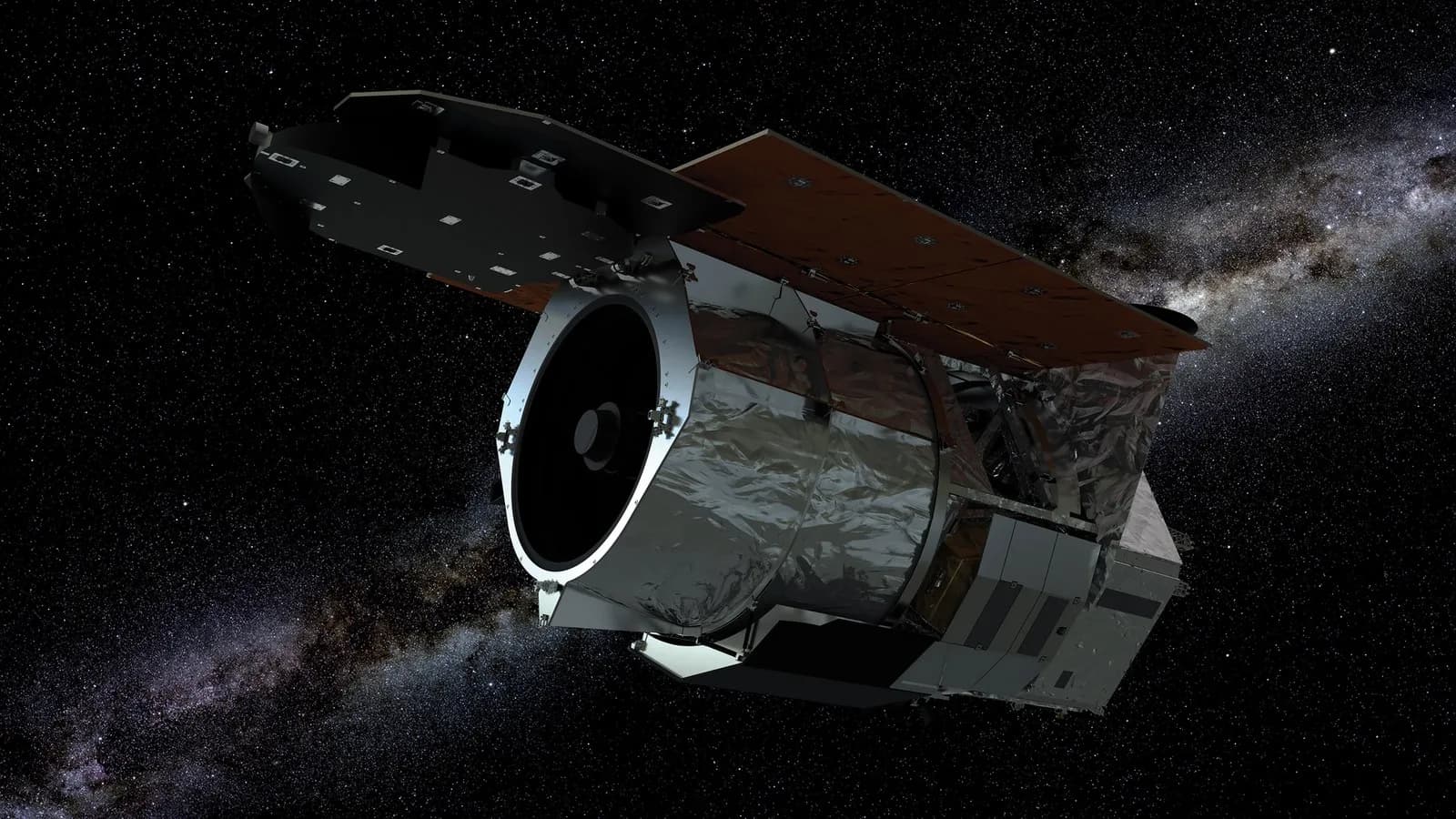
NASA's Nancy Grace Roman Space Telescope has finished its initial checkout and moved into the science commissioning phase, the agency said on 22 October. In its mission blog, NASA describes the observatory as fully functional: it can guide, take exposures, transmit data and slew between targets.
The step matters because it is the last stretch before Roman starts the survey work it was built for. The post gives no date for first images or for the start of science operations.
What has Roman actually done so far?
The team has refined the telescope and its primary instrument, the Wide Field Instrument. Test observations in crowded star fields and dust-obscured nebulae showed the guidance system performing well, which NASA says had been a concern. Some systems are performing better than required, and the agency says that could open new scientific capabilities. In a typical Wide Field Instrument observation, NASA says, Roman can detect objects about 100 million times fainter than the human eye can see.
More test observations are planned to characterise performance, calibrate the instrument's response and refine image quality before the observatory moves to science operations.
Why did Hubble image a gravitational lens the same day?
NASA's Goddard Space Flight Center published a Hubble image of a gravitational lens, DESI J194.5345+03.5358, as part of observations meant to prepare for Roman. A reddish elliptical galaxy about 4.5 billion light-years away bends the light of a blue galaxy roughly 8 billion light-years away into an arc and a smaller, flipped counter-image. The lens pulls harder than its visible matter can explain, so the distortion lets researchers estimate how much of the foreground galaxy is dark matter.
The pairing is deliberate. Hubble gives sharp, high-resolution views of single objects but can study one lens at a time. Roman has a much wider field of view and should find a far larger sample. Astronomers are building a computer model from Hubble's images to analyse dark-matter distortions, which will help interpret Roman's wide images, and Hubble will follow up interesting lenses Roman detects.
What comes next for Roman?
The coming weeks are about calibration rather than headlines: more test fields, instrument characterisation and image-quality work. NASA's post points readers to its commissioning page for updates. Until the agency names a start date, the signal to watch is the first set of full-field images, which will show whether the guidance performance NASA describes holds across the wide field.
Published in The Outspoken Digest
Editorial desk
Outspoken Digest Science DeskReports for The Outspoken Digest across Technology, Latest Trends, Health.
Newsletter
The Digest, in your inbox
One edition, sent when it is ready. No noise, and your address is never passed on.
Read Next
More Technology →
NASA's Dragonfly Flies Its Hardest Titan Manoeuvre, Autonomously, in Its Most Thorough Simulation Yet
Oct 26, 2026/2 min read

Quest Diagnostics Confirms Hackers Reached Patient Records Through Its Quanum Lab Platform
Oct 26, 2026/2 min read

Instacart Is Reportedly Exploring a Sale, With DoorDash and Uber Said to Have Held Talks
Oct 26, 2026/2 min read

NASA Ends the Swift Mission After Nearly 22 Years as Its Orbit Decays and Re-Entry Looms
Oct 25, 2026/2 min read