Global Road Deaths Fell 21%, but the Map Is Unequal
WHO’s new figures show real progress despite a billion more vehicles, while poorer countries and vulnerable road users remain on the wrong side of the decline.
Wednesday, July 22, 2026/4 min read
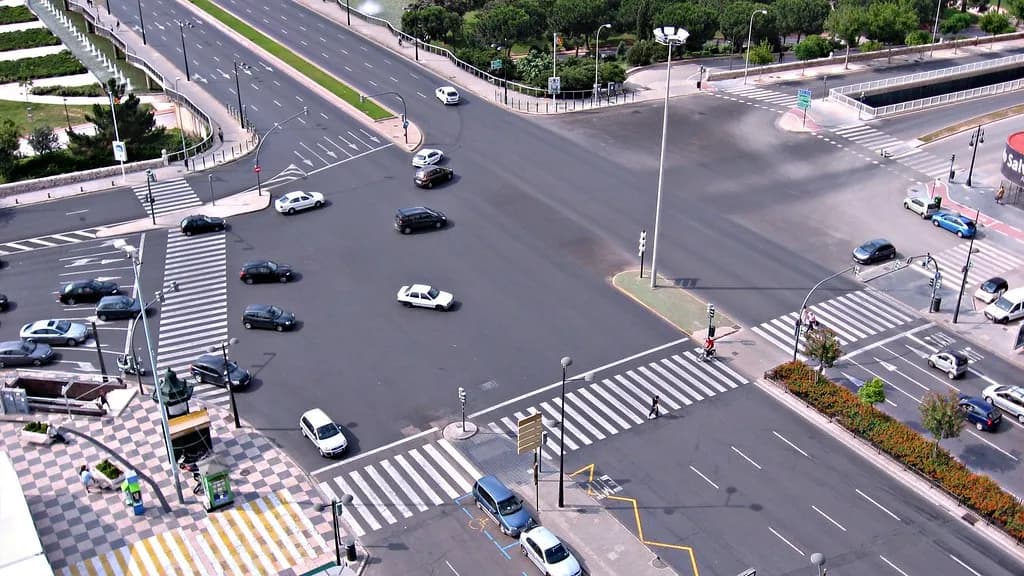
The world added more than a billion motor vehicles to its roads, yet the rate of people dying on them moved in the opposite direction. New World Health Organization figures show a 21 percent decline in the global road-traffic death rate between 2011 and 2025.
That is meaningful progress, not a statistical consolation. It means safer cars, stronger laws, better roads and emergency care are working in many places. It also hides a brutal divide. More than 1.1 million people still died in crashes last year, and the gains are distributed least evenly where the burden is greatest.
What the 21 percent decline actually measures
WHO’s new global update compares the rate of traffic deaths over fourteen years, a period of rapid motorization. Looking at the rate rather than only the raw count matters because the world’s population and vehicle fleet both grew.
A separate study in The Lancet Public Health examined a longer period and found global rates of road injuries and deaths fell by more than 30 percent from 1990 to 2023. The Associated Press reported that the direction was not shared equally. Pedestrian and vehicle-occupant deaths rose in several countries, and about 90 percent of road deaths occur in low-income countries.
The global average therefore describes two realities. Wealthier countries have spent decades installing safer road design, enforcing restraints and improving vehicle crash protection. Rapidly growing cities elsewhere have often added traffic faster than sidewalks, crossings, emergency care and enforcement could develop.
Why young people still carry the heaviest cost
Road collisions remain the leading cause of death for people aged five to 29, according to WHO. That fact separates road safety from a narrow transport debate. It is a child-health, education and economic-development issue, removing people during the decades when families and communities have invested most heavily in their future.
The victims are not only drivers. Pedestrians, cyclists, motorcyclists and passengers face risks created by speed, road design and vehicle size. WHO’s road-injury fact sheet emphasizes a Safe System approach, which assumes humans will make mistakes and designs the environment so those mistakes do not become fatal.
That approach changes the question. Instead of asking only who caused a crash, it asks whether the speed was survivable, whether a crossing existed, whether a helmet or seatbelt law was enforced and whether trauma care arrived quickly enough.
The inequality built into the road
Safer vehicles often reach richer markets first. Well-designed roads cost money, as do inspections, enforcement and ambulance networks. In lower-income countries, motorcycles and informal public transport may expand because they are affordable, while safe pedestrian space remains limited.
The result is a mobility paradox. Roads intended to connect people to jobs, schools and health services can impose their largest health cost on those with the fewest alternatives. A highway can shorten a car commute while making a child’s walk to school more dangerous.
National averages can conceal inequality within cities too. Low-income neighborhoods are more likely to border high-speed roads and less likely to have protected crossings, lighting or traffic calming. Better data needs to show not only that deaths fell, but whose deaths did.
Can the world halve road deaths by 2030?
The United Nations target is a 50 percent reduction in deaths and injuries by 2030. The high-level meeting in New York that accompanied the new figures focused on accelerating commitments toward that goal. With only a few years left, a 21 percent rate decline since 2011 shows the tools work but the pace remains insufficient.
The effective measures are not mysterious. Lower urban speeds, safe walking and cycling networks, quality helmets, seatbelts and child restraints, tougher impaired-driving rules, safer vehicles and fast post-crash care all have evidence behind them. The difficulty is political priority, funding and enforcement sustained after a campaign ends.
There is also a temptation to treat increasingly automated vehicles as the future solution while neglecting basic infrastructure now. Driver assistance may reduce some crashes, but technology inside expensive cars cannot build a crossing, regulate a bus fleet or protect a motorcyclist from an unsafe junction.
The next gains must come from ordinary streets
The most effective road-safety work often looks unglamorous: a median that prevents a head-on collision, a speed limit that matches the street, a footpath that continues through a junction, a helmet standard that is enforced, or trauma care that reaches a rural crash quickly. These measures share one idea. A mistake should not carry a death sentence, and the transport system should absorb predictable human error.
That approach also changes accountability. Education campaigns can help, but telling people to be careful cannot compensate for roads designed around speed or vehicles sold without basic protection. Governments need reliable crash data, transparent targets and budgets that prioritize the users facing the greatest risk. The global decline shows the direction is possible. Closing the remaining gap will depend on making safe design routine in places where walking, motorcycles and informal transport are everyday necessities rather than marginal modes.
Financing should follow that principle. Donor programs and transport loans can require safety audits before construction, then publish results after roads open. If a project increases speed without protecting people who cross or ride beside it, economic development has simply moved the risk onto those with the fewest choices.
The new number deserves recognition because fatalism is dangerous. Road deaths are not the inevitable price of movement, and the decline proves policy can prevent them. The next measure of success must be whether the places currently left behind begin falling faster than the global average.
Published in The Outspoken Digest
Editorial desk
Outspoken Digest Health DeskMedicine, public health and the research behind the headlines, read carefully.
Newsletter
The Digest, in your inbox
One edition, sent when it is ready. No noise, and your address is never passed on.
Read Next
More Health →
Two Days After the Nobel for Optogenetics, a Small NEJM Trial Shows It Helped Some Blind Patients Detect Objects
Oct 9, 2026/3 min read

WHO Launches a Global Roadmap on Pre-Eclampsia and Pregnancy Hypertension, Tied to 42,000 Maternal Deaths a Year
Oct 8, 2026/3 min read
WHO Says Diet and Exercise Come First and Children Under 10 Should Not Get Weight-Loss Drugs or Surgery
Oct 7, 2026/3 min read
Kenya Confirms Its First Ebola Case, a Man Who Flew In From Uganda After Years in Congo and Died in Nairobi
Oct 6, 2026/3 min read