The Mice Kept Eating Less and Put the Weight Back On Anyway. That Is the Interesting Part.
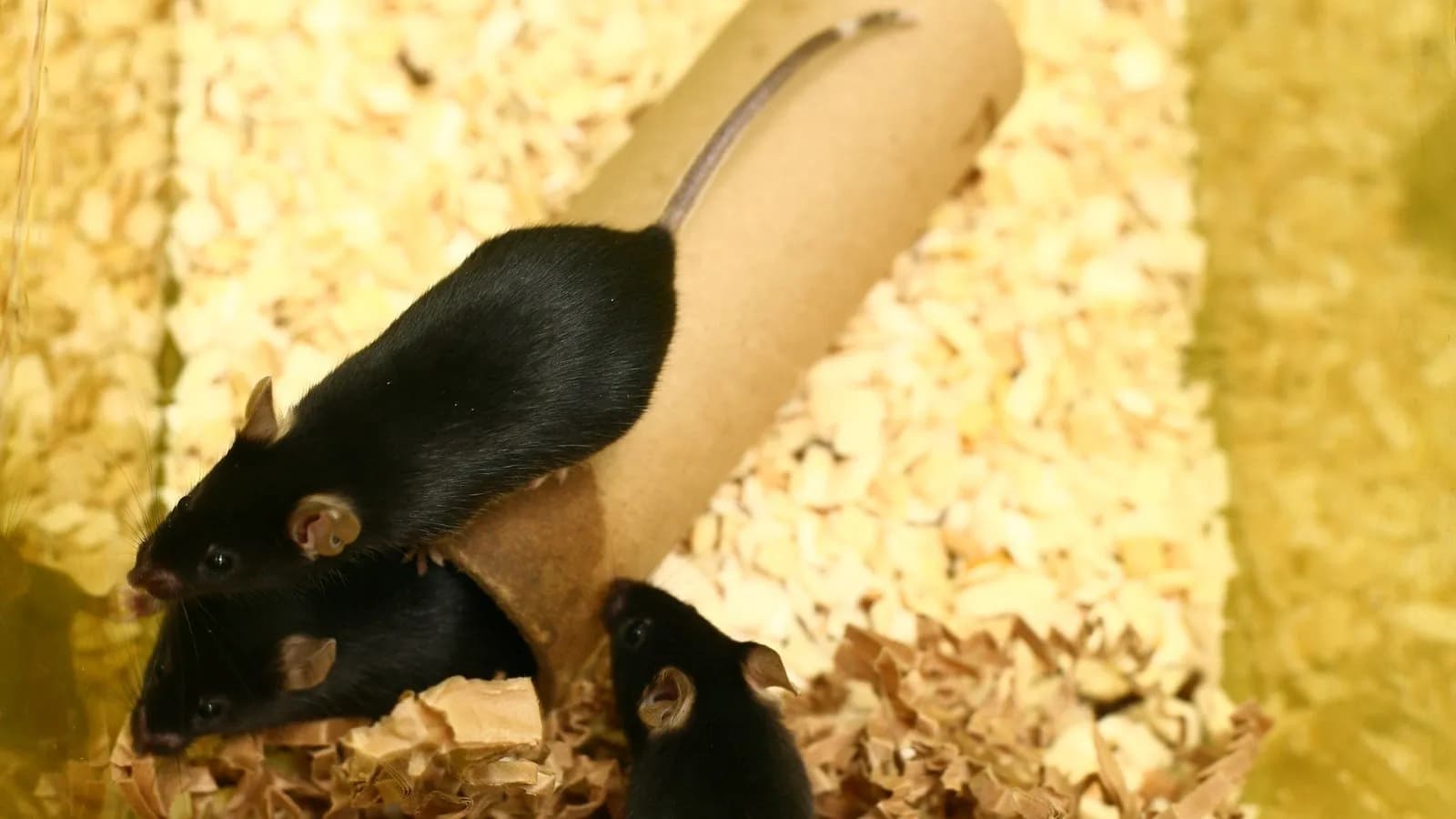
A Yale study found semaglutide switches the brain's hunger neurons on rather than off, and that those neurons are required for fat loss to last. Remove them and the mice ate just as little and regained the weight within fifteen days.
Outspoken Digest Nutrition Desk
Tuesday, August 25, 2026/4 min read
The standard account of how semaglutide works is short enough to fit on a pharmacy leaflet. The drug acts on appetite. You eat less. You lose weight.
A study from Tamas Horvath's laboratory at Yale, published in the Proceedings of the National Academy of Sciences on 10 August, suggests that account is missing the half which explains why these drugs succeeded where forty years of appetite suppressants failed.
What were they expecting to find?
Silence, in a specific set of cells.
Deep in the hypothalamus sit AgRP neurons, known in the literature as hunger neurons. Activate them in a well fed mouse and it eats. Suppress them and it does not. If a drug reduces appetite, the obvious prediction is that it is turning these cells down.
Using electrophysiology, molecular analysis and electron microscopy, the team found the opposite. Under prolonged semaglutide treatment the AgRP neurons became more active, not less.
How can hunger neurons fire harder while the animal eats less?
Because the brain is responding to the calorie deficit rather than creating it.
The reading the authors favour is that GLP-1 treatment produces a shortfall by some other route, and the hunger circuitry then ramps up in response to that shortfall, in the way it would during any period of under eating. The cells are reacting to the deficit, not causing the reduced intake.
What makes this more than a technical footnote is what those activated neurons then appear to do.
The experiment that carries the paper
The team removed the neurons and watched what the drug could still achieve without them.
In mice engineered to lack AgRP neurons, or in which those neurons were silenced, semaglutide could no longer sustain weight loss. The animals regained what they had lost inside fifteen days.
Here is the part worth reading twice. Those mice were still eating less. In some cases they ate slightly less than the comparison animals. The appetite effect was intact. The fat loss was not.
That separates two things usually treated as one. Eating less is not the same as losing fat, and in this experiment the drug needed the hunger neurons for the second even though it did not need them for the first. The implication is that these neurons help coordinate the metabolic side of the response, the mobilisation of stored fat, rather than merely governing the mouth.
Does this contradict the earlier work?
It contradicts a reasonable reading of it, and the reconciliation is the most useful thing in the story.
A 2025 mouse study found that fast acting GLP-1 drugs rapidly inhibited AgRP neurons, and that stronger inhibition went with a bigger drop in food intake. That is the opposite direction of travel.
Both can be true because they are measuring different clocks. The earlier work looked at the immediate appetite response, over hours. This one looked at prolonged treatment and at fat, over weeks. A circuit knocked down on day one and recruited by week six is not a contradiction, it is a sequence, and nobody had looked for the second phase because the first already explained the thing everyone was measuring.
What it does not show
That any of this happens in a person.
The work was done in mice, and in female mice specifically. Mouse energy metabolism is not human energy metabolism, the doses are not human doses, and the history of obesity research is substantially a history of mechanisms that were beautiful in rodents and absent in people. The authors say plainly that further research is needed before the finding can be translated.
It also does not change anything a patient should do this week. Nobody should read a mouse study as a reason to start, stop or alter a prescription, and the practical questions around these drugs remain the ones we have covered before: what happens to lean mass while the weight comes off, and what the evidence says about regain after stopping.
Why it matters anyway
Because it offers an answer to a question the field has been quietly embarrassed by for two years.
Older appetite suppressants blunted hunger perfectly well. They did not produce anything like this degree of durable fat loss, and the difference has never been properly explained by the appetite story alone. If GLP-1 drugs are also recruiting a metabolic response, and if that response is what makes the loss stick, then the gap between the old drugs and the new ones stops being mysterious.
It also complicates the shorthand that has attached itself to this class, which is that they simply make you eat less. If the mechanism is partly about what the body does with fat, the popular framing is not merely incomplete, it is pointed at the wrong organ. We set out the underlying pharmacology in how GLP-1 receptor agonists work, and the finding sits alongside a point we keep returning to, that the speed of weight loss is not evidence of anything.
Published in The Outspoken Digest
Editorial desk
Outspoken Digest Nutrition DeskDiet, food science and the evidence behind claims about what we eat.
Newsletter
The Digest, in your inbox
One edition, sent when it is ready. No noise, and your address is never passed on.
Read Next
More Nutrition →
Older Adults Who Ate Four or More Ultra-Processed Servings a Day Had More Depressive Symptoms
Oct 22, 2026/2 min read

Each Extra Daily Serving of Fruit Was Linked to 13 Percent Lower Risk of Teen Depression Symptoms
Oct 21, 2026/2 min read
Small Pilot Trial Finds Meals or an App Slowed Weight Regain After People Stopped GLP-1 Drugs
Oct 15, 2026/2 min read

Potassium-Rich DASH Diet Did Not Raise Blood Potassium to Unsafe Levels in Adults on Blood Pressure Drugs
Oct 13, 2026/2 min read