Gluten-Free Za'atar Flatbread That Actually Bends
Most gluten-free flatbread cracks the moment you fold it. Psyllium husk is the fix: it does the job gluten did, holding gas and staying pliable, and it costs almost nothing.
Sunday, August 9, 2026/3 min read
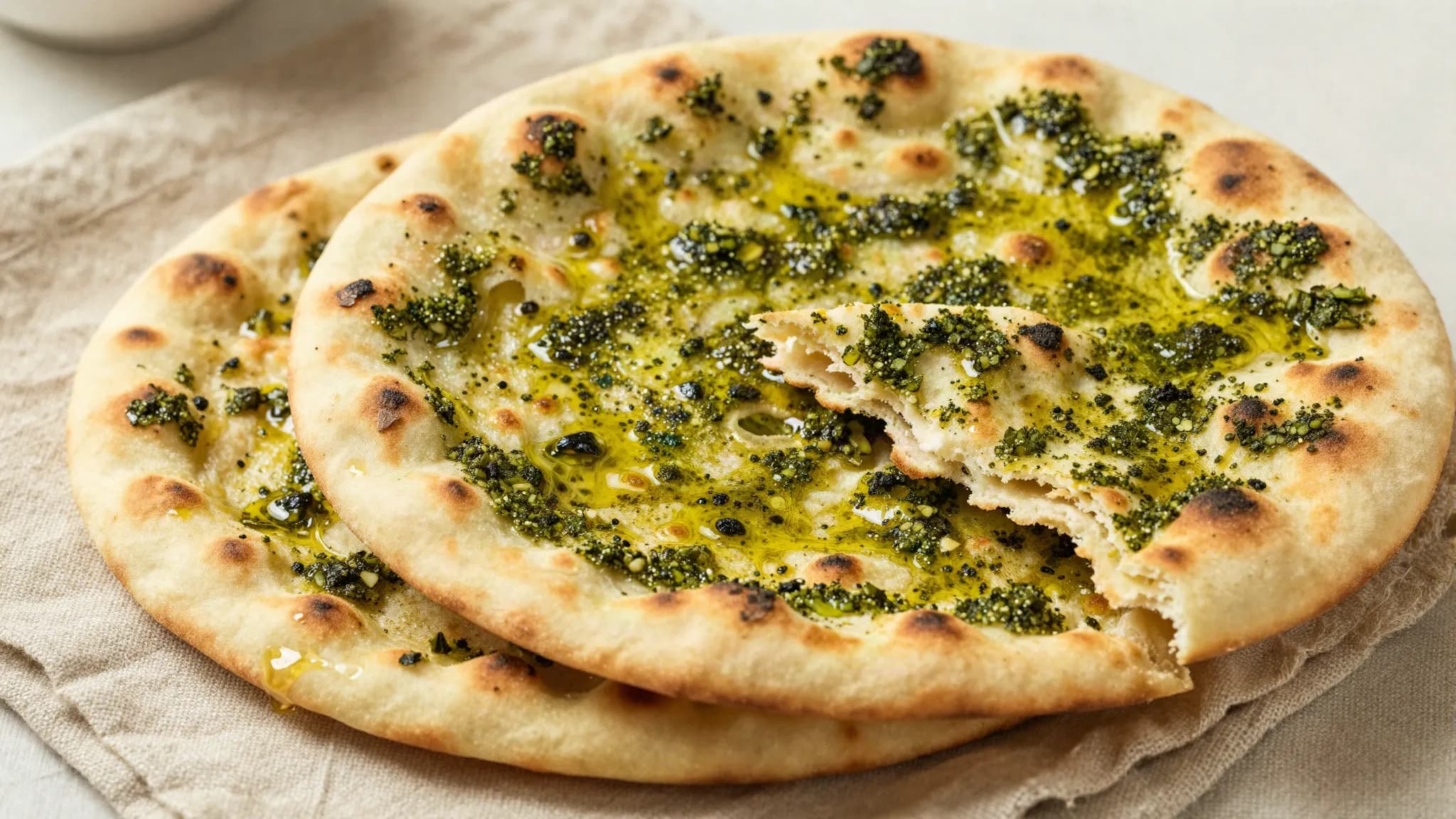
The problem with gluten-free flatbread is not flavour. It is that the thing snaps when you fold it, which for a bread whose entire purpose is wrapping and scooping makes it useless.
Gluten does two jobs in a dough: it forms an elastic network that traps gas, and it keeps the crumb flexible once baked. Remove it and starch alone gives you a cracker.
Psyllium husk replaces most of that. It is a soluble fibre that forms a gel, and the gel behaves enough like gluten to hold a dough together, let it stretch, and keep it bendable the next day. It is the single ingredient that makes this work, and there is no good substitute for it here.
Ingredients
Makes six flatbreads.
- 20 g whole psyllium husk (not powder, or use 15 g if powder is all you have)
- 300 ml warm water
- 200 g gluten-free plain flour blend
- 60 g tapioca starch
- 1 teaspoon fine salt
- 1 teaspoon caster sugar
- 7 g instant yeast
- 2 tablespoons olive oil, plus more for the tray
For the topping:
- 6 tablespoons za'atar
- 6 tablespoons good olive oil
- A pinch of salt
Method
1. Make the gel first
Whisk the psyllium into the warm water and leave it for five minutes. It will thicken to something like a loose jelly. This step is not optional and it cannot be rushed by mixing everything at once, because dry psyllium in a dough forms lumps that never hydrate.
2. Bring the dough together
Combine the flour blend, tapioca starch, salt, sugar and yeast in a bowl. Add the psyllium gel and the olive oil, then mix with a spatula until it forms a shaggy mass.
Knead in the bowl for two minutes. It will be tacky rather than stretchy and it will not develop the way wheat dough does. That is expected. Do not add flour to fix the tackiness; you will get a dry bread.
3. Prove
Cover and leave somewhere warm for about an hour. Gluten-free dough rises less dramatically than wheat, so look for noticeably puffed rather than doubled.
4. Shape
Divide into six. Working with wet hands, flatten each piece on a lightly oiled sheet of baking paper to a round about half a centimetre thick.
Wet hands are the trick. Floured hands drag the surface and tear it; wet ones glide.
5. Bake hot
Heat the oven to 240C with a baking tray or stone inside. Slide the breads on, paper and all, and bake for eight to ten minutes until puffed and just colouring at the edges.
Do not bake them to golden brown all over. Gluten-free bread dries out fast, and the difference between pliable and brittle is about ninety seconds.
6. Top
Stir the za'atar into the olive oil to a loose paste. Spread over the hot breads as they come out, so the oil soaks in rather than sitting on top.
For a manakish-style version, spread the za'atar oil on the raw dough before baking instead, and take a minute off the time.
Notes
Store wrapped in a clean cloth inside a bag, not in the open air. Reheat in a dry pan for thirty seconds a side and they come back almost completely.
Flour blends vary a great deal in how much water they absorb. If the dough is unworkably wet, add tapioca starch a tablespoon at a time rather than more of the blend.
A note on who this is for. If you avoid gluten by choice, any blend works. If you have coeliac disease, the blend, the oats if you add any, and the za'atar all need to be certified gluten free, because cross-contamination in milling and in spice blending is real. Coeliac disease is an autoimmune condition rather than an intolerance, and the distinction matters for how strict you have to be: we set out the difference between coeliac, wheat allergy and gluten sensitivity here.
One practical warning worth repeating: if you have not been tested and suspect coeliac disease, do not remove gluten first. The test only works while you are still eating it. And if wheat is fine for you but bread still causes bloating, the trigger may be fructans rather than gluten, which points at the low FODMAP approach instead.
Published in The Outspoken Digest
Editorial desk
Outspoken Digest Food DeskCooking, ingredients, restaurants and the economics of what ends up on the table.
Newsletter
The Digest, in your inbox
One edition, sent when it is ready. No noise, and your address is never passed on.
Read Next
More Recipes →
Swangy Tamarind Glazed Chicken Wings for the Flavour Replacing Swicy on Fast Food Menus
Sep 29, 2026/3 min read

Baked Apple Cider Doughnuts for a Cider Season That Peaked Earlier Than the Calendar Says
Sep 29, 2026/3 min read
An Obatzda Bavarian Beer Cheese Dip for the Final Stretch of Oktoberfest 2026
Sep 29, 2026/3 min read