Why Gulf Diners Are Eating Differently This Year
Boycotts, tighter budgets and a longer war are reshaping where GCC consumers eat, and Western fast food chains are the ones feeling it hardest.
Outspoken Digest Business Desk
Tuesday, September 10, 2024/4 min read
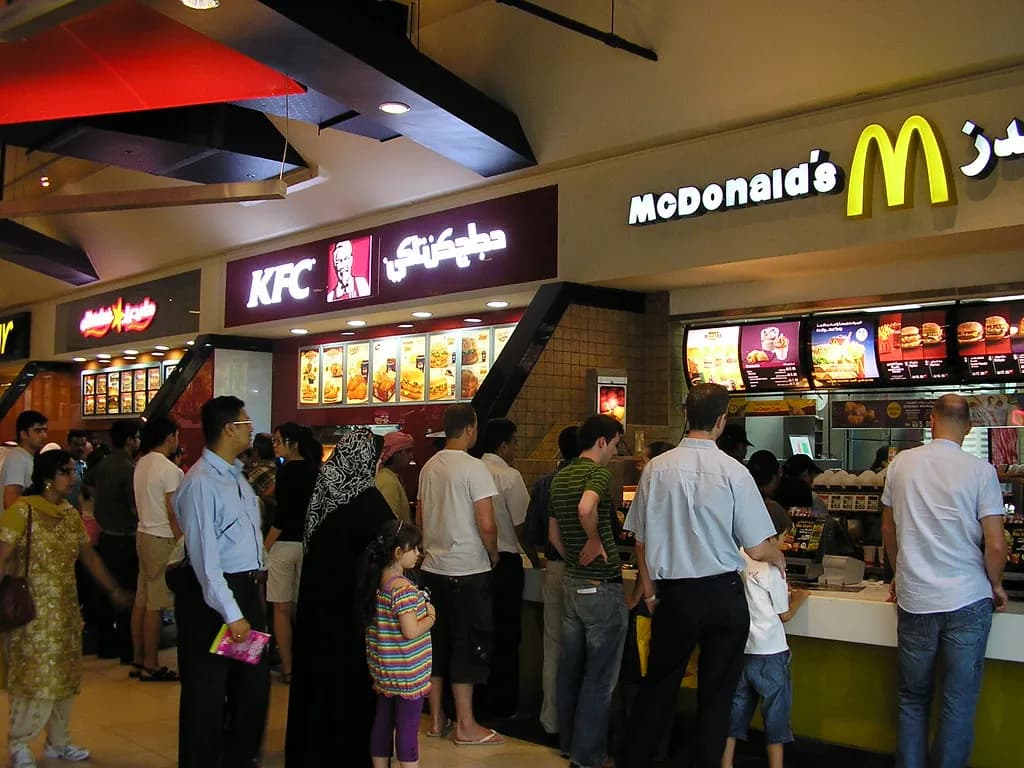
Walk into a mall food court in Dubai or Riyadh this year and the crowd looks the same as ever. Look closer at what's on the trays and something has shifted. The counters at the homegrown burger and juice chains are busier than they were twelve months ago. The queues at some of the familiar American logos are noticeably shorter.
Almost a year into the war in Gaza, its economic echo inside the Gulf's own food courts has become one of the clearer consumer stories of 2024. This isn't a boycott of the region by outsiders, the kind that hits tourism numbers. It's a shift happening from within, GCC consumers voting with their spend against brands they associate with the conflict.
What the earnings reports are showing
Majid Al Futtaim, the Dubai conglomerate that operates Carrefour and a string of malls and cinemas across the region, reported retail sector profits falling by nearly half in the first half of 2024, according to its own semi-annual disclosures covered by Gulf News. The company pointed directly at declining consumer confidence tied to the geopolitical conflict in the region as a factor behind the drop.
Bloomberg reported in March that the retail arm's business had been hurt specifically by the fallout from the Gaza war, with the group's Carrefour operations among the most exposed given the brand's visibility and, fairly or not, its association in boycott campaigns with companies seen as linked to Israel.
The fast food chains taking the direct hit
The pressure has been sharpest for global quick-service brands. Alshaya Group, the Kuwait-based franchisee that runs Starbucks across much of the Middle East, cut roughly 2,000 jobs at its restaurants in the region, citing what it called continually challenging trading conditions over the prior six months, according to CBS News. That is not a company quietly absorbing a soft quarter. That is a company restructuring around a boycott it expects to outlast the news cycle.
Coverage from AGBI found homegrown UAE food brands actively picking up share as diners steer away from chains carrying Western, and specifically American, branding, a reversal of a pattern that has favoured international franchises in the Gulf for decades.
Where the money is actually going
- Local and regional burger, juice and cafe chains are reporting stronger footfall where international rivals are softening.
- Grocery spend has shifted toward retailers and private-label products seen as regionally owned rather than multinational.
- Some multinational operators are quietly adjusting marketing and even signage to distance themselves from perceived political associations.
Is this a blip or a structural shift
Boycott movements tied to prior Middle East conflicts have historically faded once the news cycle moved on, and there is no guarantee this one behaves differently. But the scale of the layoffs at a franchisee as large as Alshaya suggests operators are not betting on a quick reversal. They are restructuring cost bases for a leaner year, which is its own kind of evidence about how long they expect consumer sentiment to stay this way.
For homegrown Gulf F&B brands, the war has handed an unplanned opening. Whether they can convert a year of boycott-driven trial into lasting loyalty, once the political charge around the choice fades, is the question that will determine whether this shift outlives the conflict that caused it.
How brands are quietly repositioning
Some multinational operators are responding by leaning harder into local identity rather than fighting the sentiment directly, emphasising regional ownership structures, local sourcing and community initiatives in their marketing in a way that would have felt unnecessary two years ago. Franchise groups that hold the regional rights to global brands, rather than the brands' head offices abroad, are the ones absorbing most of this reputational work, caught between a boycott campaign they cannot control and a global brand identity they cannot easily separate from.
Social media has accelerated the whole dynamic. Lists of boycotted brands and their local alternatives circulate widely across the Gulf's most active platforms, turning what might once have been a slow, word-of-mouth shift in consumer habits into something closer to real-time market share tracking, visible to operators on both sides within days rather than fiscal quarters.
What the delivery data hints at
Even as dine-in visits shift between brands, delivery volumes across the UAE have kept climbing through the year, a sign that overall appetite for restaurant food has not collapsed so much as redirected. That distinction matters for how operators plan the rest of 2024: this looks less like a broad pullback in dining spend and more like a targeted reallocation of it, away from specific brands and toward others, with the overall size of the market holding up reasonably well underneath the shift.
Whichever way the political situation moves from here, F&B operators across the Gulf now have a full year of data on how quickly their customers are willing to switch loyalties when a cause feels personal, a lesson that is likely to outlast the conflict that taught it.
Published in The Outspoken Digest
Editorial desk
Outspoken Digest Business DeskCompanies, markets and the money moving through the region.
Newsletter
The Digest, in your inbox
One edition, sent when it is ready. No noise, and your address is never passed on.
Read Next
More Business →
Nasdaq Falls 1.25% as the FT Puts OpenAI's Annualized Revenue Near $50 Billion, Not $70 Billion
Oct 9, 2026/2 min read
Treasury Yields Hit a 24-Year High, Waller Says More Fed Rises Are Coming, and the 30-Year Auction Clears at 5.618%
Oct 9, 2026/2 min read
Samsung's 107 Trillion Won Quarter Outearned Nvidia, and Its Shares Fell 2.4 Per Cent Anyway
Oct 8, 2026/3 min read

McKesson and CD&R Agree to Take Option Care Health Private in a $5.8 Billion Home Infusion Deal
Oct 7, 2026/2 min read