Robert Hall and Michael Woodford Win the Nobel Prize in Economics for Models That Steady Economies
Two American economists who modelled how households and firms form expectations took the 2026 economics Nobel, as central banks face an energy shock and a debate over how much to say.
Monday, October 12, 2026/2 min read
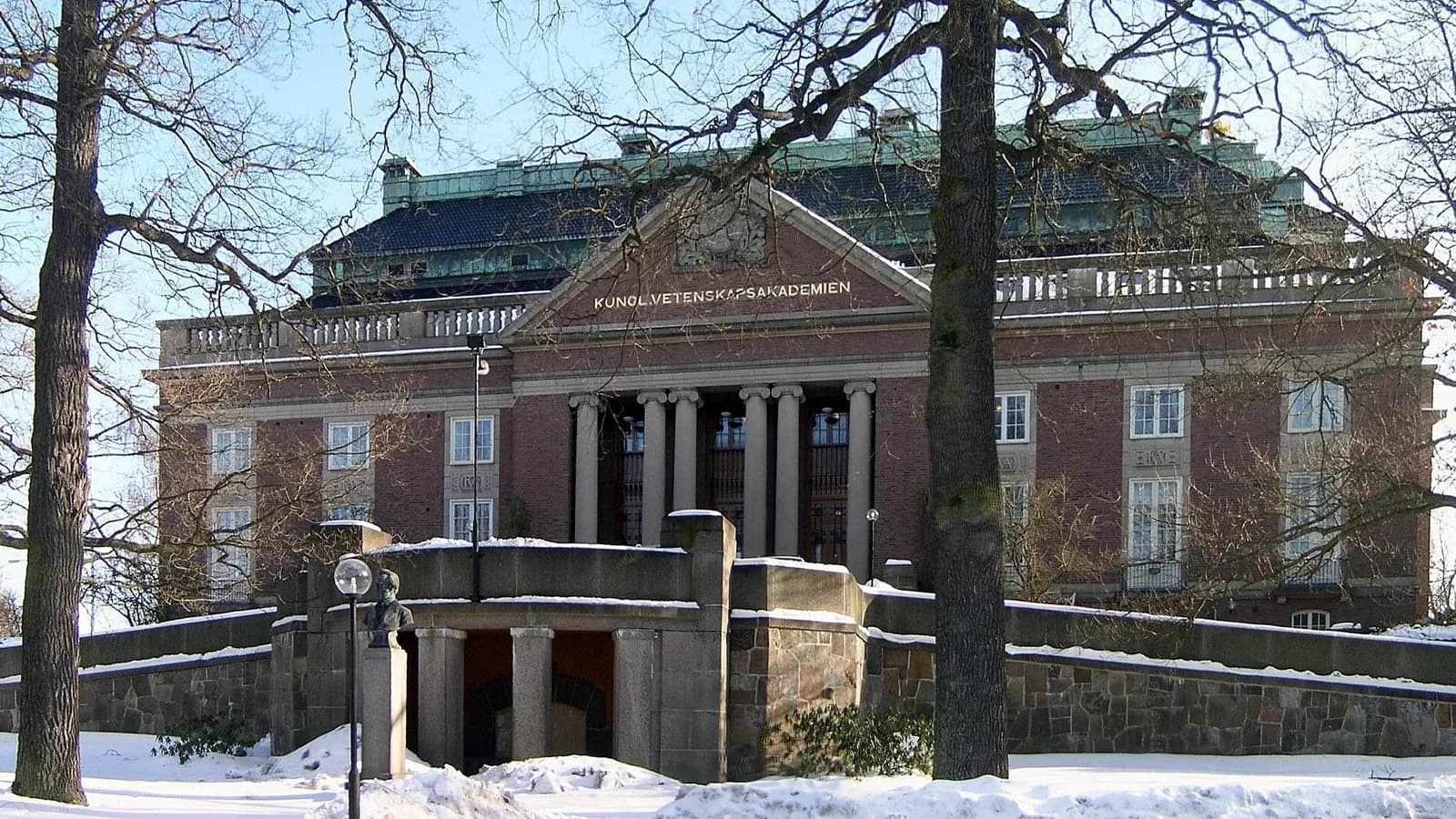
Two American economists who spent decades studying how ordinary households and firms decide what to do next won the 2026 prize in economic sciences on Monday, in a year when central banks are again fighting an energy shock. The Royal Swedish Academy of Sciences honoured Robert E. Hall of Stanford University and Michael Woodford of Columbia University, according to WBUR. The prize is worth 12 million Swedish kronor, about $1.2 million, and is shared equally.
The Academy said their research has made it possible to manage major macroeconomic crises far more effectively than before, and that it proved hugely beneficial during the pandemic and the energy crises of recent years. It was the last award of the Nobel season.
What did Hall and Woodford actually show?
Older policy thinking leaned on simple Keynesian trade-offs between unemployment and inflation, a view the stagflation of the 1970s exposed as too crude. Hall and Woodford rebuilt the framework from the ground up, modelling how households and businesses decide based on what they expect to happen later, WBUR reported.
Hall's 1978 paper argued that household spending choices reveal what people expect about their future income, as The Globe and Mail described it. His 1982 work with Fredric Mishkin found that about 80 per cent of households spent according to those expectations, while the rest lived hand to mouth. Woodford turned to the other side of the market and showed that firms set prices according to expected conditions, such as future interest rates and what their competitors will charge.
From that grew ideas that are now central-bank vocabulary: forward guidance, which means signalling the likely path of interest rates, sticky inflation, where prices adjust slowly to demand, and the output gap.
Why does it matter to central banks right now?
The committee chair, John Hassler, said the models leave policymakers better equipped to deal with shocks in the economy. The timing is pointed. The Globe and Mail notes that central banks, still absorbing the inflation surge that followed the pandemic, are now dealing with an energy shock linked to the Iran war.
The prize also lands in the middle of an argument about the laureates' own legacy. Fortune reports that Kevin Warsh, the new Federal Reserve chair, has said the drift toward forward guidance has gone too far and wants the Fed to say less about its thinking and intentions. Woodford, for his part, credited forward guidance as an important part of the policy response from 2009 onward, a period when rates sat near zero, according to the Globe.
Who are the laureates?
Hall, who was born in Chicopee, Massachusetts, has advised the US Treasury, the Justice Department and the Federal Reserve Board. Both men earned their doctorates at MIT. Only three women have won the economics prize, most recently Claudia Goldin in 2023, and most laureates have been American, a pattern this year's award continues. Last year's prize went to Joel Mokyr, Philippe Aghion and Peter Howitt for work on creative destruction.
The practical question the prize leaves open is whether the central banks that borrowed from Hall and Woodford will keep talking or start talking less. Markets will get an early read when policymakers next explain their rate decisions.
Published in The Outspoken Digest
Editorial desk
Outspoken Digest Markets DeskReports for The Outspoken Digest across Business, Crypto.
Newsletter
The Digest, in your inbox
One edition, sent when it is ready. No noise, and your address is never passed on.
Read Next
More Business →
Starbucks Says It Is Not Buying Chipotle, Ending a Four-Day Takeover Story and Costing Chipotle About 4 Percent
Oct 13, 2026/2 min read
Wall Street Ends Mixed Near Records as Chip Stocks Slide, Oil Climbs and Traders Await Wednesday's Inflation Report
Oct 13, 2026/2 min read

Nasdaq Falls 1.25% as the FT Puts OpenAI's Annualized Revenue Near $50 Billion, Not $70 Billion
Oct 9, 2026/2 min read
Treasury Yields Hit a 24-Year High, Waller Says More Fed Rises Are Coming, and the 30-Year Auction Clears at 5.618%
Oct 9, 2026/2 min read