Herzog Receives Israel's Official Results and Opens Consultations as Ra'am Says It Will Back Eisenkot
The elections committee certified the count over Likud and Shas abstentions, the president began hearing parties from smallest to largest, and the Arab party's eight seats tilted the arithmetic.
Wednesday, November 4, 2026/3 min read
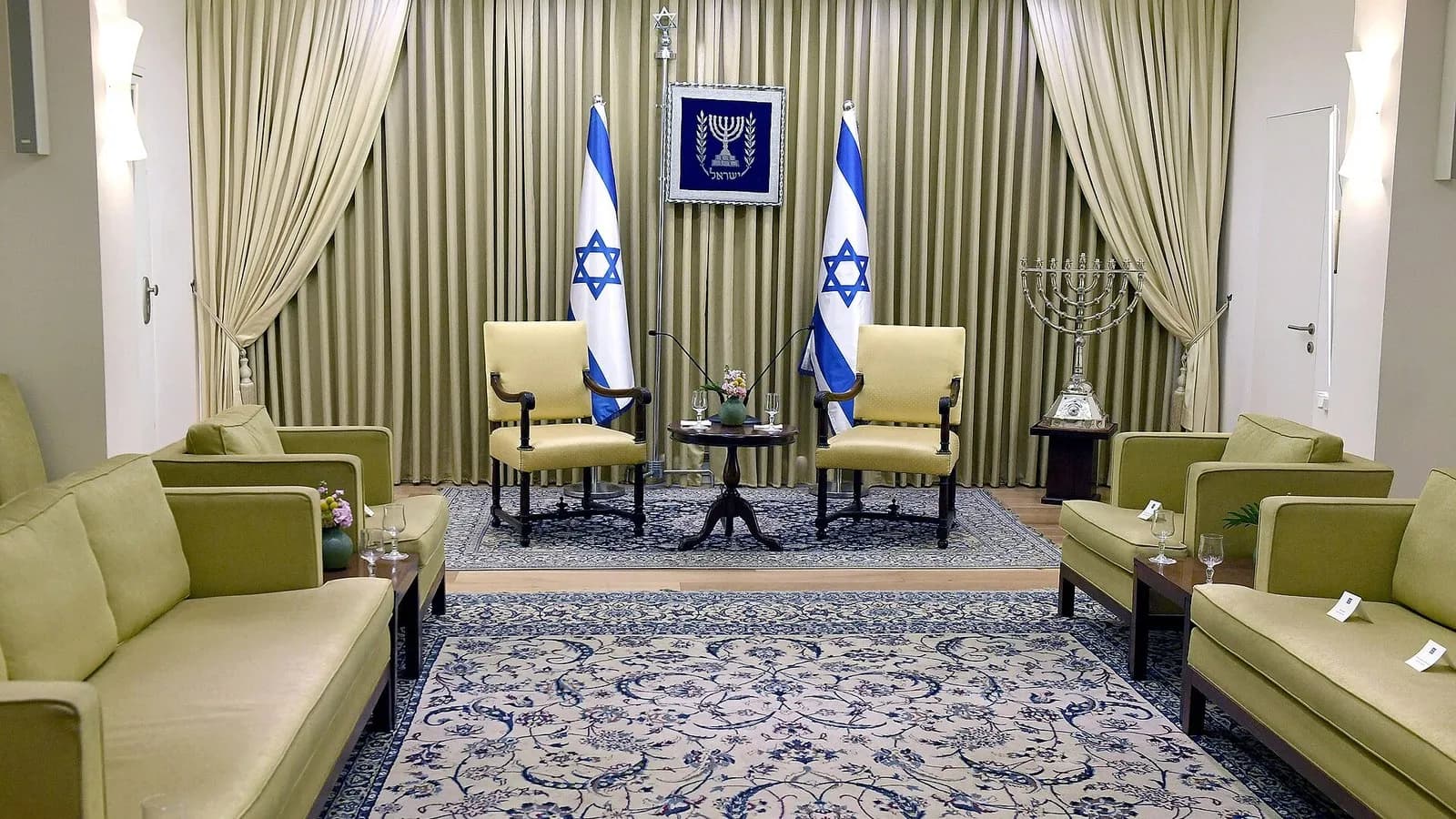
Shortly after noon on Wednesday the chairman of Israel's Central Elections Committee, Justice Noam Sohlberg, walked into the President's Residence in Jerusalem and handed Isaac Herzog the official results of the 27 October election. With publication in the state gazette, that handover certified the outcome: 53 seats for Benjamin Netanyahu's bloc, 48 for the opposition bloc and a record 19 for the two Arab-led lists, Ra'am and the Joint List, with 61 needed to govern. Herzog formally adopted the results at 1:02 p.m., said he had full confidence in the Shin Bet and police to investigate alleged foreign interference, condemned what he called coarse and racist rhetoric aimed at Arab citizens, and asked the factions to consider what is truly best for the country, the Times of Israel liveblog recorded.
Certification did not come quietly. The five-member presidium that approved the results in the morning split: Yesh Atid and Blue and White voted in favour, Likud and Shas abstained, and Sohlberg cast the deciding vote. Likud MK Amit Halevi resigned from the panel, Otzma Yehudit said it would vote against certifying the results, and National Security Minister Itamar Ben Gvir called for a freeze on both certification and government formation. Sohlberg's answer was that casting doubt on the results is a real danger to democracy and that the suspected fraud, even if confirmed, would be too small to change anything.
We reported on Tuesday how the opposition gathered in Herzliya behind Gadi Eisenkot while Likud weighed opposing certification. Wednesday was the day the process moved from the parties' hands to the president's.
How do Herzog's consultations work this time?
Herzog has turned the tradition upside down, meeting the smallest parties first. Religious Zionism came at 5 p.m., Shas at 6:15, Yisrael Beytenu at 7:30 and Zehut at 8:45, with United Torah Judaism, Otzma Yehudit, the Democrats, Ra'am, the Joint List, Yachad, Eisenkot's Yashar and finally Likud scheduled for Thursday, Ynet reported ahead of the talks. The president has said he wants a wider view of the possible arrangements, has not ruled out a second round, and expects to hand a mandate between Friday and next Tuesday. Whoever receives it has 28 days to build a coalition, with a possible 14-day extension.
The first meeting was testy. When Settlements Minister Orit Strock of Religious Zionism rejected any role for the Arab parties, Herzog asked how she distinguished between racism and what she was saying, and later called one representative's claim of an Arab takeover a very dangerous remark.
Where does the count of recommendations stand?
Going into the evening, Religious Zionism, Otzma Yehudit, Shas and Likud had said they would recommend Netanyahu, and Yashar, the Democrats, B'Yachad and Yisrael Beytenu had committed to Eisenkot, the Times of Israel noted at 5:07 p.m. At 7:50 p.m. Ra'am said it would recommend Gadi Eisenkot as the next prime minister, bringing his backing to 56 seats against 53 for Netanyahu, with the Joint List's 11 seats possibly abstaining. A senior Joint List official had told Walla before the vote that both Arab parties were expected to back Eisenkot, the Jerusalem Post reported, and the Knesset is due to be sworn in on 10 November regardless of where the talks stand.
Eisenkot, marking the anniversary of Yitzhak Rabin's assassination, said Israel would not be allowed to be dragged into a dark abyss beyond the rules of democracy and accused Likud of trying to sabotage it. Former Mossad chief Yossi Cohen, meanwhile, apologised to him for a false accusation made at a protest.
What happens on Thursday?
Eight more parties, including the two Arab lists and Likud itself, file through the residence. If the Joint List abstains, Eisenkot still has more recommendations than Netanyahu but no majority, which is exactly the deadlock Herzog warned on Sunday could send the country back to the polls. The arithmetic now rests on 11 seats that may choose to say nothing at all.
Published in The Outspoken Digest
Editorial desk
Outspoken Digest News DeskReports for The Outspoken Digest across Latest Trends, Sports, Nutrition, Crypto.
Newsletter
The Digest, in your inbox
One edition, sent when it is ready. No noise, and your address is never passed on.
Read Next
More Latest Trends →
Mississippi Senate Race Sits at 1,145 Votes With No Recount Law as Democrats Line Up Their Leadership
Nov 5, 2026/3 min read
Joint List and Ra'am Back Eisenkot as Herzog's Consultations Point to a 67-Seat Mandate
Nov 5, 2026/3 min read
Democrats Flip Five Governorships and Hold a Majority of States as Voters Reject Abortion Rollbacks and Back Voter ID
Nov 4, 2026/3 min read
Democrats Win the House and Senate With Seven Senate Flips as Trump Says He Was Not on the Ballot
Nov 4, 2026/3 min read