The Home First Aid Kit: What Belongs in It, What Does Not, and How Often to Check It
A useful kit is small, current and findable. Dressings, a thermometer, tweezers, gloves and a few basic medicines cover most household accidents. The rest is knowing what to do, which a short course teaches better than any box.
Saturday, September 19, 2026/3 min read
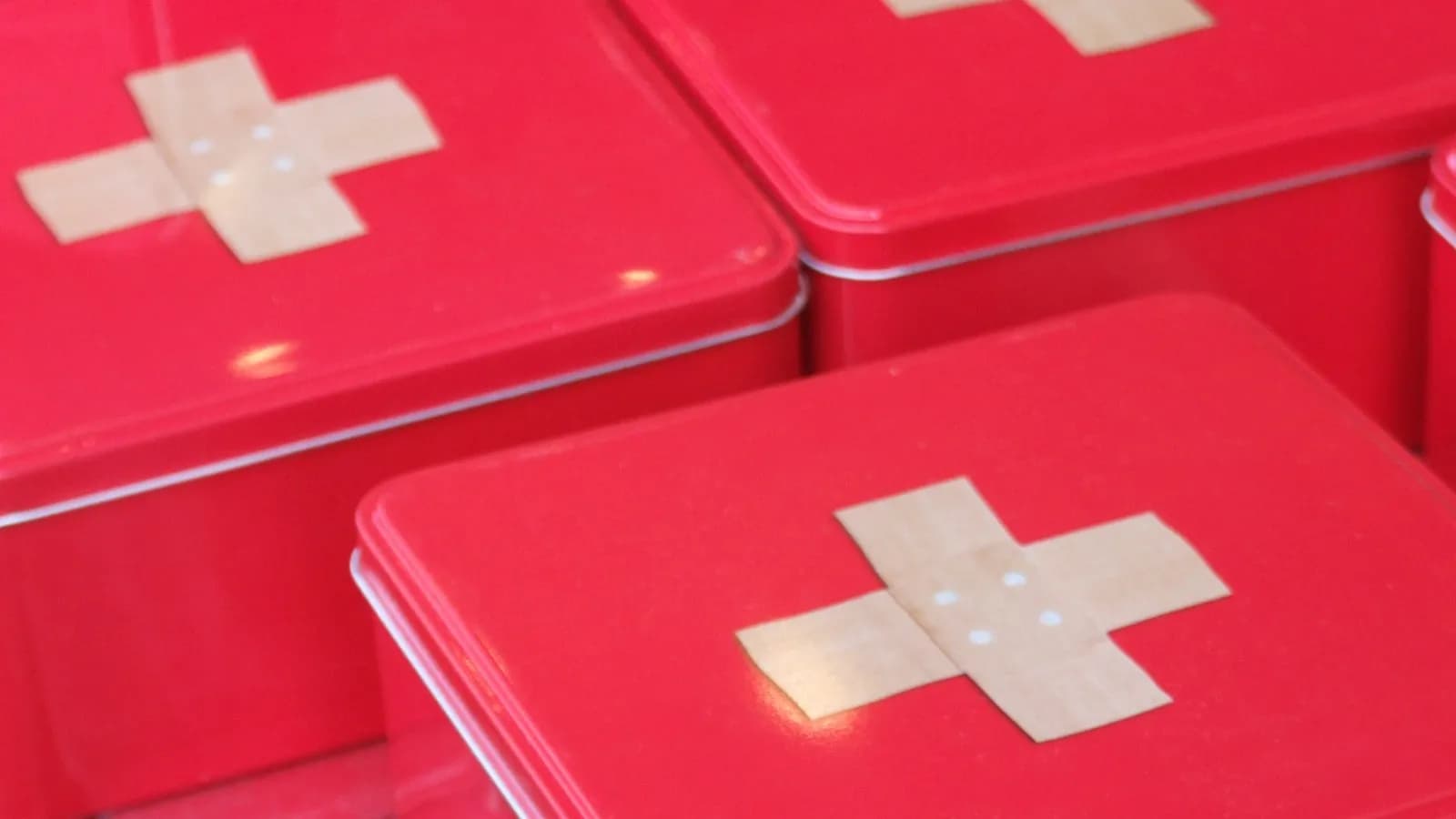
Most first aid kits sit in a cupboard until the day they are needed, and then turn out to hold three dried-up plasters, a bandage that fell apart and a bottle of something past its date. A kit does not need to be large or expensive. It needs to be complete enough for the common injuries of an ordinary household, current, and somewhere the whole family can find it in the dark. The NHS's first aid pages and the British Red Cross's first aid guidance set out the basics, and both agree on one point above all: the skill matters more than the contents.
The core contents
- A range of plasters in different sizes, preferably waterproof, including some for fingers
- Sterile gauze dressings in a few sizes, and medical tape to hold them
- A roller bandage, and a triangular bandage that can serve as a sling
- Disposable non-latex gloves, several pairs
- Antiseptic wipes or saline sachets for cleaning around a wound
- Blunt-ended scissors and fine-pointed tweezers for splinters
- A digital thermometer
- Safety pins
- A foil blanket, which is light and useful in cold or shock
- A pocket face shield for rescue breaths, if you are trained
Basic medicines
Keep a small supply of paracetamol, and ibuprofen if suitable for the household, as asthma, stomach ulcers and some other conditions rule it out, so check with a pharmacist first. Keep an antihistamine for mild allergic reactions and insect bites, oral rehydration sachets for stomach upsets, and any emergency medicine prescribed to a family member, such as an adrenaline pen or an asthma reliever. Do not keep leftover prescription antibiotics or other people's medicines. The NHS medicines pages explain what each one is for and who should avoid it. Children's doses are by age and weight, so keep the paediatric versions and read the label each time.
What not to put in
Creams and butter on burns are a persistent habit that does harm. The NHS advice for a minor burn or scald is to cool it under cool or lukewarm running water for 20 minutes, not to apply ice, creams or greasy substances, and to cover it loosely with cling film. Cotton wool sheds fibres into wounds and is best avoided. Tourniquets are for trained use in life-threatening bleeding. A well-chosen kit has fewer items than the cheap ones sold in bags of a hundred.
Where to keep it and how often to check
Choose a cool, dry place out of reach of small children but not locked away. In a hot climate such as the Gulf, avoid the car glovebox and the kitchen shelf above a cooker; most medicines are labelled to be stored below 25C, and heat degrades many of them. Check the kit every six months: replace anything used, anything out of date and any dressing with a damaged wrapper. A good time is when the clocks change, or at the start of a school term. Put a short card inside with local emergency numbers and the names of anyone with allergies or conditions.
The car, the bag, the trip
A smaller version belongs in the car, and another in the bag you take on holiday or walks, with blister plasters, rehydration salts and your usual medicines in original packaging. Our guide to extreme heat and health covers what to add for hot weather.
The part that is not in the box
The most useful first aid item is knowing what to do for choking, severe bleeding, an unresponsive adult and a burn. The NHS has a clear page on CPR, and the Red Cross and equivalent bodies elsewhere run short courses, often a few hours, that cost less than a decent kit. Do one. It will outlast every item in the box.
Published in The Outspoken Digest
Editorial desk
Outspoken Digest Health DeskMedicine, public health and the research behind the headlines, read carefully.
Newsletter
The Digest, in your inbox
One edition, sent when it is ready. No noise, and your address is never passed on.
Read Next
More Lifestyle →
Street Fighter Wins the Weekend With $31 Million, but an Elizabeth Holmes Documentary Opens to $15 Million
Oct 19, 2026/2 min read

Street Fighter Opens With $4 Million in Thursday Previews as Critics Split on the Video Game Reboot
Oct 16, 2026/2 min read

Two Stolen Renoirs Found Behind a Cinder-Block Wall as Police Say Suspects Eyed the Fondation Maeght
Oct 15, 2026/2 min read

Hulu Orders Ryan Coogler's X-Files Reboot to Series With Danielle Deadwyler and Himesh Patel
Oct 14, 2026/2 min read