Iran Says Three Tankers Hit Mines in Hormuz as Ship Traffic Falls More Than 40% and Brent Stays Near $89
Tehran says escorted tankers struck mines, ship-tracking shows the strait emptying, and the US widened sanctions, yet crude barely reacted as supply elsewhere recovers.
Tuesday, November 24, 2026/2 min read
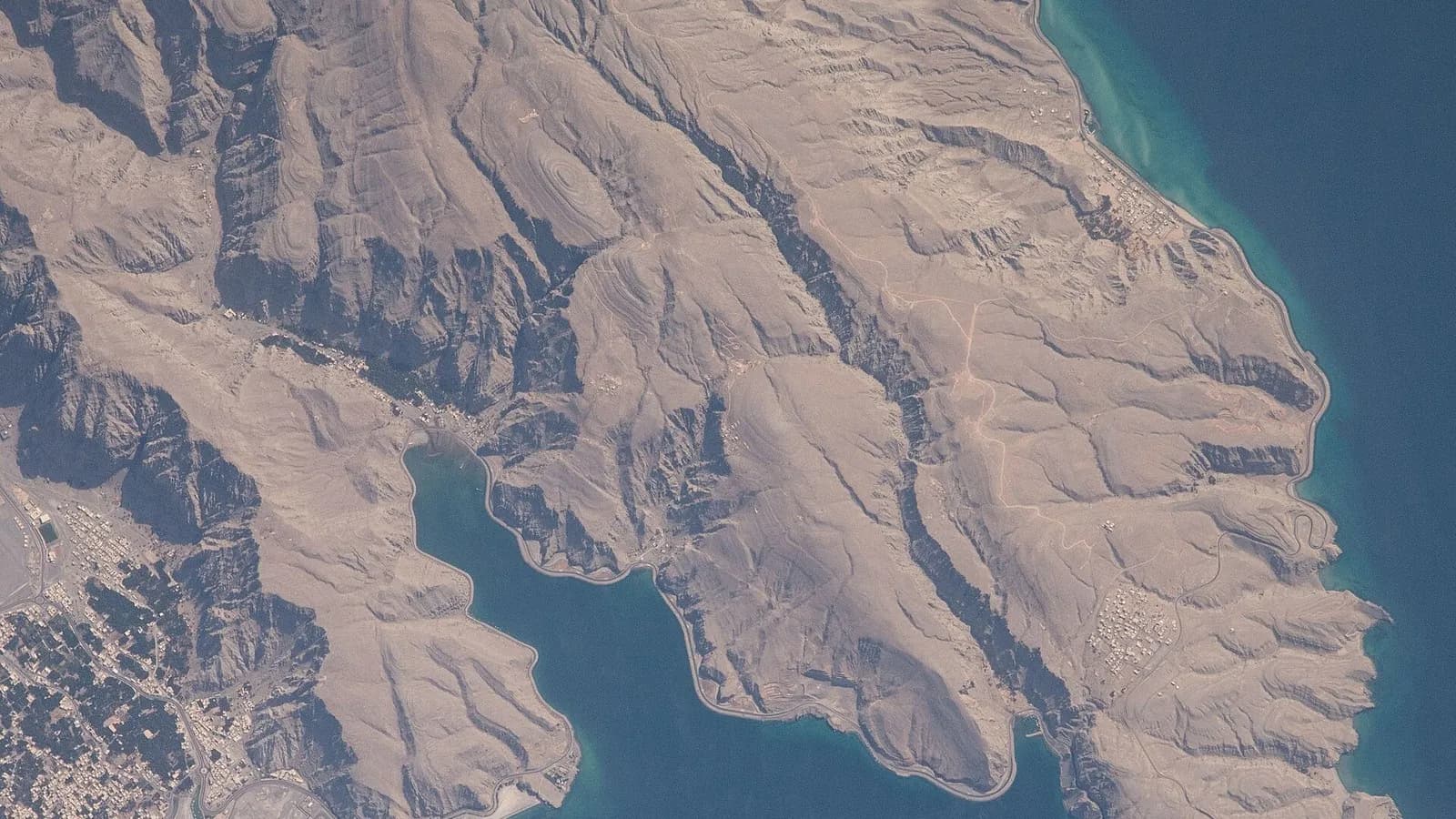
The Strait of Hormuz is getting quieter by the week, and on Tuesday Iran's own account of why made the picture darker. The Revolutionary Guard said three oil tankers caught fire after hitting naval mines, one near the southern coast and two in the eastern part of the strait, according to CNBC, citing Iranian state media. The Guards said all three were under American air cover and escort. Nothing in the report independently confirms the explosions.
The claim follows the tanker strikes near Khasab that we covered in our report on Monday. What has changed since is the arithmetic: fewer ships are moving, and the price of oil has not noticed.
How much has Hormuz traffic fallen?
Al Jazeera, drawing on Marine Traffic data, counted 226 vessels crossing between 1 and 7 November and 125 between 17 and 23 November, a fall of more than 40 percent. Before the war, 125 to 140 ships passed in a single day. In the past 24 hours, transponder data showed just 28 crossings carrying an estimated 4.18 million barrels. The quietest day was Sunday, with one ship leaving and two entering.
One caution applies. Tracking depends on ships keeping their transponders on, so the count misses vessels running dark. And the data cannot say how much of the decline is down to mines, to the American blockade of Iranian ports, or to insurers and owners simply staying away.
What is Iran saying it wants?
Iran's navy said, via the Tasnim agency, that the strait stays closed until its demands are met, including an end to hostilities, a lifting of the blockade and relief from sanctions. Tanker owners, it said, must coordinate passage with Iran's armed forces. Foreign Ministry spokesman Esmaeil Baghaei said Tehran would not tolerate the blockade and would use all its tools against it. The Guards also say only the northern lane is approved, and that ships using routes near Oman have been attacked or threatened.
Washington is tightening from its side. CNBC reports that the Treasury sanctioned more than two dozen Iranian exchange houses, front companies and individuals on Monday in an effort to disrupt shadow banking networks, and that a third aircraft carrier, the USS Theodore Roosevelt, has joined two already enforcing the blockade. The Wall Street Journal reported that US authorities are investigating Iran, and also Russia, over dozens of cyberattacks on energy tankers, with as many as 50 ships possibly targeted. Neither government responded to CNBC.
Why is oil not spiking?
Brent crude dipped to about $89 a barrel on Tuesday and US West Texas Intermediate to about $80, according to CNBC, well below an October high near $105 for WTI. Al Jazeera put Brent at $88.35 at the time of writing, and noted it once topped $120. Eurasia Group's Gregory Brew attributed the calm to recovering regional supply and a rebound in Russian refined-product exports, but warned that intensifying Iranian attacks could reverse it. He expects Brent in the lower half of an $80 to $100 range.
The test now is whether the traffic numbers keep sliding. A strait that is 40 percent emptier is a cushion for prices only as long as the oil that is still moving keeps getting through.
Published in The Outspoken Digest
Editorial desk
Outspoken Digest News DeskReports for The Outspoken Digest across Latest Trends, Health, Business, Technology.
Newsletter
The Digest, in your inbox
One edition, sent when it is ready. No noise, and your address is never passed on.
Read Next
More Latest Trends →
Burnham Brings Forward NDA Limits to January and Opens a Review of a Staggered Age of Consent
Nov 25, 2026/2 min read
Huawei Convicted on 10 of 12 Counts in Brooklyn but Cleared of Racketeering, and Vows to Appeal
Nov 25, 2026/2 min read
Judge Puts His Reasons in Writing: Case Against Two Ex-FBI Officials Was Rushed, Political and Pushed From the Top
Nov 24, 2026/2 min read
Zelensky Confirms Ukraine Hit the Russian Cargo Ship Sparta II in the Gulf of Finland as Norway Urges Caution
Nov 24, 2026/2 min read