Human Rights Watch Says the Houthi Siege of Taizz May Amount to the War Crime of Starvation
The rights group says Houthi forces encircled Yemen's third-largest city this month, and cites UN figures on empty flour stocks, a failing health system and halved water production.
Thursday, October 29, 2026/2 min read
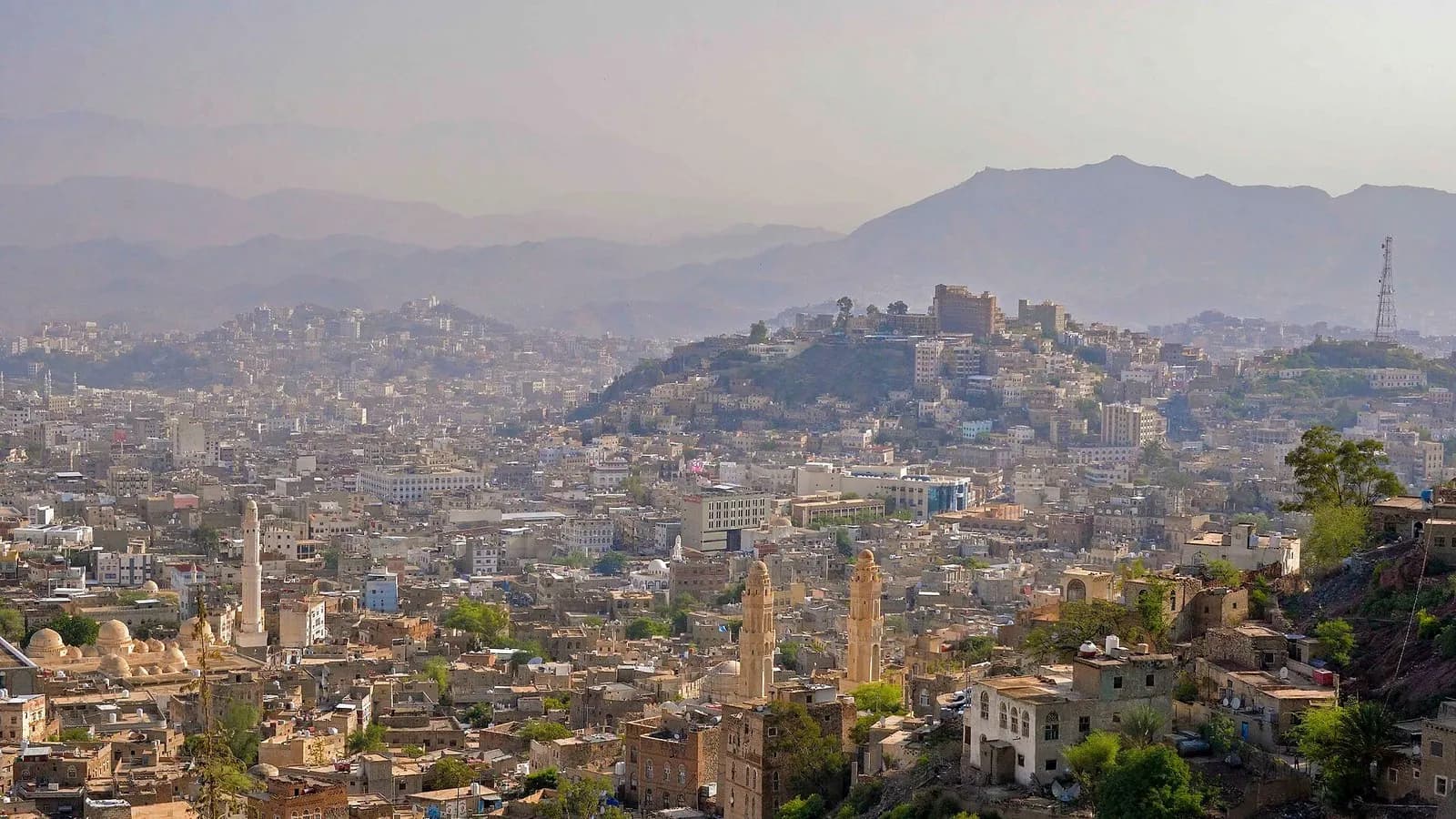
In Taizz, Yemen's third-largest city, people have been counting what is left. Human Rights Watch said on Thursday that Houthi forces have fully encircled the city since October, blocking and attacking its last major supply route, and that depriving civilians of food, water and medicine may amount to the war crime of using starvation as a method of warfare.
The wording is careful. HRW does not say a court has found anything. It says the facts, if they reflect an intent to starve civilians, would meet the definition.
What is happening in Taizz?
The Houthis have besieged Taizz since 2015, while government-backed forces hold the city centre. What changed this month is the severity. The Houthis blocked all the major roads, in particular the one to Aden, and on 18 October, HRW said in an earlier statement, explosives badly damaged the Hayjat al-Abd road, the main entry for food, medicine and fuel.
The consequences, HRW says, are widespread shortages of fuel, food, water, medicine and cooking gas. It reports that vegetable prices doubled early in the escalation, cooking gas prices rose about 400 percent, and truck costs doubled. Patients with cancer or kidney disease struggled to reach facilities. One facility stopped services for three days because it had no diesel.
What do UN agencies say about Taizz?
HRW draws on UN statements. The World Food Programme said on 14 October that it could not reach more than 600,000 people in Taizz who depend on aid, that most districts face emergency levels of hunger, and that wheat flour stocks were nearly exhausted. The UN's OCHA said on 23 October that the city had been cut off for 20 days.
The UN humanitarian coordinator, Laurent Bukera, said on 20 October that water production had halved and the health system was close to collapse. UNICEF warned that diesel shortages threaten water pumps, and trucked water has tripled in price. Roughly one million residents are affected by the 12-year siege, HRW says.
We reported on the displacement from the wider fighting earlier this month.
What do the Houthis say, and what does the law require?
A Houthi spokesperson told HRW on 21 October that Yemeni government forces, not the Houthis, were blocking roads into the city. HRW notes that residents, civil society workers and UN officials instead place responsibility on the Houthis. The group also said it could not conclusively establish who carried out an earlier road attack, on 30 September and 1 October.
International humanitarian law does not ban sieges that have a military aim. It bans using them to starve civilians or cause disproportionate harm, and it requires every party, including a besieging one, to let relief through. HRW stresses that starvation covers more than food, and includes water and medicine.
Its demand is simple: the Houthis should immediately open the vital roads and allow food, fuel, medicine and water to enter. Whether they do will be visible in the next WFP and OCHA updates, and in what reaches Taizz's pharmacies and water tanks first.
Published in The Outspoken Digest
Editorial desk
Outspoken Digest News DeskReports for The Outspoken Digest across Latest Trends, Sports, Nutrition, Crypto.
Newsletter
The Digest, in your inbox
One edition, sent when it is ready. No noise, and your address is never passed on.
Read Next
More Latest Trends →
A Russian Jet Drone Kills 14 on a Dnipro Station Platform as Russia Reports 613 Drones Toward Moscow
Oct 29, 2026/2 min read
Judge Rejects Justice Department Bid to Set Aside 20,000 California Ballots Six Days Before the Midterms
Oct 29, 2026/2 min read
Israel's Count Nears 90 Percent With No Bloc at 61 as Likud Alleges Arab Parties Stole the Vote
Oct 29, 2026/2 min read
Iraq's Prime Minister Visits Damascus to Discuss Sending 2 Million Barrels a Day of Oil Through Syria
Oct 29, 2026/2 min read