A Turbine That Makes Its Own Pressure With Detonation Waves
Researchers generated electricity from a hydrogen turbine that compresses using detonation rather than a mechanical compressor. Removing that component changes the efficiency ceiling.
Outspoken Digest Energy & Infrastructure Desk
Thursday, August 6, 2026/4 min read
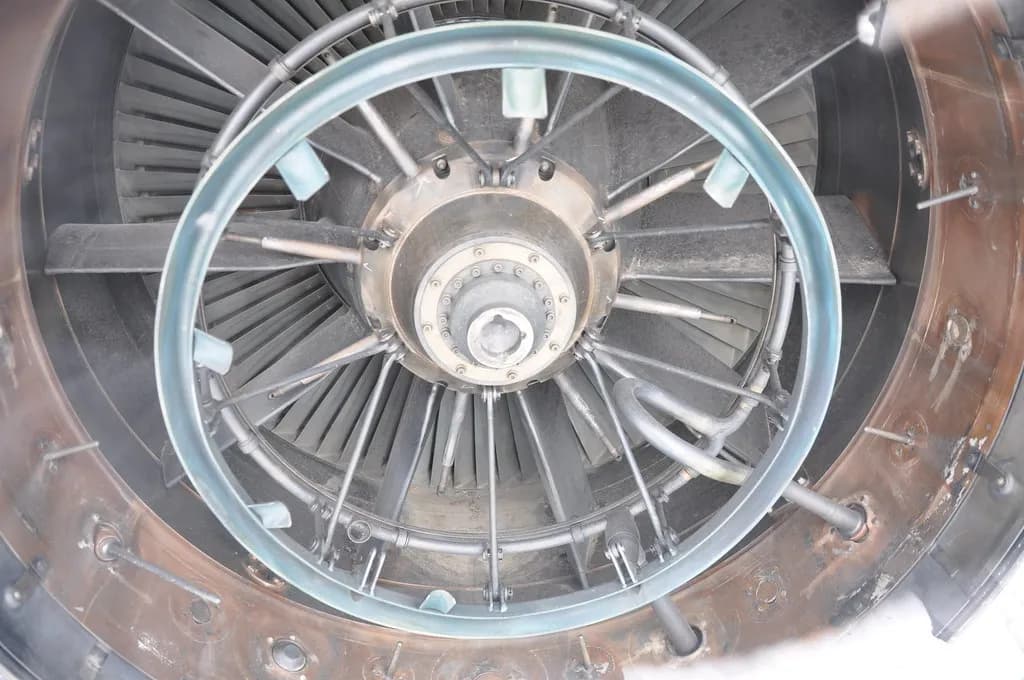
A gas turbine spends a large share of the energy it produces on running itself. The compressor stage, which squeezes incoming air before combustion, is a substantial parasitic load and one of the reasons turbine efficiency has improved only incrementally for decades.
Researchers have now generated electricity with a hydrogen turbine that produces its own pressure using detonation waves instead of a mechanical compressor, in work reported on 4 August through ScienceDaily's science coverage. The finding is described as potentially unlocking substantially more efficient power systems.
Why detonation is different from burning
The distinction sounds like semantics and is central to the physics.
Conventional combustion is deflagration: a flame front moves through the fuel mixture at subsonic speed, and pressure stays roughly constant while the gas expands. Every jet engine and gas turbine in commercial service works this way.
Detonation is supersonic. The reaction front travels faster than sound in the medium, driving a shock wave ahead of it, and pressure rises sharply across that front. The gas leaves the process at higher pressure than it entered.
That last sentence is the entire point. If combustion itself raises pressure, the machine no longer needs a separate compressor stage to do it, and the energy that stage consumed becomes available as output.
Why this has taken so long
The theoretical advantage of detonation cycles has been understood since the middle of the twentieth century. Building one that runs reliably has been the obstacle.
A detonation is a violent, unstable event. Sustaining it in a controlled, repeating way inside a machine that must survive thousands of hours means containing shock waves, managing extreme thermal and mechanical stress, and initiating each cycle with precise timing. Materials and control systems have historically not been up to it.
Getting from a laboratory detonation to actual electricity generation is therefore the meaningful step in this result. Demonstrating the effect is one thing; producing usable power from it is what moves it toward engineering.
The hydrogen part
Hydrogen is a natural fuel for this and an awkward one everywhere else.
It suits detonation because it has a wide flammability range, a high flame speed and low ignition energy, all of which make a controlled detonation easier to initiate and sustain than with hydrocarbon fuels.
The awkwardness is upstream and unchanged by any of this. Most hydrogen produced today comes from natural gas, and a turbine burning it is only as clean as the process that made it. Storage and transport remain difficult, since hydrogen embrittles metals, leaks through seals that contain other gases, and carries little energy per unit volume unless compressed or liquefied at cost.
An efficient hydrogen turbine improves one link in that chain. It does not fix the others.
How far this is from a power station
Some distance, and it is worth being clear about that rather than letting the word breakthrough do unearned work.
Laboratory demonstration to deployed generating equipment is typically a decade or more, and the specific obstacles here are known: component life under repeated shock loading, control at scale, and thermal management. Any one of them can stall a promising cycle indefinitely.
The related materials research appearing alongside it, including work on 3D printed tungsten carbide cobalt using less of its expensive raw material, is relevant for exactly this reason. Advanced cycles tend to be gated by whether anything can survive the conditions inside them.
What efficiency actually means here
Thermodynamic efficiency in a heat engine is bounded by the temperatures it works between, and every practical cycle falls well short of that limit.
A conventional gas turbine loses meaningful output to the compressor stage, and the industry has spent decades recovering fractions of a percent through blade design, materials and cooling. Those gains are real and incremental.
A pressure gain cycle is a different category of change. It does not improve a component, it removes one, which is why detonation cycles attract attention disproportionate to how close they are to deployment.
Where a machine like this would fit
Not in a car, and probably not first in a power station.
The likeliest early applications for a compact high output cycle are aerospace propulsion and distributed generation, where size and weight carry a premium that justifies accepting a less mature technology. Grid scale generation is the most conservative market in energy, and it adopts last.
Materials work reported alongside it, including a 3D printing technique producing tungsten carbide cobalt with less of its expensive raw material, is part of the same story. Advanced cycles are usually gated by whether a component can survive the conditions, and manufacturing routes for hard materials are on the critical path. Ongoing research coverage tracks both threads.
The honest position on hydrogen
Every hydrogen technology story invites the same overreach, so it is worth restating the constraint.
Hydrogen is an energy carrier, not an energy source. It has to be manufactured, and today most of it is made from natural gas in a process that emits carbon dioxide. A more efficient hydrogen turbine improves what happens at the point of use and changes nothing upstream.
Electrolysis powered by renewable electricity solves that and is currently more expensive. Until the production side moves, the cleanliness of any hydrogen machine is inherited rather than intrinsic, and reporting on the research frames the result as an efficiency finding rather than an emissions one.
What to watch next
Watch for run duration. A detonation engine that produces power for seconds is a physics result; one that runs for hundreds of hours without component failure is an engineering result, and only the second leads anywhere commercial.
Watch also whether turbine manufacturers show interest. The gas turbine industry is conservative for sound reasons, and it is the clearest available signal on whether an efficiency claim is considered real by the people who would have to build it.
Published in The Outspoken Digest
Editorial desk
Outspoken Digest Energy & Infrastructure DeskReports for The Outspoken Digest across Technology, Business.
Newsletter
The Digest, in your inbox
One edition, sent when it is ready. No noise, and your address is never passed on.
Read Next
More Technology →
What PHP2Shell Reveals About Maintaining the Code Behind Most of the Web
Oct 22, 2026/3 min read

PHP2Shell for Hosts, Developers and Security Teams: Backports, WAF Rules and Incident Response
Oct 22, 2026/3 min read

PHP2Shell: What Website Owners and Small Businesses Should Do Right Now
Oct 22, 2026/3 min read

PHP2Shell Timeline: From a Quiet August Report to a Leak, Early Attacks and a Day-Early Patch
Oct 22, 2026/3 min read