Intel Plunges After Hours as a Weak Fourth-Quarter Forecast Overshadows a 78% Jump in Data Centre Sales
Revenue rose 21% to $16.5 billion, yet Intel guided fourth-quarter profit to half the current level and said the PC downturn will last into mid-2027, sending shares down as much as 23%.
Thursday, October 29, 2026/2 min read
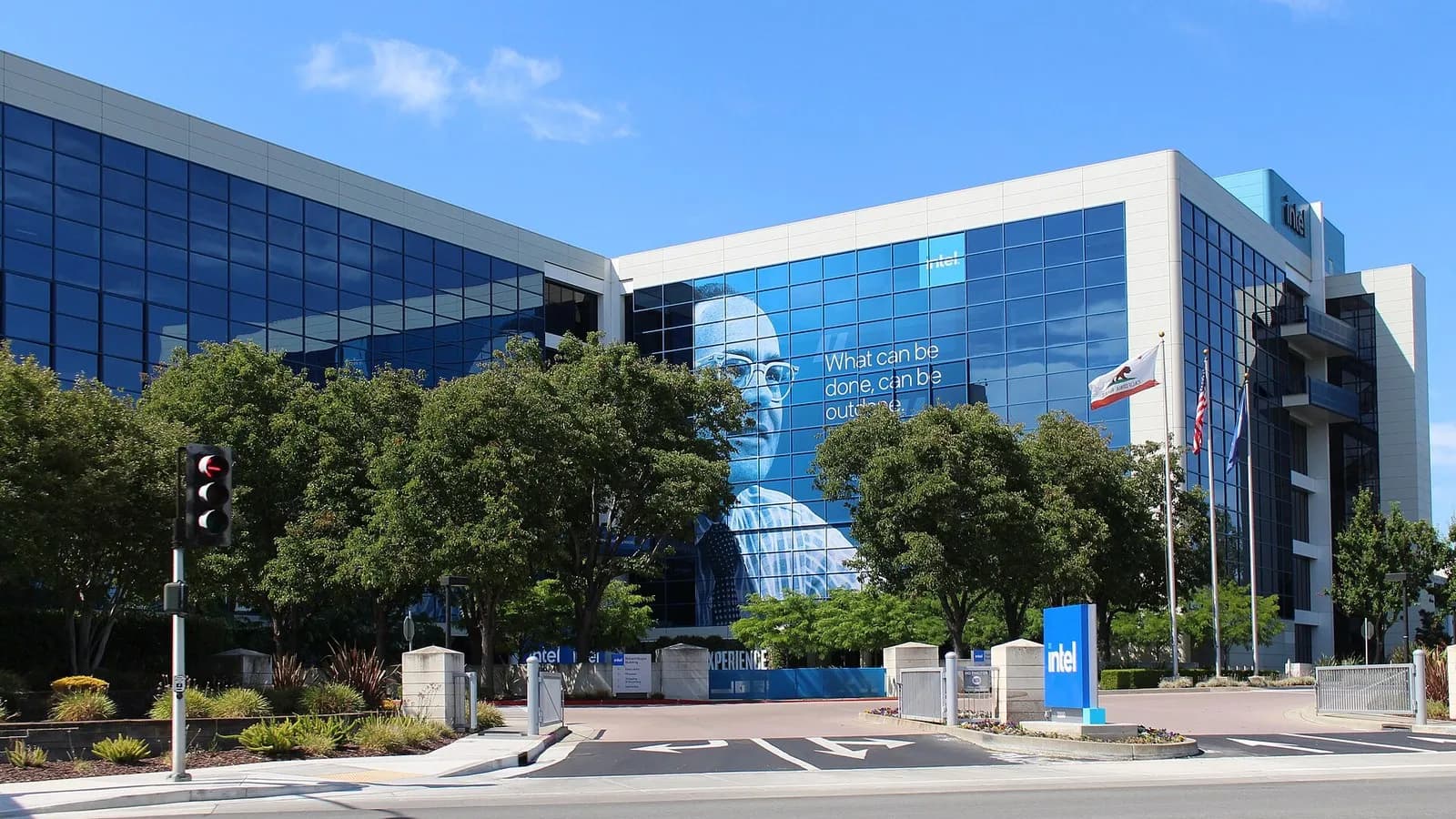
Intel reported revenue growth of 21 percent and a data-centre business up 78 percent, and its shares still fell by as much as 23 percent after the bell. The reason sat in the guidance: the chipmaker told investors that profit per share in the current quarter would be about half of what it earned in the quarter just ended, and that the slump in personal computers will not lift before the middle of next year.
Third-quarter revenue was $16.5 billion, according to Intel's earnings release. Earnings per share were $0.52 on a non-GAAP basis, up 126 percent, and $0.60 on a GAAP basis, down 33 percent. Gross margin was 44.1 percent on the non-GAAP measure, up 4.1 points from a year earlier.
What did Intel guide for the fourth quarter?
Revenue of $15.0 billion to $16.0 billion, which at the midpoint is below the quarter just reported. Non-GAAP gross margin is expected to fall to 38.0 percent from 44.1 percent, and non-GAAP earnings per share to $0.25 from $0.52. GAAP earnings per share is guided at $0.10. Chief financial officer David Zinsner said he expects the PC slowdown to last at least through the first half of next year, and that Intel will keep investing in capacity and working capital to increase supply.
Chief executive Lip-Bu Tan took a more upbeat line, saying demand for Intel's CPUs "remains robust" and that the immediate priority is to unlock more supply of the Xeon server family.
Where did the quarter come from?
Two businesses carried it. Data Center and AI revenue was $7.3 billion, up 78 percent. Intel Foundry, the contract-manufacturing arm, took in $6.7 billion, up 58 percent, though it posted a GAAP operating loss of $1.9 billion. The Client Computing and Physical AI Group, which sells the PC chips, brought in $8.1 billion, down 5 percent, the weak spot behind Zinsner's warning. Operating cash flow was $5.1 billion, gross capital spending $4.2 billion, and adjusted free cash flow $1.6 billion, up from $0.9 billion.
How far did the stock fall?
Intel had closed near $92.08. In extended trading it dropped to a low of $71.20, a fall of about 22.7 percent, then rebounded to roughly $79, and was near $76.83, down 16.6 percent, at 4:50 p.m. in New York, investingLive recorded. A closing note from Capp Notes put the after-hours loss at about 17 percent.
It is a harsh reaction for a company whose server business is growing at close to 80 percent, and the drop shows how little room chip stocks have for a soft outlook right now. Friday's trading will say whether Intel's drop is a single-night repricing or a lasting verdict on a PC market that its own finance chief says has months to go before it turns.
Published in The Outspoken Digest
Editorial desk
Outspoken Digest Markets DeskReports for The Outspoken Digest across Business, Crypto.
Newsletter
The Digest, in your inbox
One edition, sent when it is ready. No noise, and your address is never passed on.
Read Next
More Business →
Kospi Sinks 4.9% and the Nikkei Falls 2.5% as Amazon and Intel Revive AI Cost Fears and Treasury Yields Slip Below 5%
Oct 30, 2026/2 min read

Amazon Stock Slides After Hours Despite AWS Growing 39% as Free Cash Flow Turns to a $42 Billion Outflow
Oct 29, 2026/2 min read

Alphabet Closes 12.6% Lower in Its Worst Day Ever, but Most Stocks Rise as the Nasdaq Falls 1.4%
Oct 29, 2026/2 min read

Alphabet Heads for Its Worst Day on Record, Shedding About $500 Billion, as Nasdaq Slides
Oct 29, 2026/2 min read