Hegseth Calls the Hormuz Blockade 'Ironclad' While Iran Says There Is No Military Solution
After a Camp David meeting, the Pentagon chief said Iran has 'literally gotten nothing through' the strait. Shipping data tell a messier story, and Tehran says talks should rest on lifting sanctions, not new pressure.
Monday, October 5, 2026/2 min read
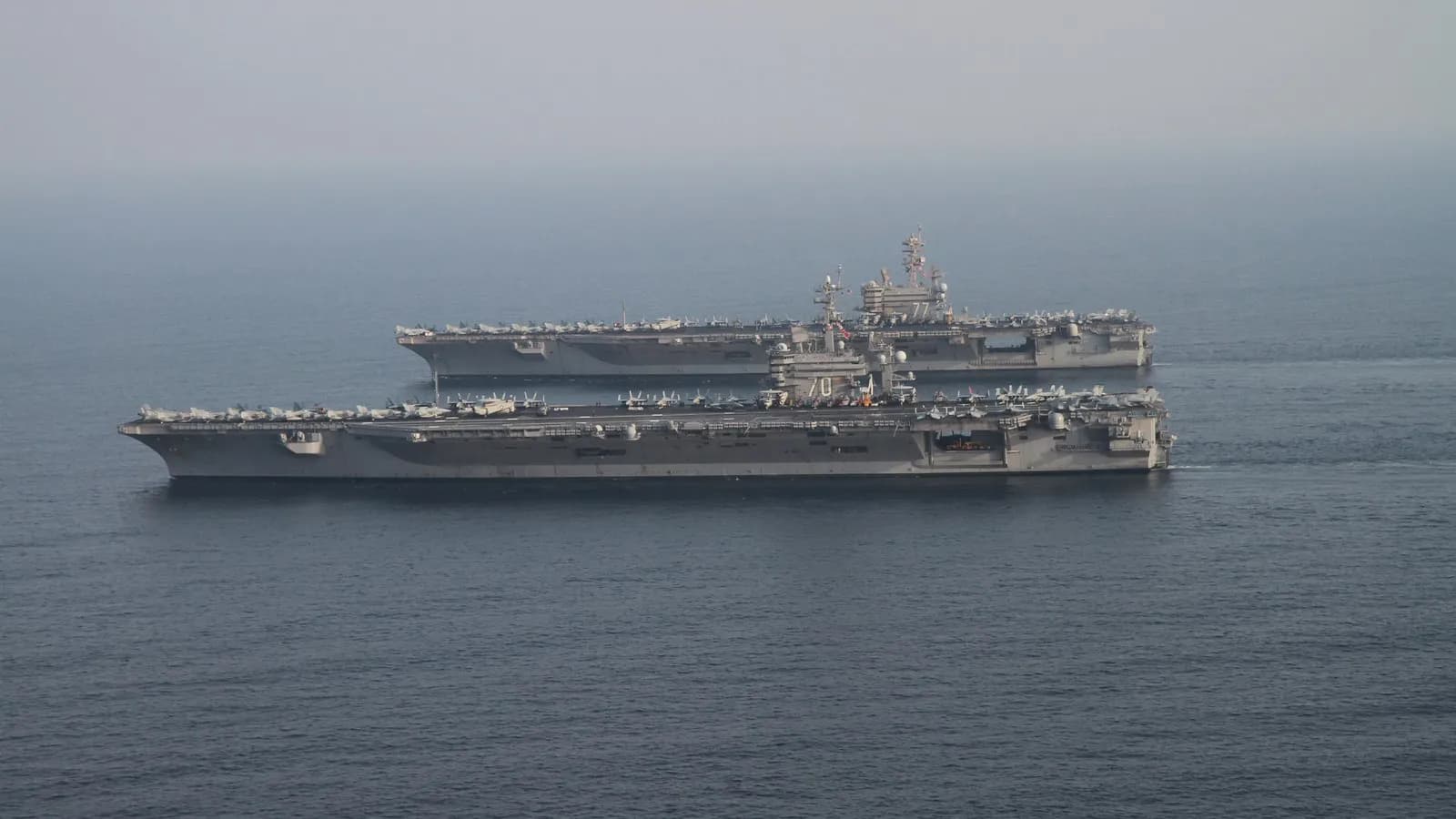
Seven months into the war with Iran, the argument over who controls the Strait of Hormuz hardened again at the weekend. Defence Secretary Pete Hegseth told reporters that the American blockade is "ironclad." Middle East Eye, citing an AP report, quoted him as saying: "Iran wants to play games with things like the Strait of Hormuz. They don't control it, we do." He added that Iran had "literally gotten nothing through."
Camp David, then the warning
Hegseth spoke after senior officials met at Camp David on Friday. CBS News's live coverage and Middle East Eye list Vice President JD Vance, Secretary of State Marco Rubio, the special envoy Steve Witkoff, the CIA director John Ratcliffe and the Joint Chiefs chairman, General Dan Caine among those present, with Iran and the fighting in Yemen on the agenda. "Iran ought make the right choice," Hegseth said. "If they don't, the president is going to have all the options he needs on the table." On Saturday Donald Trump told reporters he had "a decision" to make about Iran, and that it would be "the easy way or the hard way."
Tehran's answer
Iran's foreign minister, Abbas Araghchi, told a gathering of ambassadors on Sunday that "there is no military solution, nor any solution based on new sanctions," and that only "negotiations based on justice and fairness" could end the war. Deputy Foreign Minister Kazem Gharibabadi said Washington's reply to Iran's conditions was being examined and that Tehran was also "preparing itself for any other possible scenario." A foreign ministry spokesman, Esmaeil Baqaei, said reopening the strait would require an end to disruption of Iranian commercial shipping and the lifting of sanctions. This follows President Trump's rejection of Tehran's earlier proposal, and talks look stuck.
What the shipping data say
The picture at sea is less clear-cut than either side's rhetoric. CBS cited tracking firm Kpler as saying that Middle East crude exports excluding Iran passed their pre-war average of 18 million barrels a day on some days last week, helped by pipelines through Saudi Arabia and the UAE and routes via the Red Sea. Kpler put the share of oil now bypassing Hormuz at 40 percent. Experts stressed that the situation is far from normal: Iran still claims control of the strait, ships without its approval risk attack, and the US counter-blockade is cutting off a large share of Iran's own exports.
Prices and politics
Brent remains above $100 a barrel, up from about $73 before the war began on 28 February. Energy Secretary Chris Wright, on CBS's Face the Nation, said Trump knew the war would raise energy prices in the short run and that prices would fall "absolutely" over the next four weeks, a window that runs up to the midterm elections. The Group of Seven agreed on Friday to release 100 million barrels of oil and fuel products, led by a front-loaded diesel release over 20 days.
Two things now decide what happens next: whether Trump chooses the hard way he has hinted at, and whether Iran's conditions on sanctions move at all. Neither side has publicly given ground.
Published in The Outspoken Digest
Editorial desk
Outspoken Digest News DeskReports for The Outspoken Digest across Latest Trends, Sports, Nutrition, Crypto.
Newsletter
The Digest, in your inbox
One edition, sent when it is ready. No noise, and your address is never passed on.
Read Next
More Latest Trends →
Ukraine's Anti-Corruption Bureau Searches the National Bank, and Governor Pyshnyi Says He Is Staying
Oct 22, 2026/2 min read
Iran Says Hormuz Stays Shut Until Washington Accepts Its Seven-Day Plan, and Explosions Are Reported on Its Coast
Oct 22, 2026/2 min read
Putin Tells Witkoff He Will Negotiate in Principle as Russia Frees American Stephen Hubbard
Oct 22, 2026/2 min read

Two Killed at a Saudi Oil Field and One at Dammam Airport as the US Orders Embassy Staff Out of Saudi Arabia
Oct 22, 2026/2 min read