Koshari: Egypt's Soul-Filling Street Food Breakfast
Rice, lentils, pasta, and crispy onions layered together and crowned with spiced tomato and garlic sauces. Egypt's national dish is humble street food that tastes like pure comfort in a bowl.
Sunday, July 14, 2024/3 min read
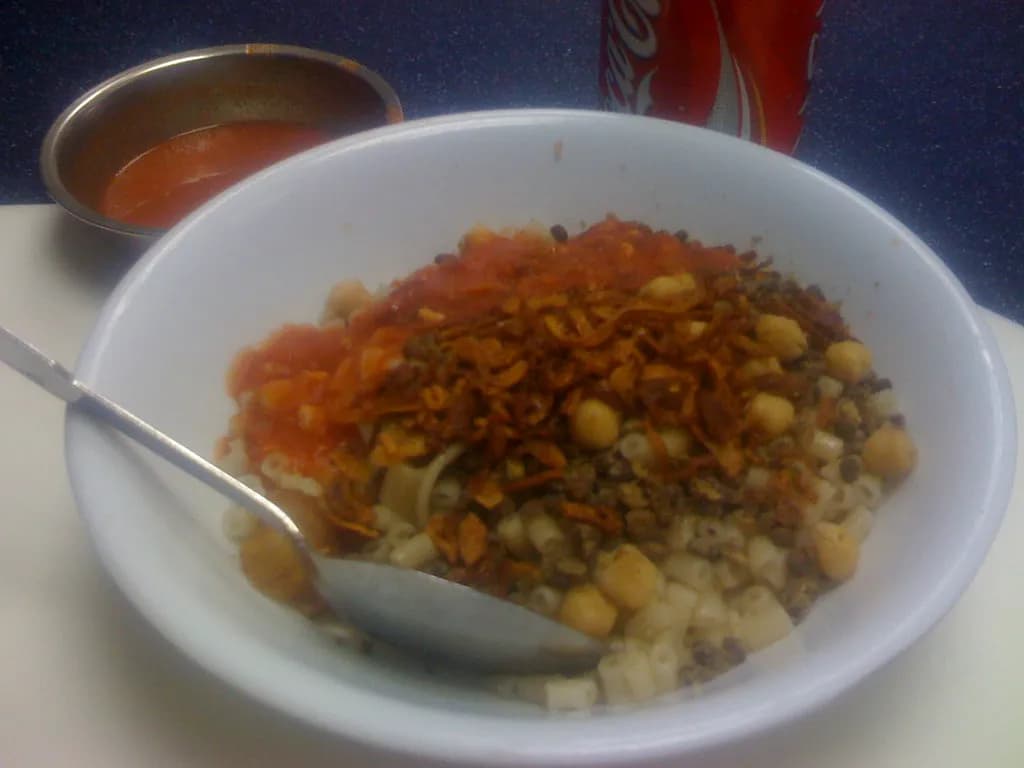
Koshari is urban Egyptian food, born from the collision of cultures that found their way to Cairo. According to A Pinch of Adventure, the dish was brought by Indian soldiers fighting alongside the British during World War One. They brought khichri, their own rice-and-lentil dish, which Egyptians adopted and transformed. Italians living in Egypt added pasta to the mix, and locals finished it with two sauces: a spiced tomato sauce and dukka, a garlicky cumin-based sauce that knits everything together. Wikipedia's entry on Koshary traces this remarkable culinary fusion and explains why the dish has become so foundational to Egyptian food culture.
Today koshari appears at every street corner in Cairo, Cairo vendors piling rice, lentils, and pasta into bowls with the confidence of someone who's done this ten thousand times. Silk Road Recipes details how to build it at home, though the truth is that koshari tastes best bought from someone who's perfected their hand motion through years of repetition. That said, the home version is entirely doable and strangely satisfying to construct layer by layer. Each component remains separate until the sauces arrive, which is part of the dish's appeal: you taste each ingredient's individual identity before they merge into one.
Koshari proves that the most satisfying food often comes from accident, adaptation, and the pragmatic decision to use what's on hand rather than what you meant to make.
Ingredients
Serves 4 people. Total time: 45 minutes. Active time: 15 minutes.
- 200 g basmati or long-grain white rice
- 150 g brown or green lentils, rinsed
- 150 g elbow macaroni or small pasta shapes
- 2 tablespoons vegetable oil
- 2 large onions, sliced thin
- Salt and black pepper to taste
- For the tomato sauce: 400 g canned crushed tomatoes, 3 cloves garlic (minced), 1 tablespoon vegetable oil, 1 teaspoon white vinegar, 1/2 teaspoon salt, 1/4 teaspoon paprika
- For the dukka sauce: 100 g Greek yogurt or tahini, 3 cloves garlic (minced), 2 tablespoons white vinegar, 1 tablespoon cumin, 1/2 teaspoon salt, 100 ml water
- Fresh cilantro or parsley for garnish (optional)
Method
- Bring a pot of salted water to a boil. Add lentils and cook for 15 minutes until tender but not falling apart. Drain and set aside.
- In the same pot (or a new one), boil water and cook rice according to package directions until tender, about 15 minutes. Drain and set aside.
- In another pot, cook pasta in salted boiling water until al dente, about 8 minutes. Drain and set aside.
- Prepare the fried onions. Heat 2 tablespoons oil in a large skillet over medium-high heat. Add sliced onions and cook, stirring frequently, for 8 to 10 minutes until deep golden and crispy. Using a slotted spoon, transfer to paper towels. Reserve 2 tablespoons of the onion oil for the sauces.
- Make the tomato sauce. In a small saucepan, heat 1 tablespoon oil and sauté minced garlic for 30 seconds. Add crushed tomatoes, vinegar, salt, and paprika. Simmer for 5 minutes. Taste and adjust seasoning.
- Make the dukka sauce. Whisk together yogurt or tahini, minced garlic, vinegar, cumin, salt, and water until smooth. Add 1 tablespoon of the reserved onion oil for richness.
- To serve, divide rice among bowls, then layer lentils, then pasta. Top each bowl with fried onions, then pour both sauces over. Garnish with fresh cilantro if desired. Serve immediately.
Tips and Storage
All components can be prepared ahead separately and stored in airtight containers for 2 days. Assemble just before serving for best results. Some Egyptian vendors use chickpeas in addition to lentils. Koshari is vegetarian as written but can include shredded chicken or beef if desired. The dukka sauce is the non-negotiable element that ties everything together.
Koshari reveals a fundamental truth about food: the most beloved dishes are rarely the most complicated. They are the ones that showed up at the right moment in history, combined what was available, and tasted so good that every generation since has fought to keep them alive exactly as they are.
Published in The Outspoken Digest
Editorial desk
Outspoken Digest Food DeskCooking, ingredients, restaurants and the economics of what ends up on the table.
Newsletter
The Digest, in your inbox
One edition, sent when it is ready. No noise, and your address is never passed on.
Read Next
More Recipes →
Swangy Tamarind Glazed Chicken Wings for the Flavour Replacing Swicy on Fast Food Menus
Sep 29, 2026/3 min read

Baked Apple Cider Doughnuts for a Cider Season That Peaked Earlier Than the Calendar Says
Sep 29, 2026/3 min read
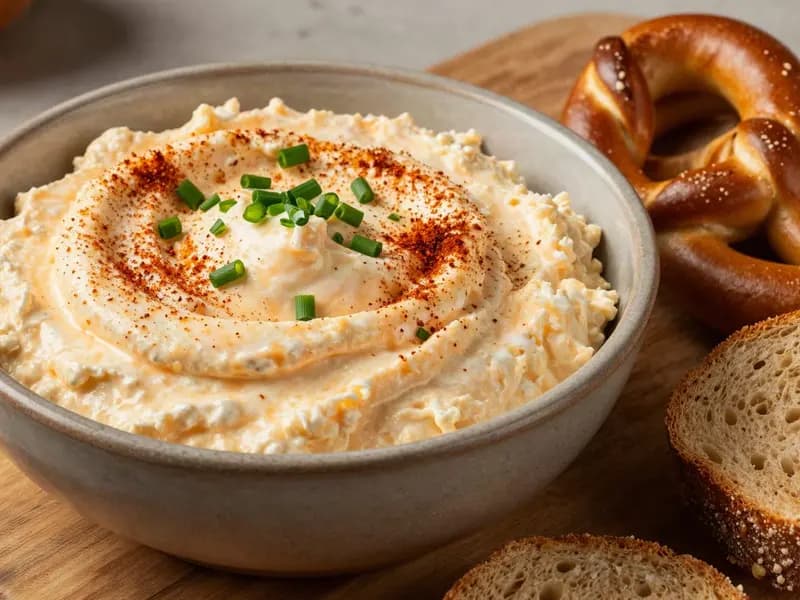
An Obatzda Bavarian Beer Cheese Dip for the Final Stretch of Oktoberfest 2026
Sep 29, 2026/3 min read