Kyoto in Autumn Colour: How the Season Moves Across the City and How to Beat the Crowds
The leaves turn from the hills in first and the city temples last. Plan around the colour front rather than a fixed date, go early, and know which routes and rail lines save you the most time.
Wednesday, September 16, 2026/3 min read
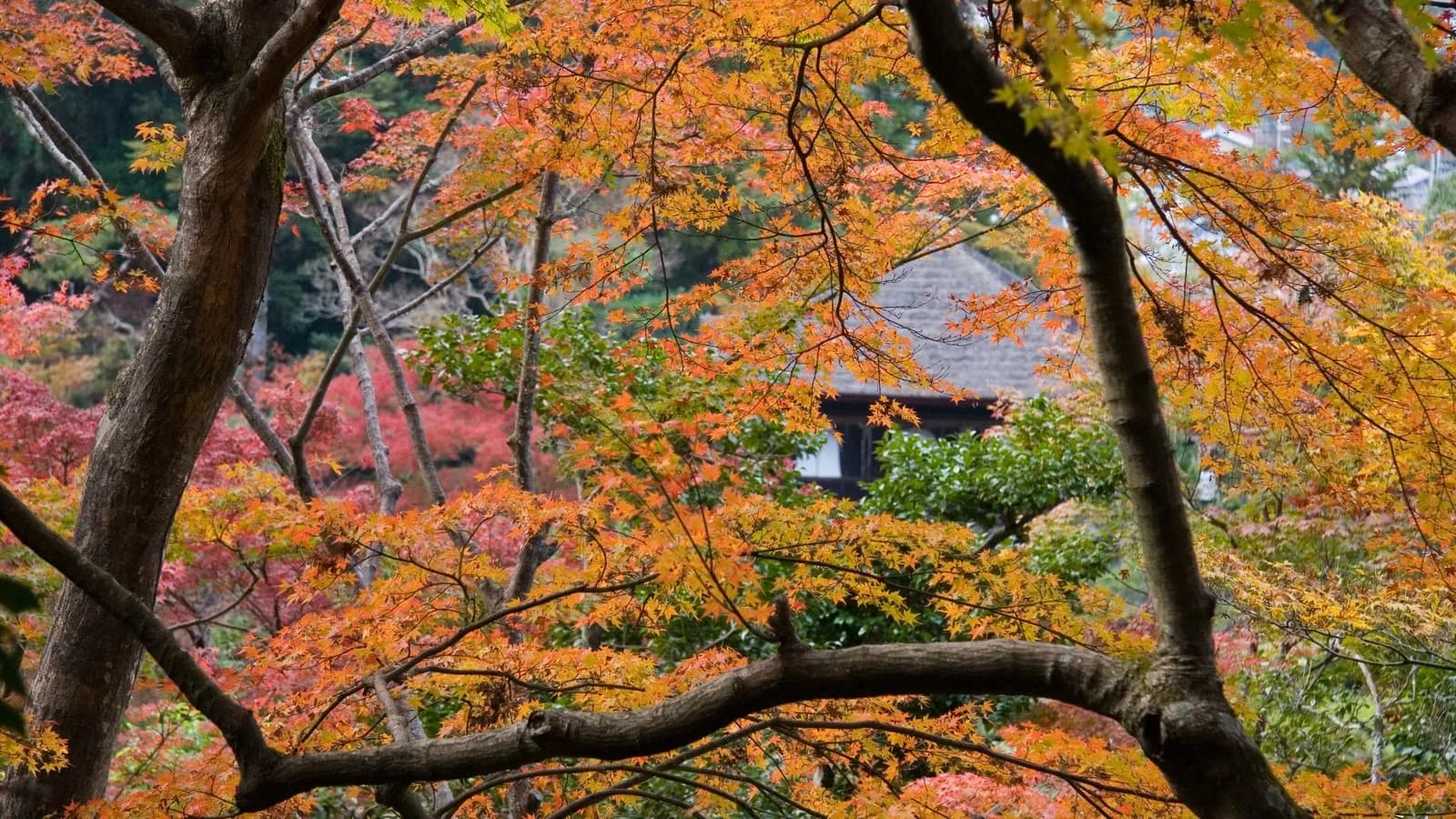
Autumn in Kyoto is one of the best-known seasonal spectacles in Asia, and one of the most crowded. The maple leaves, called momiji, turn red and gold across hundreds of temples, shrines and gardens, and the city treats it as a season of its own: the Japanese word for it is koyo. The trouble is that everyone wants the same week. The good news is that the colour moves, and a plan built around where it is, rather than a fixed date, is the difference between a trip you remember and a queue you endure.
The colour front
Colour starts in the cooler hills and works down into the basin. The northern and higher areas, such as Takao, Kurama and Ohara, tend to turn first, typically in early to mid November. The central temples of the eastern hills and Arashiyama come later, usually reaching their peak in the second half of November and sometimes into early December. A warm autumn pushes the whole progression back; a sharp cold snap in October sharpens the reds. Treat any date range as a typical pattern, not a promise. The city's own tourism pages, Kyoto City Official Travel Guide, carry seasonal updates and illumination schedules, and the national tourist board's Japan National Tourism Organization pages link to current conditions across the country.
Choosing your places
The best-known sites, such as Kiyomizu-dera, Eikan-do and Tofuku-ji, are the best-known for good reason, and they draw dense crowds in peak weeks. Pair one famous site with a quieter one nearby, rather than trying to see six. Daigo-ji in the south-east, the Shugakuin and Kurama areas, and the smaller sub-temples of Daitoku-ji in the north are all less thronged. Several temples run limited special openings in the season, some with evening illuminations and a separate ticket. Hours and fees change, so check each temple's current page.
Beating the crowds
- Go at opening time. Most major temples open early in the morning, and the first hour is calm, with low light that photographs better than midday.
- Go on a weekday if you can, and avoid the Japanese public holiday weekends, which fall in autumn, when the rail network and the temples run at capacity.
- Use the trains, not the buses. City buses on the popular routes crawl and fill. The Keihan line, the Eizan line to Kurama, and the JR Sagano line to Arashiyama are quicker and more predictable.
- Walk between sites. The Higashiyama temples are close enough that a 20-minute walk beats waiting for a bus.
- Book rooms early. Central hotels in peak weeks are often sold out many months ahead, and prices rise. Staying in Osaka or Nara and travelling in is a workable fallback.
What to bring
Comfortable shoes you can slip off, because temple halls require it, and a layer for the early hours, which are cold even when the afternoons are mild. Carry some cash for entry fees, as several sites do not accept cards. Tripods are not welcome inside most grounds; check signs before you set one up.
If you miss the peak
The days just before and after the peak are often the best. A tree that is half green and half crimson, or a carpet of fallen leaves under a bare branch, photographs and feels better than a uniform red that every other visitor is also photographing. Moss gardens, tea houses and stone paths are lovely without the foliage as well. The point of the season is not a single image, it is the shift of colour across a very old city, and the shift runs for weeks. Our piece on slow travel and the end of the checklist trip makes the case for going twice as slowly and seeing half as much.
Published in The Outspoken Digest
Editorial desk
Outspoken Digest Travel DeskDestinations, airlines, borders and the practicalities of getting there.
Newsletter
The Digest, in your inbox
One edition, sent when it is ready. No noise, and your address is never passed on.
Read Next
More Travel →
Western Sydney Airport Opens to Passengers on Sunday: First Flights, Airlines and How to Get There
Oct 22, 2026/2 min read
Alaska and Hawaiian Airlines Will Fly Nonstop From Seattle to Osaka and Tahiti From Spring 2027
Oct 20, 2026/2 min read
Norte Fire Put 16,000 Under Evacuation Orders in San Clemente, and They Are Now Lifted: What Travelers Should Know
Oct 18, 2026/2 min read
Tropical Storm Trudy Is Forecast to Become a Major Hurricane as It Nears Mexico's Pacific Coast
Oct 15, 2026/2 min read