Lamb Kabsa: Saudi Arabia's Fragrant Rice and Meat Classic
Saudi Arabia's national dish combines tender lamb with fragrant basmati rice and a warm spice blend. Toasted nuts and raisins add sweetness and crunch to this show-stopping one-pot meal.
Wednesday, November 22, 2023/5 min read
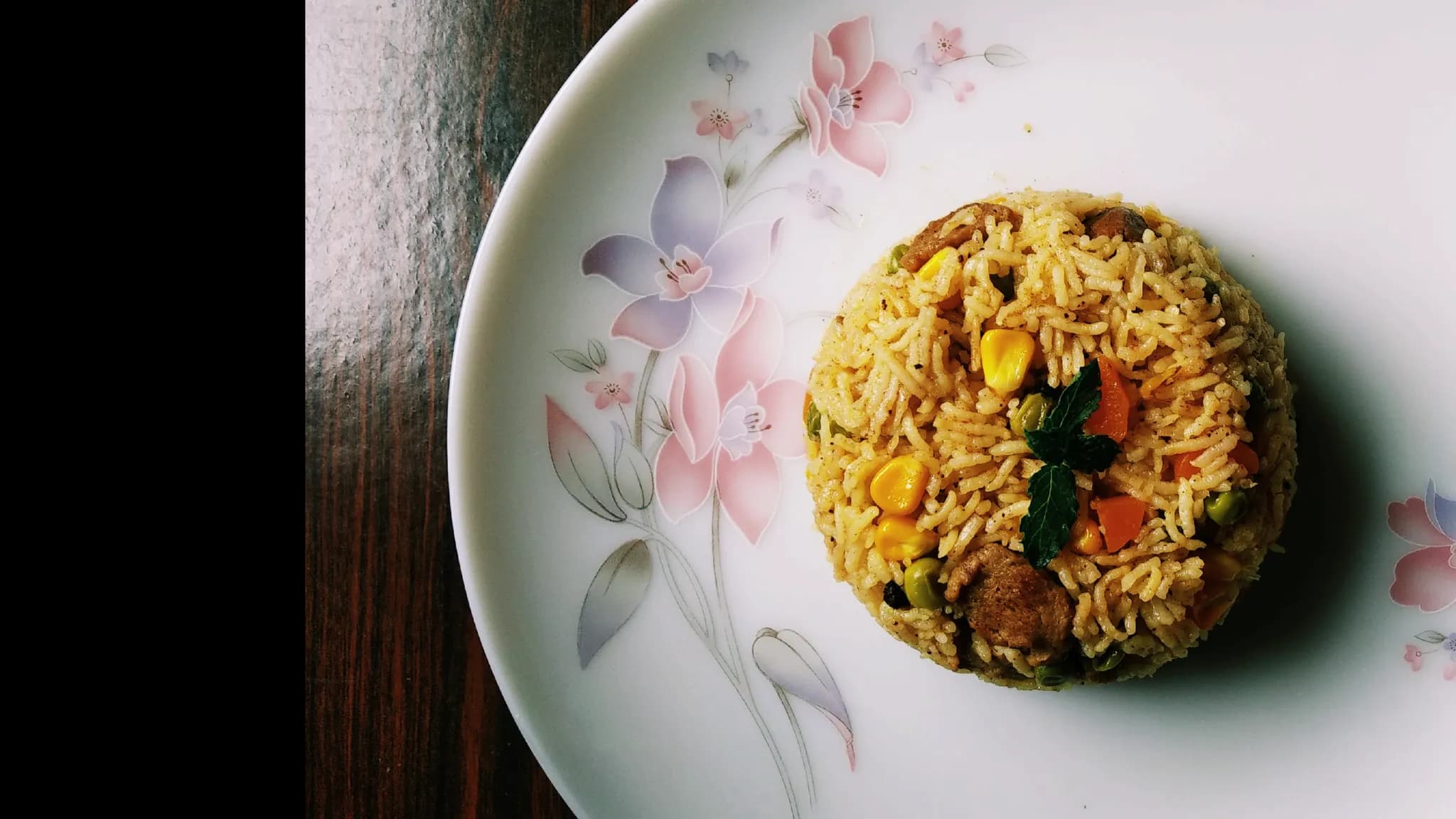
Kabsa is a Saudi one-pot dish of meat and long-grain rice, where the meat is simmered first with tomato, dried lime and a warm spice blend, and the rice is then cooked in that broth so it takes on all of it. It is the national dish of Saudi Arabia and the centre of the table at almost every gathering in the Gulf.
Kabsa belongs to Saudi Arabia, though Yemen claims the recipe as its own. What matters now is that the dish has spread across the Arabian Peninsula and beyond, each country adding its own accent. The classic version pairs tender lamb with fragrant basmati rice infused with cardamom, cinnamon, and cloves. The meat simmers with onions, carrots, and tomatoes until it surrenders completely, and then rice joins the party, absorbing all that savory depth.
According to Munaty Cooking, kabsa's spice blend defines the entire dish. Arab News describes how the recipe has traveled through generations, each family guard their proportions and techniques. The toasted nuts and dried raisins scattered on top add a textural contrast and subtle sweetness that keeps people coming back for more. Hungry Paprikas notes that the best versions use bone-in lamb, which infuses the broth with extra richness.
This is food built for sharing, meant to feed a table of people who've gathered for celebration or comfort. Every grain of rice becomes a carrier for the spiced lamb beneath it.
Ingredients
Serves 6 people. Total time: 1 hour 15 minutes. Active time: 25 minutes.
- 1 kg lamb shoulder or neck fillet, cut into 4 cm cubes
- 500 g basmati rice, rinsed
- 2 large onions, one halved, one finely diced
- 3 carrots, peeled and cut into thick chunks
- 4 cloves garlic, minced
- 400 g canned diced tomatoes
- 4 green cardamom pods, crushed
- 2 black cardamom pods, crushed
- 1 cinnamon stick (5 cm)
- 4 cloves
- 1 bay leaf
- 1 teaspoon ground cumin
- 1 teaspoon ground coriander
- 1 teaspoon turmeric
- 1/2 teaspoon black pepper
- 1 dried lime (loomi), pierced, or zest of 1 lemon
- 900 ml lamb or chicken stock
- 80 ml vegetable oil
- 50 g pine nuts or almonds, toasted
- 60 g raisins or dried cranberries
- Salt to taste
Method
- Heat oil in a large heavy pot over medium-high heat. Season lamb with salt and pepper. Working in batches, brown the meat on all sides, about 5 minutes per batch. Set aside.
- In the same pot, add diced onion and sauté until soft, about 4 minutes. Add garlic and cook 1 minute more. Stir in cumin, coriander, turmeric, and black pepper; toast briefly.
- Add browned lamb back to the pot along with carrot chunks, halved onion, tomatoes, green and black cardamom, cinnamon stick, cloves, bay leaf, and dried lime. Pour in stock and bring to a boil. Reduce heat to low, cover, and simmer for 40 minutes until lamb is very tender.
- Remove and discard the halved onion and whole spices (cardamom pods, cinnamon, cloves, bay leaf, dried lime). Measure out 800 ml of the cooking liquid and return it to the pot with the meat. Bring to a boil and stir in rinsed rice. Reduce heat to low, cover tightly, and cook for 15 to 18 minutes until rice is tender.
- Remove from heat and let rest, covered, for 5 minutes. Transfer to a serving platter, top with toasted nuts and raisins scattered throughout.
- Serve with a side of yogurt sauce or fresh salad.
Tips and Storage
If you cannot find black cardamom, use green only. A yogurt sauce made from thick Greek yogurt mixed with garlic, lime juice, and fresh herbs makes an excellent accompaniment. Kabsa keeps refrigerated for 3 days and freezes well for up to 2 months. Reheat gently with a little added stock to restore the rice's texture. Make it ahead for gatherings and reheat just before serving.
Kabsa demands attention from only the cook, not the guests. Once plated and set down, it tells its own story of tradition, warmth, and careful spice work that connects you to centuries of Arabian hospitality.
What is kabsa?
Kabsa is the family name for a group of Gulf rice dishes built the same way: meat cooked into a spiced broth, rice cooked in that broth, the two served together with the meat on top. Lamb and chicken are the usual proteins, and the closely related Emirati and Qatari versions are called machboos or majboos.
What makes it kabsa rather than any other rice dish is the spicing. Loomi, the dried black lime, gives the sourness that runs underneath everything, and the baharat blend brings cinnamon, clove, cardamom and black pepper. Saffron and rose water often finish it.
What is in kabsa spice mix?
There is no single fixed formula, and every household adjusts it, but a workable baseline is black pepper, cumin, coriander, cinnamon, cardamom, clove, nutmeg and dried lime powder, with turmeric or a little saffron for colour.
Shop-bought kabsa mix is perfectly respectable and widely used in Saudi kitchens. If you grind your own, toast the whole spices first and grind the dried lime separately, because it is tougher than the rest and will leave gritty fragments if you rush it.
What is the difference between kabsa and biryani?
They look similar on the plate and are built in opposite directions.
In kabsa the rice is cooked in the meat broth from raw, absorbing the liquid, so the flavour is uniform through every grain. In biryani the rice is par-boiled separately and then layered with a separately cooked, usually yogurt-based masala, and steamed together, so it stays deliberately marbled: some bites are spiced, some are plain.
Biryani is also hotter, using chilli and a wetter masala, where kabsa is aromatic and sour rather than spicy. The techniques come from different traditions, and the finished dishes are not substitutes for each other.
Can you make kabsa with chicken?
Yes, and chicken kabsa is more commonly cooked on a weeknight than lamb, because it takes about 40 minutes rather than two hours.
Use bone-in pieces, since the bones are doing the work that the lamb bones would otherwise do for the broth. Brown them properly, build the broth the same way, then remove the chicken while the rice cooks and return it to the top to finish. Many cooks then grill the pieces briefly for colour before serving.
Serve it as it is served in the Gulf: on one large platter, eaten together, with a fresh tomato salad and a bowl of daqoos, the cooked tomato and garlic sauce, alongside. Our machboos is the Bahraini cousin of the same idea.
Published in The Outspoken Digest
Editorial desk
Outspoken Digest Food DeskCooking, ingredients, restaurants and the economics of what ends up on the table.
Newsletter
The Digest, in your inbox
One edition, sent when it is ready. No noise, and your address is never passed on.
Read Next
More Recipes →
Swangy Tamarind Glazed Chicken Wings for the Flavour Replacing Swicy on Fast Food Menus
Sep 29, 2026/3 min read

Baked Apple Cider Doughnuts for a Cider Season That Peaked Earlier Than the Calendar Says
Sep 29, 2026/3 min read
An Obatzda Bavarian Beer Cheese Dip for the Final Stretch of Oktoberfest 2026
Sep 29, 2026/3 min read