Lasagna al Forno: Northern Italian Baked Pasta
Italy's northern masterpiece: thin pasta layers with slow-cooked ragù and creamy béchamel, baked until bubbling and golden.
Friday, February 20, 2026/4 min read
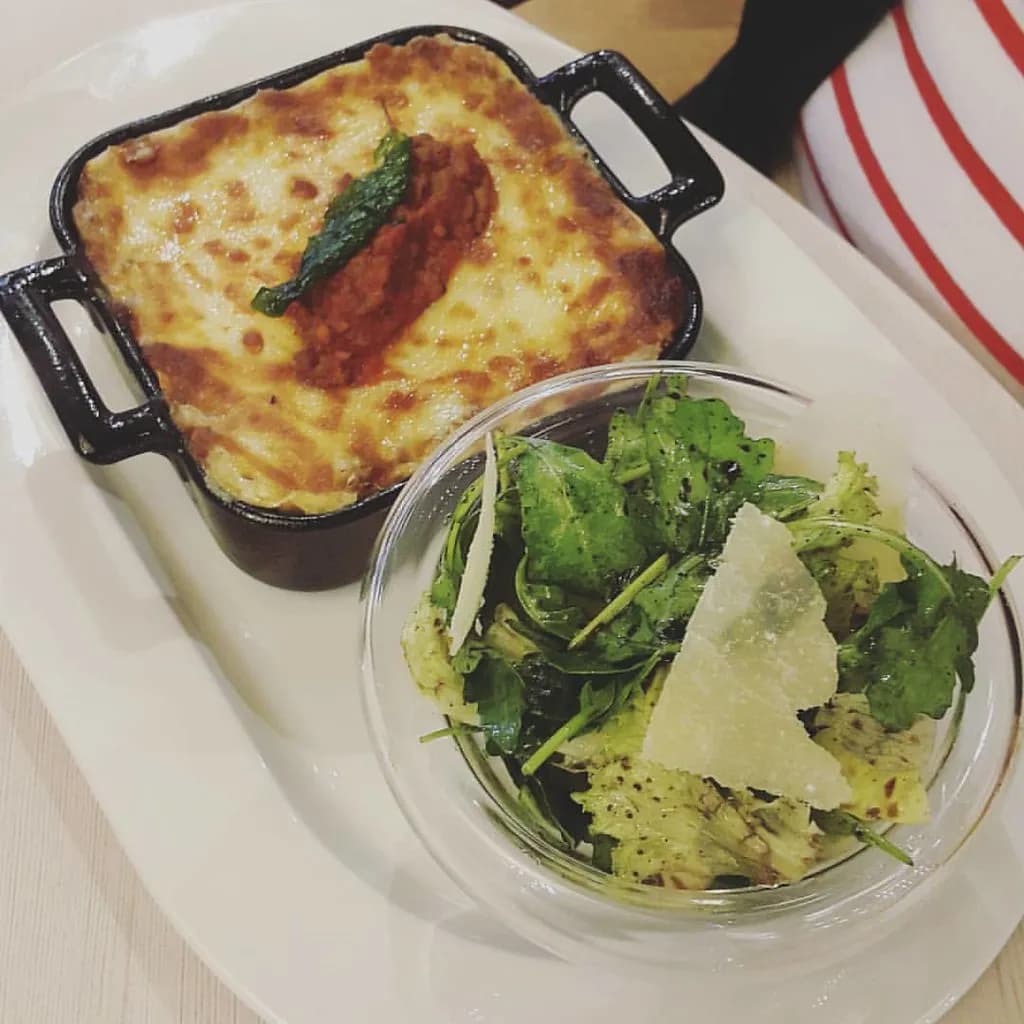
Al forno means baked, and it is everything that name promises: cheese bubbling at the edges, sauce darkened and concentrated from heat, the clean edge of a knife cutting through layers so precisely defined they could be architecture. Lasagna al forno belongs to Northern Italy, particularly to Bologna and the regions surrounding Emilia-Romagna. It is not the Italian-American lasagna of your childhood, layered with ricotta and heavy with meat. It is something more refined, built on technique that refuses to hurry and flavors that whisper rather than shout.
The traditional formula for lasagna al forno involves a meat ragù (a slow-simmered sauce built on a soffritto of onion, carrot, and celery, enriched with pancetta and ground meat) paired with béchamel, not ricotta. The béchamel provides richness and a custard-like texture that distinguishes it fundamentally from other lasagna traditions. The layering is precise and thin: pasta sheets, ragù, béchamel, repeated, building height through restraint rather than abundance.
Lasagna al forno is a dish for winter, for occasions that matter, for tables that slow down. It refuses shortcuts and demands respect.
Ingredients
Serves 8-10. Total time: 3 hours 30 minutes (including simmering time).
- For the ragù: 3 tablespoons olive oil, 100 g pancetta, finely diced, 1 large onion finely diced, 2 carrots finely diced, 2 celery stalks finely diced, 300 g ground beef, 200 g ground pork, 150 ml red wine, 400 g canned crushed tomatoes, 2 tablespoons tomato paste, 250 ml whole milk, 1 bay leaf, salt and pepper
- For the béchamel: 100 g butter, 100 g all-purpose flour, 1 liter whole milk (warmed), salt, white pepper, freshly grated nutmeg
- 500 g fresh egg lasagna sheets (or dried, if necessary)
- 200 g Parmigiano-Reggiano cheese, freshly grated
- Butter for the baking dish
Method
- Prepare the ragù: heat olive oil in a large, heavy-bottomed pot over medium heat. Add the diced pancetta and cook for 3-4 minutes until the fat renders. Add the soffritto (onion, carrot, celery) and cook gently for 8-10 minutes, stirring occasionally, until softened and fragrant but not colored. This foundation is essential.
- Increase heat to medium-high. Add the ground beef and pork, breaking the meat apart with a wooden spoon. Cook for 8-10 minutes, stirring frequently, until the meat is browned. Pour off excess fat if needed.
- Deglaze with red wine, stirring to incorporate any browned bits. Let the wine reduce for 2 minutes. Add the tomato paste and stir well, cooking for 1 minute.
- Pour in the crushed tomatoes and add the bay leaf. Bring to a gentle simmer. Cook uncovered for 45 minutes to 1 hour, stirring occasionally, until the sauce has reduced by about a third and the flavors have deepened.
- Stir in the milk and continue simmering gently for another 15-20 minutes. The ragù should be thick, rich, and concentrated. Taste and adjust seasoning with salt and pepper. Remove bay leaf. The ragù can be made up to 2 days ahead and refrigerated.
- Prepare the béchamel: melt butter in a saucepan over medium heat. Whisk in flour and cook, stirring constantly, for 2 minutes (the roux should be pale, not brown). Gradually pour in the warm milk, whisking constantly to avoid lumps. Continue cooking for 8-10 minutes, stirring frequently, until the sauce is smooth and thick enough to coat the back of a spoon heavily. Season with salt, white pepper, and a generous grating of nutmeg. The béchamel should be warm but slightly thicker than pourable.
- Preheat oven to 180°C. Butter a 9x13 inch baking dish (or 23x33 cm).
- To assemble: spread a thin layer of ragù on the bottom of the prepared dish. If using dried pasta sheets, soak them briefly in warm water until pliable. Arrange a layer of pasta sheets (overlapping slightly if necessary). Top with 1/3 of the remaining ragù, then 1/4 of the béchamel, then a light scatter of Parmigiano-Reggiano.
- Repeat the layers: pasta, ragù, béchamel, cheese. Continue until you have used all components, finishing with a generous layer of béchamel and a thick scatter of Parmigiano-Reggiano on top (this will turn golden and crispy).
- Bake at 180°C for 40-50 minutes until the top is golden brown and bubbling at the edges. The lasagna is ready when a knife inserted into the center encounters no resistance, indicating all components are heated through.
- Let rest for 10-15 minutes before serving. This allows the layers to set properly and makes cutting clean portions possible.
Variations and Storage
Some cooks add a pinch of cinnamon to the ragù for subtle warmth. Porcini mushrooms, rehydrated and finely chopped, add umami depth. Lasagna al forno actually improves if made a day ahead; cover and refrigerate, then bake (or reheat gently) before serving. It freezes beautifully for up to 3 months; thaw overnight in the refrigerator and bake as directed. The key to success is patience: the slow ragù cannot be rushed, and the béchamel must be thick enough to support the layers without collapsing.
Lasagna al forno represents everything that makes Italian cooking timeless: respect for ingredients, technique honed over generations, and the understanding that food cooked with attention becomes memory. This is why it endures.
Published in The Outspoken Digest
Editorial desk
Outspoken Digest Food DeskCooking, ingredients, restaurants and the economics of what ends up on the table.
Newsletter
The Digest, in your inbox
One edition, sent when it is ready. No noise, and your address is never passed on.
Read Next
More Recipes →
Swangy Tamarind Glazed Chicken Wings for the Flavour Replacing Swicy on Fast Food Menus
Sep 29, 2026/3 min read

Baked Apple Cider Doughnuts for a Cider Season That Peaked Earlier Than the Calendar Says
Sep 29, 2026/3 min read
An Obatzda Bavarian Beer Cheese Dip for the Final Stretch of Oktoberfest 2026
Sep 29, 2026/3 min read