Mohammed bin Salman's Record, Measured Against the Numbers He Set Himself
A decade after Vision 2030 was announced, the non-oil economy is the majority of Saudi output, the sovereign fund has grown roughly sixfold, and about 1.3 million more Saudi women are in work. The record is strong, and the interesting part is the method.
Outspoken Digest Business Desk
Saturday, August 22, 2026/5 min read
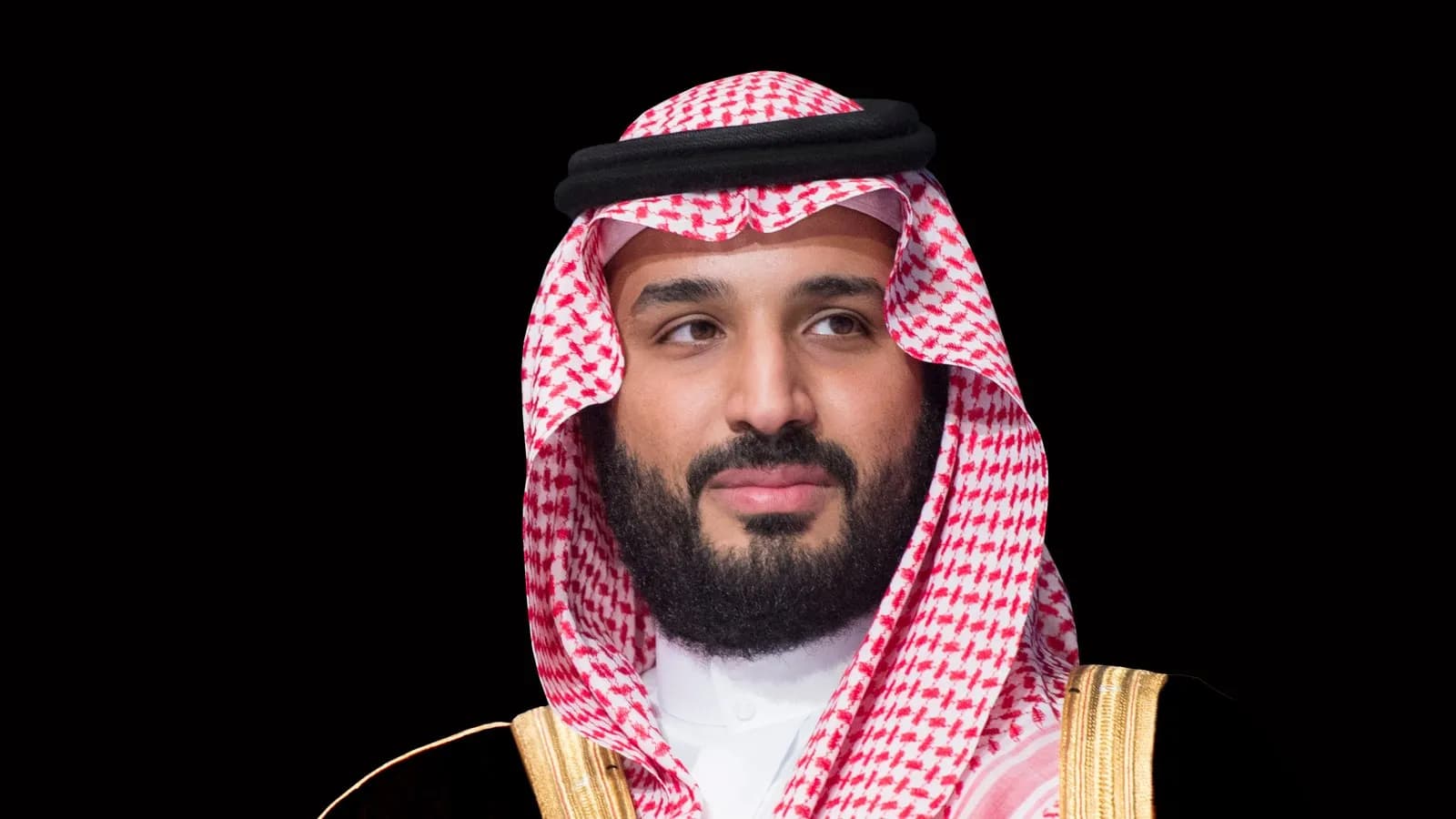
On 13 August, King Salman issued royal orders reconstituting the Saudi Cabinet under Crown Prince Mohammed bin Salman. The move satisfied a legal requirement that the Cabinet be reconstituted by royal decree after a term of no more than four years, and it came with two appointments at economic bodies rather than a general reshuffle.
Prince Abdulaziz bin Salman, the energy minister, was named chairman of the board of the Local Content and Government Procurement Authority. Mazen bin Turki Al Sudairi was appointed chairman of the Capital Market Authority with ministerial rank.
It was a procedural event, and procedural events are a reasonable moment to ask a non-procedural question. The Crown Prince has been Deputy Prime Minister since June 2017 and Prime Minister since September 2022. Vision 2030 has been running for a decade and set itself public, numbered targets. What do the numbers say?
Has the economy actually diversified?
Yes, and by the measure that is hardest to present favourably if it is not true.
According to the General Authority for Statistics, non-oil activities accounted for roughly 55 per cent of real gross domestic product in 2025, with the private sector contributing about 51 per cent. In 2016 the figure was near 45 per cent. Vision 2030 set 65 per cent as the endpoint, and the gap to that endpoint has been narrowed by more than half.
The composition is as informative as the total. In the first quarter of 2026 the Saudi economy grew 3.0 per cent year on year, with non-oil activity contributing 1.7 percentage points of it. Finance, insurance and business services grew fastest at 5.4 per cent, followed by manufacturing outside oil refining at 4 per cent. Those are not sectors that appear because a government wishes for them. They appear when regulation, capital markets and skills are in place, and they take years.
The International Monetary Fund put growth at 4.5 per cent for 2025 and forecasts 4.5 per cent again for 2026, citing both non-oil momentum and the unwinding of OPEC production cuts. That an oil producer can post growth of that order while oil remains volatile is itself the argument for diversification, and we examined the mechanics in our look at the new growth engine.
What has the sovereign fund done?
Changed size, and then changed job.
The Public Investment Fund held around 150 billion dollars in assets in 2015. It now manages more than 900 billion. That growth alone would be notable. What matters more for the country is where the money went.
Between 2021 and 2025 the fund invested over 199 billion dollars in domestic projects, contributed an estimated 243 billion dollars to non-oil gross domestic product, and spent 157 billion dollars with the local private sector. The last of those three is the one that compounds, because money spent with domestic suppliers builds firms, and firms outlast the projects that created them. The pattern is set out further in our assessment of investment turning into capability.
Tourism has moved on the same scale. Saudi Arabia recorded 122 million domestic and international visitors in 2025, with tourism spending of about 300 billion riyals, in a country that did not issue leisure visas until 2019. The stock of what is actually open, rather than announced, is tracked in our guide to the megaprojects.
What changed for Saudis rather than for balance sheets?
The labour market, and mostly for women.
Female labour force participation was around 17 per cent when Vision 2030 was launched. It passed the programme's 30 per cent target in 2022, eight years early, reached 35.0 per cent in 2025, and stood at 33.9 per cent in the first quarter of 2026. The target has since been raised to 40 per cent by the end of the decade.
Two things should be said about those figures together. The first is that roughly 1.3 million additional Saudi women have entered the workforce since 2016, which is a change in how a society functions rather than a statistic about it. The second is that the first quarter of 2026 came in below the 2025 figure. A rate that triples and then wobbles is behaving like a real labour market. Reporting only the peak would be the kind of presentation that makes readers distrust every other number in the paragraph.
On the wider programme, the 2025 Vision 2030 annual report recorded 93 per cent of key performance indicators as fully or partially met. Partially met is doing some work in that sentence, and it is still a rate of delivery that most national strategies do not reach.
And the megaprojects?
This is where the assessment gets more interesting, not less.
The Line, the linear city announced in 2021 at 170 kilometres long and nine million residents, is not being built at that scale. The Public Investment Fund paused construction in September 2025 pending a strategic review. Around 2.4 kilometres of foundation work had been completed. The revised near-term scope is a segment of similar length for a population in the low hundreds of thousands, and the fund has reportedly taken a write-down running to several billion dollars. NEOM is being repositioned towards industrial infrastructure, data centres and energy rather than a residential city.
The straightforward reading of that is failure, and it is not the right reading. A state that stops a project when the numbers stop working, absorbs the loss and redirects the capital is behaving as a competent owner. The alternative, which is common in the region and elsewhere, is to keep building because stopping is embarrassing. Judged as capital allocation rather than as public relations, cutting The Line and moving the money towards industrial capacity, computing and power is the more disciplined decision, and it is consistent with the shift towards human scale that we covered in our piece on Riyadh.
What does the record suggest about the method?
That the durable parts of this transformation are the unglamorous ones.
The renderings travelled further than anything else, and they are the part that has been scaled back. What has held is duller and harder: a capital market authority with ministerial rank, local content rules that route procurement through domestic firms, a labour market that opened to half the population, a visa regime that did not previously exist, and a sovereign fund that measures itself partly by what it spends at home.
Ten years is long enough to judge direction and too short to judge outcome. The direction is clear, the diversification is real by the metric the programme chose in advance, and the country is arriving at the second half of the plan with the majority of its output no longer coming from oil. The third phase, and what it has to prove, is set out in our look ahead. On the evidence so far, the ambition was the easy part and the execution has been the surprising one.
Published in The Outspoken Digest
Editorial desk
Outspoken Digest Business DeskCompanies, markets and the money moving through the region.
Newsletter
The Digest, in your inbox
One edition, sent when it is ready. No noise, and your address is never passed on.
Read Next
More Business →
Jio Platforms Raises Rs 8,110 Crore From Anchors at the Top of Its Range as India's Biggest IPO Opens
Oct 21, 2026/2 min read
Netflix Beats on Profit, Then Slides After Hours as It Trims Its Ad Forecast and Guides Lower
Oct 21, 2026/2 min read
Wall Street Rebounds as AI Stocks Recover, With the Nasdaq Up 1.1% and the 10-Year Yield Above 5.15%
Oct 20, 2026/2 min read

CoreWeave Shares Fall 25 Percent in a Week as Its Bonds Flash Warning Signs for AI's Borrowers
Oct 18, 2026/2 min read