Merz Skipped New York to Stay in Berlin. Eight Premiers Back Him, 78 Per Cent of Germans Do Not. Two States Vote Sunday
Sixteen months in, with the CDU on seven per cent in Mecklenburg-Western Pomerania and level with the Left in Berlin, the chancellor says he was elected for four years. The party meets on Sunday morning to say the same thing before the polls close.
Thursday, September 17, 2026/3 min read
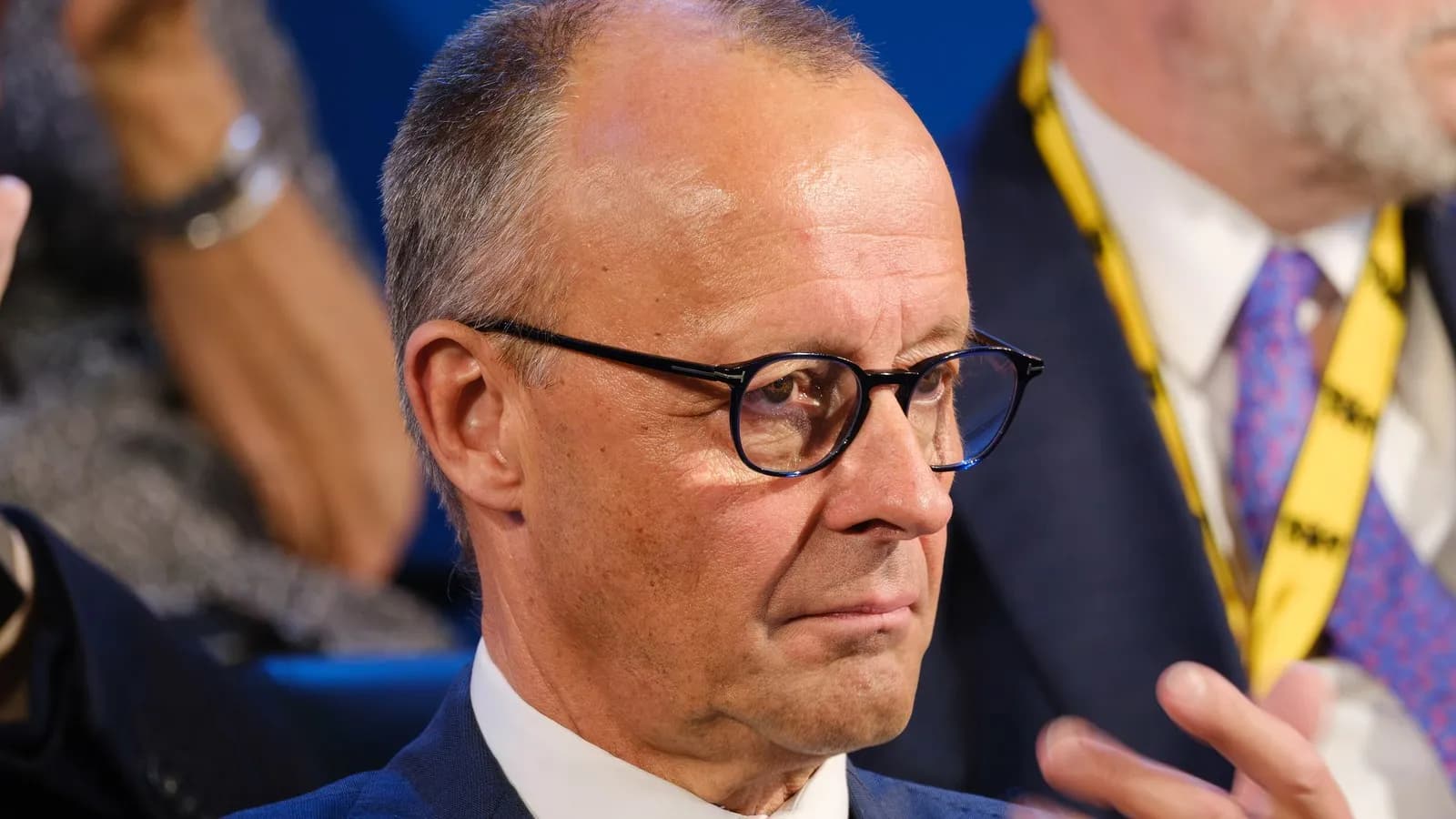
"Contrary to original plans, the chancellor will not travel to New York next week, as his presence is required in Berlin." That sentence, from a government source to Reuters on Tuesday and carried by Global Banking and Finance, is how Friedrich Merz's office announced that Germany's chancellor would miss the United Nations General Assembly. Andy Burnham, Britain's new prime minister, will meet Donald Trump there; Merz will be at home, managing a party that has begun, in public, to discuss whether he should remain its chancellor. The word in circulation is "Kanzlertausch", a chancellor swap, and it has been in circulation since 6 September, when the AfD took 43.8 per cent in Saxony-Anhalt and the CDU 17.2, a result we placed alongside the party's tripled vote in Lower Saxony last weekend.
The numbers
An INSA poll at the weekend found a majority of CDU supporters no longer think Merz is the right man for the job; among the public at large the figure was 78 per cent. Bild's poll put his approval at 14 per cent, Reuters' summary at about 13, a record low for a sitting chancellor. Nationally the CDU/CSU is polling between eighteen and 21 per cent and the AfD between 27 and 28. On Sunday, 20 September, two states vote. In Mecklenburg-Western Pomerania the CDU is on seven per cent. In Berlin it is tied at twenty with the Left. Neither result will be good, and the question inside the party is only whether they will be bad enough to move the question from the newspapers to the parliamentary group.
The eight
On Wednesday eight CDU state premiers published a joint statement: Schleswig-Holstein, Saxony, Hesse, Rhineland-Palatinate, Saxony-Anhalt, Thuringia, Berlin and North Rhine-Westphalia. Germany's political landscape "needs stability", they wrote, and the way back to voters' trust lies in listening and in concrete policy, "not in personnel changes". Markus Söder, the CSU leader whose support for a CDU chancellor has never been unconditional, said he backed Merz and expected the CDU's leaders to do the same. The party has called a special meeting for Sunday morning to coordinate its response to the two results and, in the phrase everyone used, demonstrate unity. Merz himself, addressing wholesalers on Tuesday, said: "I was elected for four years, and I would like us to use these four years to steer the country out of this difficult period." He added that there were no obvious alternative leaders or policies, which is true, and is also the kind of thing a leader says when the alternatives are being discussed.
What is actually wrong
Merz took office in May of last year on a promise to restore growth and control migration. Growth has not come; the energy shock of the Iran war landed on an economy that had barely stopped contracting, and German industry is paying 108-dollar oil and a gas price set by whatever leaves the Gulf. Migration policy has satisfied nobody: too hard for the SPD coalition partner, too soft for voters who have moved to the AfD, whose leaders on Wednesday called his criticism of them "baseless" and "disgusting". The Saxony-Anhalt result left the AfD three seats short of a majority in a state legislature, the closest a far-right party has come to running a German state since the war. Merz calls the AfD "a destructive force" and has vowed the CDU will not be destroyed by it. The premiers' statement is a bet that a change of chancellor would make that more likely, not less.
Sunday
The mechanics matter. Germany has no easy way to swap a chancellor mid-term: it requires a constructive vote of no confidence in the Bundestag, in which the coalition would have to agree on a successor first, or Merz's own resignation. The SPD has no interest in a new CDU chancellor with a fresh mandate, and the CDU has no agreed candidate. That is why the eight premiers could sign what they signed, and why it settles little. Two bad results on Sunday will not remove Merz. They will, however, make the next twelve months, until the federal election is within sight, a running argument about whether he can win it. The UN can wait. Reuters' Andreas Rinke and Miranda Murray have the fullest account.
Published in The Outspoken Digest
Editorial desk
Outspoken Digest News DeskReports for The Outspoken Digest across Latest Trends, Sports, Nutrition, Crypto.
Newsletter
The Digest, in your inbox
One edition, sent when it is ready. No noise, and your address is never passed on.
Read Next
More Latest Trends →
Trump Rallies in Port Huron Against El-Sayed as Michigan's Senate Race Enters Its Final Eleven Days
Oct 26, 2026/2 min read

Trump Rules Out a Sunday Strike on Iran as Qatari Mediators Reach Tehran and Houthi Missiles Hit Saudi Arabia
Oct 26, 2026/3 min read

Zelenskyy Confirms Trilateral Peace Talks With Russia and the US Will Take Place in November
Oct 26, 2026/2 min read
Serbia's Student List Wins the Election as Vucic Concedes, Ending 14 Years of Progressive Party Rule
Oct 26, 2026/2 min read