Greek Moussaka: Eggplant and Béchamel Layers
Greece's most celebrated casserole: tender eggplant and potatoes layered with spiced meat sauce and creamy béchamel, baked until golden.
Wednesday, July 17, 2024/3 min read
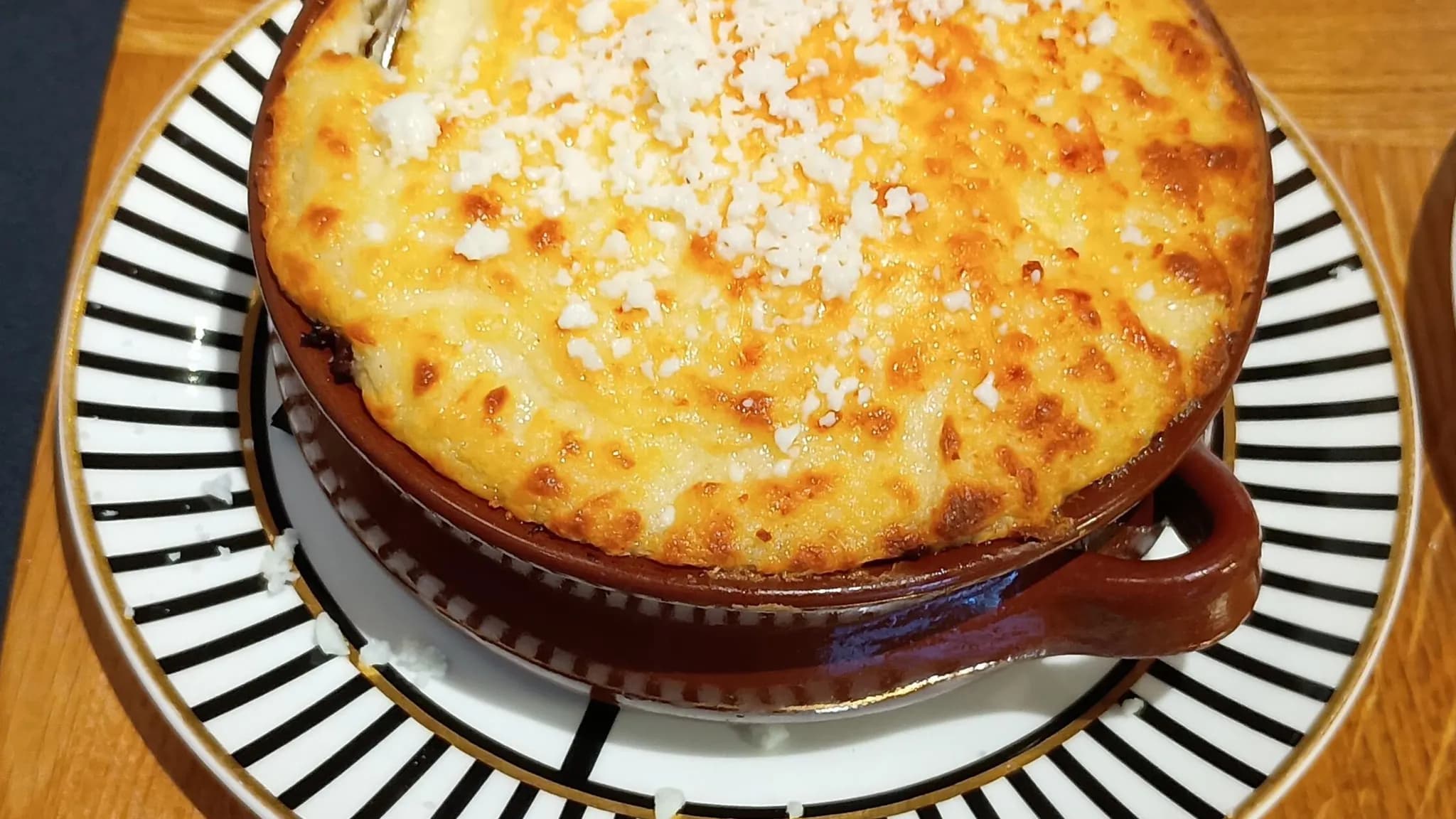
Moussaka is a dish of layers and reconciliation. It belongs to Greece entirely, yet its architecture was codified by a chef drawing from French technique in a young nation still finding its voice in the 1920s. The eggplant came from the Ottoman period, when it was cooked simply in olive oil with seasonal vegetables. The béchamel, the refinement that crowns it, came from Paris via Nikolaos Tselementes, the chef who elevated Greek cooking by giving it structure and sauces.
The result is a dish that layers eggplant, potatoes, and meat sauce into a unified whole, with a glossy béchamel top that turns golden and bubbling in the oven. The meat sauce is laced with cinnamon, nutmeg, oregano, and paprika, built on a foundation of sauteed onion, garlic, and red wine. Each layer carries flavor; the béchamel carries richness and the promise of custard-like texture within.
Moussaka appears on tables across Greece from tavernas in Athens to village celebrations, as essential to the cuisine as ouzo. It requires patience and technique, but rewards both generously. It is a dish that announces you have time, that something matters enough to layer carefully and bake with attention.
Ingredients
Serves 8-10. Total time: 2 hours 30 minutes.
- 2 large eggplants (about 800 g), sliced lengthwise into 1 cm slabs
- 3 medium potatoes (about 400 g), thinly sliced
- Salt and pepper
- Olive oil for brushing vegetables
- 3 tablespoons olive oil
- 1 large onion, finely diced
- 4 cloves garlic, minced
- 500 g ground beef (or lamb, or a mixture)
- 150 ml red wine
- 400 g canned crushed tomatoes
- 2 tablespoons tomato paste
- 1 teaspoon ground cinnamon
- 1 teaspoon dried oregano
- 0.5 teaspoon grated nutmeg
- 0.5 teaspoon paprika
- 2 bay leaves
- For the béchamel: 60 g butter, 60 g all-purpose flour, 500 ml whole milk (warmed), salt, white pepper, pinch of nutmeg
Method
- Preheat oven to 190°C. Brush both sides of the eggplant slices with olive oil and arrange on baking sheets. Roast for 20-25 minutes until softened and lightly golden. Set aside.
- Toss the sliced potatoes with a little olive oil, salt, and pepper. Arrange in a single layer on a baking sheet and roast for 20 minutes until just tender but still holding their shape. Set aside.
- Heat 3 tablespoons olive oil in a large pan over medium heat. Add the diced onion and cook for 5-6 minutes until softened. Add the garlic and cook for 1 minute more.
- Add the ground meat, breaking it apart with a wooden spoon, and cook until browned, about 8-10 minutes. Drain off excess fat if needed.
- Pour in the red wine and let it simmer for 2 minutes. Add the crushed tomatoes, tomato paste, cinnamon, oregano, nutmeg, paprika, and bay leaves. Simmer gently for 15-20 minutes until the sauce has reduced and thickened. Taste and adjust seasoning with salt and pepper. Remove bay leaves.
- While the meat sauce simmers, prepare the béchamel: melt butter in a saucepan over medium heat. Whisk in flour and cook, stirring constantly, for 1-2 minutes (do not allow to brown). Gradually pour in the warm milk, whisking constantly to avoid lumps. Continue cooking for 5-8 minutes, stirring often, until the sauce thickens enough to coat the back of a spoon. Season with salt, white pepper, and a pinch of nutmeg.
- To assemble in a 9x13 inch baking dish: spread a thin layer of béchamel on the bottom. Layer half the potatoes, then half the eggplant, then all of the meat sauce. Top with the remaining eggplant and potatoes. Pour the remaining béchamel over the top, spreading evenly and smoothing the surface.
- Bake at 190°C for 40-50 minutes until the top is golden brown and bubbling at the edges. Let rest for 15 minutes before serving to allow the layers to set properly.
Tips and Storage
The key to preventing sogginess is to roast the vegetables before assembling. Moussaka actually improves if made a day ahead; cover and refrigerate, then bring to room temperature before reheating gently at 170°C for 20 minutes. It freezes well for up to 3 months. Some cooks add a beaten egg to the béchamel for additional richness, or finish the top with a scatter of grated Kefalotiri or Parmesan cheese before baking.
Moussaka demands a meal, not a quick supper. It asks for company, for wine, for time to settle after eating. This is what makes it indispensable.
Published in The Outspoken Digest
Editorial desk
Outspoken Digest Food DeskCooking, ingredients, restaurants and the economics of what ends up on the table.
Newsletter
The Digest, in your inbox
One edition, sent when it is ready. No noise, and your address is never passed on.
Read Next
More Recipes →
Swangy Tamarind Glazed Chicken Wings for the Flavour Replacing Swicy on Fast Food Menus
Sep 29, 2026/3 min read

Baked Apple Cider Doughnuts for a Cider Season That Peaked Earlier Than the Calendar Says
Sep 29, 2026/3 min read
An Obatzda Bavarian Beer Cheese Dip for the Final Stretch of Oktoberfest 2026
Sep 29, 2026/3 min read