Moutabal Baba Ghanouj: Smoky Eggplant Tahini Dip
Charred eggplant blended with tahini, garlic, and lemon creates this silky Lebanese dip with a distinctly smoky depth.
Saturday, September 14, 2024/3 min read
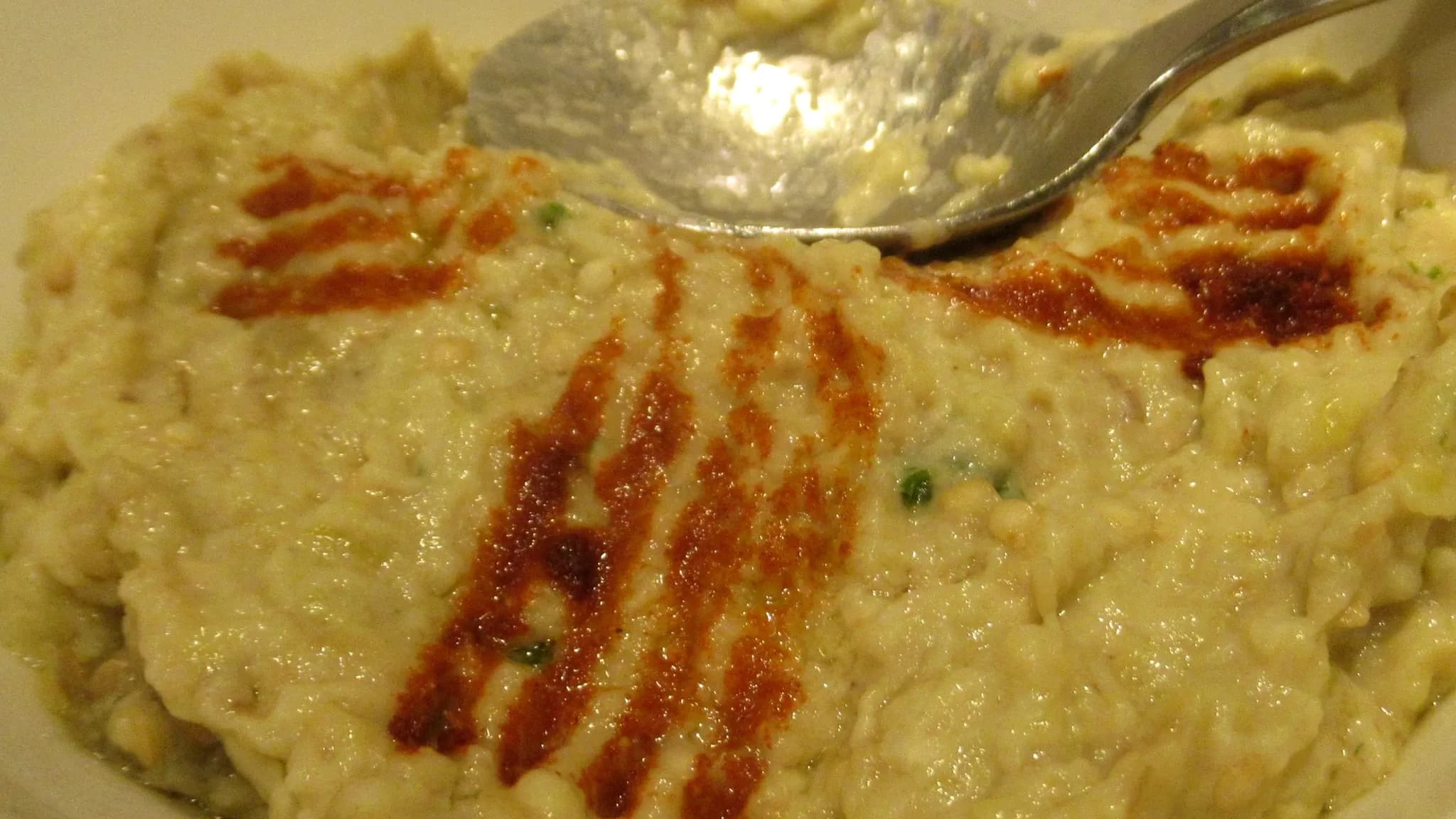
There is a moment when the eggplant collapses under the heat, when its interior flesh becomes soft enough to mash between two fingers, when the skin blackens and cracks and releases the scent of something deeply charred and transformed. That moment is everything in moutabal. The smoke is not optional flourish; it is the dish's identity. Without the char, without the blackened exterior giving up its essence to the tender flesh within, you have simply blended eggplant and tahini. With it, you have captured something ineffable: the scent of fire, the sweetness of softened vegetable, the depth that only heat and time can create.
Moutabal is a creamy, smoky eggplant dip made with grilled eggplant, tahini, garlic, and lemon, known as baba ganoush in many regions and baba ghanouj in others. The essential smoky flavor comes from grilling the eggplant over hot coals or baking it in a very hot oven until it simply collapses, making the flesh easy to blend with the other ingredients. In Lebanese cooking, the distinction between baba ghanoush (without tahini, sometimes with tomatoes and herbs) and moutabal (with tahini) matters deeply. Moutabal is the tahini version, richer and more luxurious, a true dip for scooping.
The sesame flavor of tahini plays against the smoky eggplant like light against darkness. The lemon provides brightness and acidity, cutting through the richness. The garlic whispers rather than shouts. This is a dip that demands good quality tahini and eggplants at peak season, firm and heavy for their size.
Ingredients
Serves 4 to 6 as part of a mezze. Prep and cooking time: 35 minutes plus 15 minutes cooling.
- 2 large eggplants (about 400 g each)
- 100 g tahini
- 4 tablespoons fresh lemon juice (about 1 large lemon)
- 2 cloves garlic, minced
- 30 ml ice water
- 40 ml extra virgin olive oil, divided
- 1 teaspoon salt, or to taste
- 0.25 teaspoon freshly ground black pepper
- Pinch of paprika for garnish (optional)
- Fresh parsley for garnish (optional)
Method
- Preheat your oven to 220 degrees Celsius (425 degrees Fahrenheit). Pierce each eggplant several times with a fork to prevent them from exploding during cooking.
- Place the eggplants directly on an oven rack with a baking sheet positioned below to catch any drips. Roast for 25 to 35 minutes, turning halfway through, until the eggplants are completely soft and collapsed, and the skin is blackened and charred in spots. The eggplant should feel like a soft pillow when pressed gently.
- Remove from the oven and let cool for 10 to 15 minutes until cool enough to handle.
- Once cooled, cut each eggplant in half lengthwise and scoop the soft flesh into a fine-mesh sieve positioned over a bowl. Using the back of a spoon or a fork, press gently to remove as much excess liquid as possible. Discard the liquid and transfer the eggplant flesh to a food processor.
- Add the tahini, lemon juice, minced garlic, and salt to the processor. Pulse several times, then blend on high speed for 1 minute.
- While the processor is running, slowly drizzle in the ice water through the feed tube. The mixture will lighten and become creamier. Blend for another 2 to 3 minutes until completely smooth and silky.
- Taste and adjust seasoning. Add more lemon juice for brightness, more salt if needed, or a pinch of black pepper. The final consistency should be thick enough to hold its shape when spooned, but spreadable and creamy.
- Transfer to a serving bowl and create a shallow well in the center with the back of a spoon. Drizzle 20 ml of the olive oil into the well and around the edges. Garnish with a pinch of paprika and fresh parsley if desired.
Make-Ahead and Storage
Moutabal keeps in the refrigerator for up to 5 days in an airtight container. The flavor actually improves after a day as the ingredients meld together. Before serving, bring to room temperature and drizzle with fresh olive oil to restore the silky texture. You can also freeze moutabal for up to 3 months; thaw overnight in the refrigerator before using. Some cooks add a pinch of cumin or a handful of pomegranate arils for additional flavor and visual interest, though traditional moutabal remains simple and restrained. Serve with warm pita bread, fresh vegetables, or alongside other mezze dishes.
Moutabal is proof that the best dishes often come from mastering a single technique and understanding how heat transforms simple vegetables into something transcendent.
Published in The Outspoken Digest
Editorial desk
Outspoken Digest Food DeskCooking, ingredients, restaurants and the economics of what ends up on the table.
Newsletter
The Digest, in your inbox
One edition, sent when it is ready. No noise, and your address is never passed on.
Read Next
More Recipes →
Swangy Tamarind Glazed Chicken Wings for the Flavour Replacing Swicy on Fast Food Menus
Sep 29, 2026/3 min read

Baked Apple Cider Doughnuts for a Cider Season That Peaked Earlier Than the Calendar Says
Sep 29, 2026/3 min read
An Obatzda Bavarian Beer Cheese Dip for the Final Stretch of Oktoberfest 2026
Sep 29, 2026/3 min read