OPEC+ Seven Hold November Oil Output Steady as the Closed Strait of Hormuz Keeps Brent Above $100
Saudi Arabia, Russia and five other members agreed on Sunday to leave production unchanged for November and to meet again on 1 November, two days after the G7 announced its own emergency oil release.
Sunday, October 4, 2026/2 min read
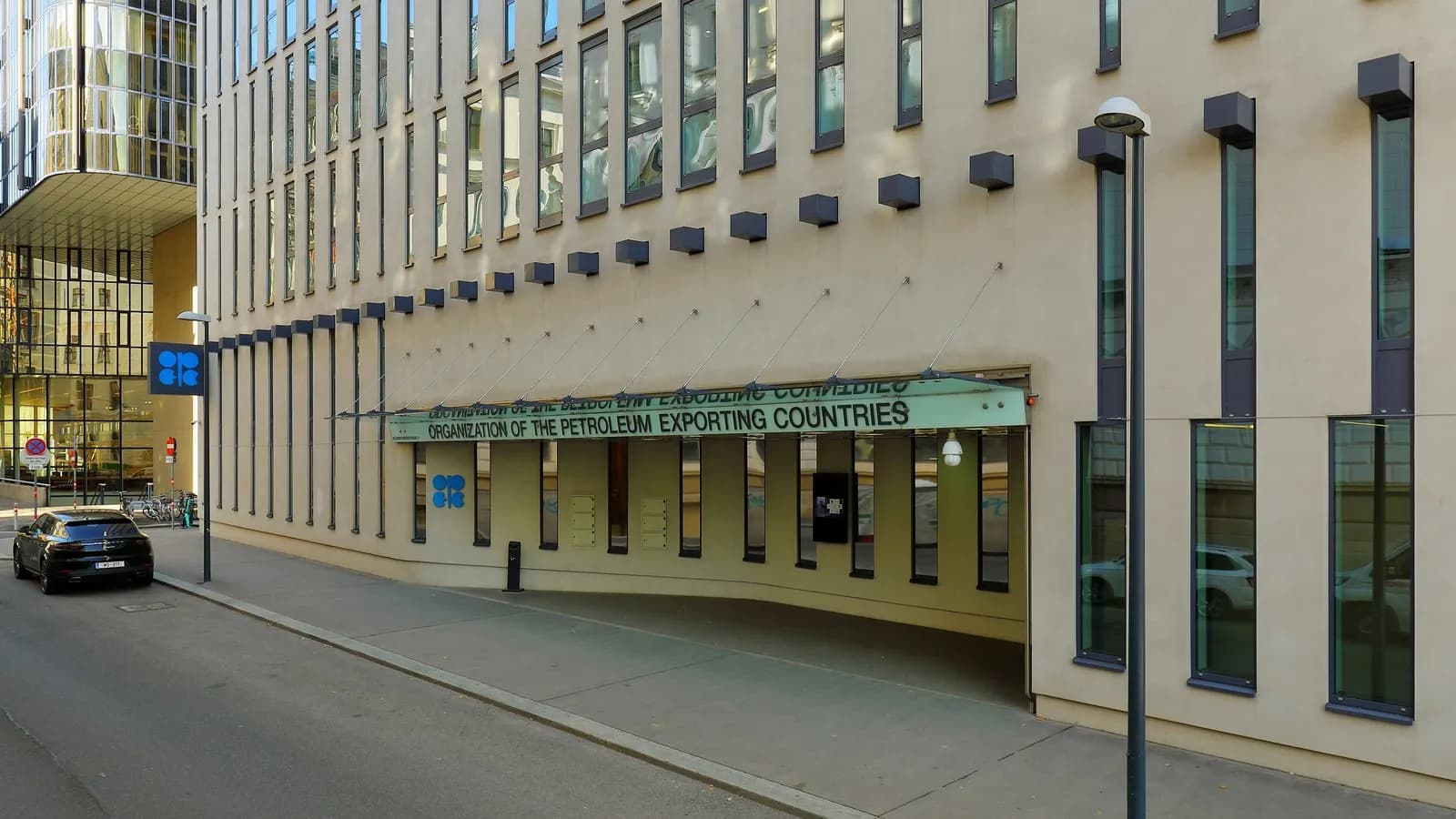
Seven of the OPEC+ producers agreed on Sunday 4 October to keep oil production steady in November, extending a pause as the war with Iran keeps benchmark Brent crude above $100 a barrel. The group, made up of Saudi Arabia, Russia, Iraq, Kuwait, Kazakhstan, Algeria and Oman, will meet again on 1 November, according to The National.
The decision
The group said it would "maintain September 2026 required production for November 2026" and "continue to hold monthly meetings to review market conditions," as quoted by The National. The pause extends the one agreed for October, which followed six months of gradual increases by the group.
A freeze on targets matters less than usual this year, because many members cannot meet their targets in any case. The National reports that most are producing below their quotas because of the conflict, which is a very different problem from the usual question of how much oil to add to a well-supplied market.
The war behind the numbers
The conflict began on 28 February with US and Israeli attacks on Iran, and the Strait of Hormuz, which normally carries about a fifth of the world's crude oil and liquefied natural gas, has been effectively shut since then. The Associated Press reports that diesel prices have reached record highs in the United States, which is hurting farmers, truckers and consumers.
The OPEC+ decision came two days after the G7 agreed to release 100 million barrels of oil and fuel products, with a front-loaded release of diesel in the first 20 days and the rest spread over four months. In effect, consuming nations are drawing on reserves while producers hold their output, and neither can easily add supply past a closed strait.
Prices
Brent has traded above $100 a barrel through the conflict, and The National notes that it hit an intraday high of $126 in late April. It reports that the benchmark was roughly flat at the week's close, with Brent down about 2 percent over the week and US crude down 1.4 percent.
What to watch
The next OPEC+ meeting is on 1 November. By then the G7 release will have run for four weeks, the diesel front-loading will be over, and traders will know whether the strait is still shut. A decision to hold output is the simplest one the group could make, and it reflects a market in which the main variable is not quota policy but whether tankers can sail.
For consumers the point is plain. Pump prices will follow the Gulf rather than Vienna, and the producers' meeting changes little while the shipping lane stays closed. The relief that matters will come from the G7's barrels and from any reopening of the strait.
Published in The Outspoken Digest
Editorial desk
Outspoken Digest Markets DeskReports for The Outspoken Digest across Business, Crypto.
Newsletter
The Digest, in your inbox
One edition, sent when it is ready. No noise, and your address is never passed on.
Read Next
More Business →
Tesla Beats Profit Estimates on $28.05 Billion in Revenue, Then Slips After Hours
Oct 22, 2026/2 min read
Nasdaq Jumps 1.05% as SpaceX and Super Micro Revive the AI Trade While Netflix and AT&T Slide
Oct 22, 2026/2 min read

Jio Platforms Raises Rs 8,110 Crore From Anchors at the Top of Its Range as India's Biggest IPO Opens
Oct 21, 2026/2 min read
Netflix Beats on Profit, Then Slides After Hours as It Trims Its Ad Forecast and Guides Lower
Oct 21, 2026/2 min read