Ghormeh Sabzi: Persian Herb Stew with Kidney Beans
Iran's unofficial national dish layers fresh herbs, kidney beans, and dried limes into a deeply aromatic stew. Serve it over saffron rice for pure comfort with complexity.
Wednesday, January 8, 2025/5 min read
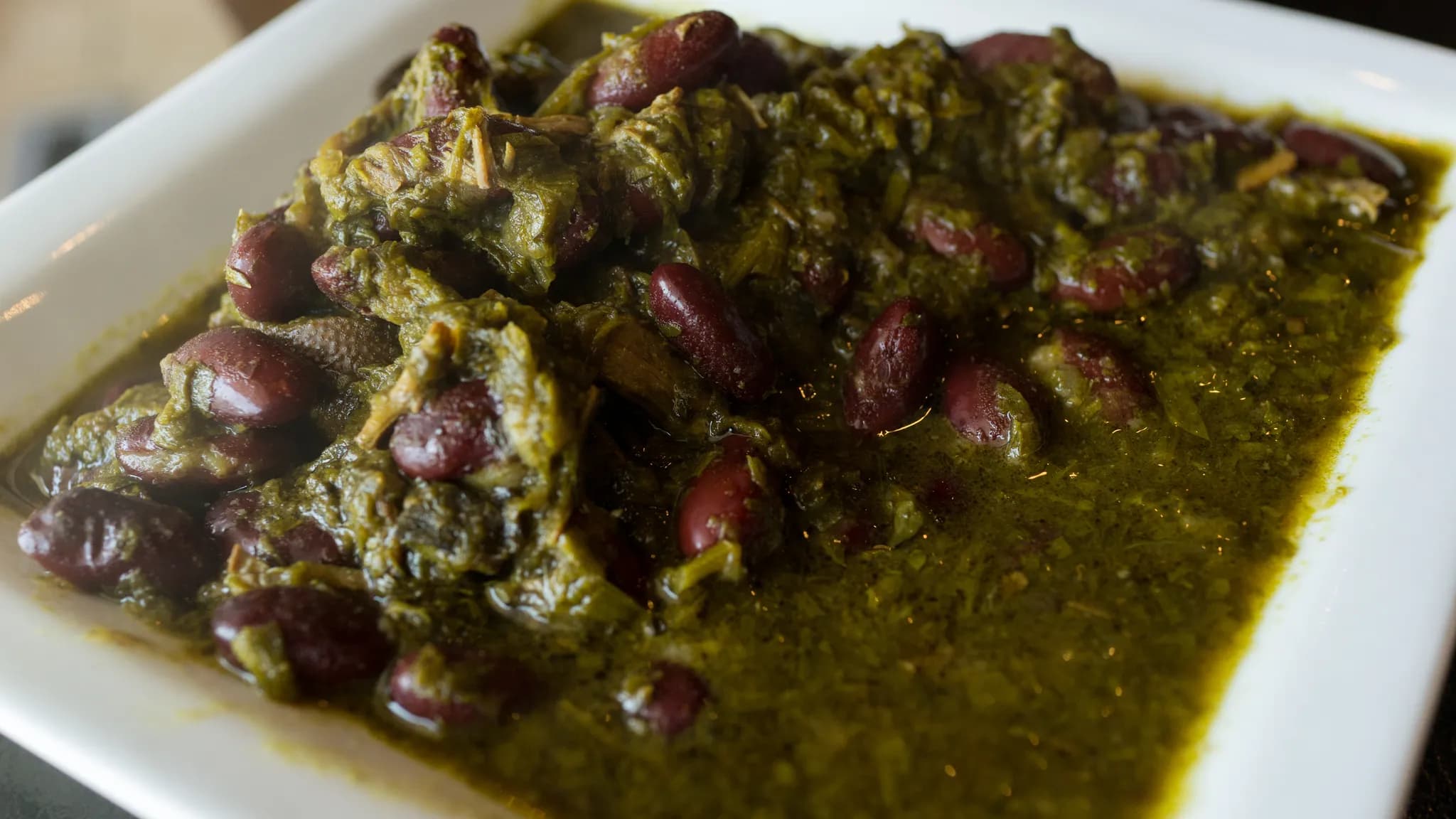
Ghormeh sabzi is a Persian stew of lamb, kidney beans and dried limes, built on an enormous quantity of fresh herbs that are fried slowly until they darken and lose all their raw greenness. That frying step is the entire dish. Rushed, it tastes of grass; done properly, it turns almost black and tastes deep, sour and savoury in a way nothing else does.
Ask any Iranian to name their favorite stew and nine out of ten will say ghormeh sabzi. The dish is so beloved that it appears regularly on family dinner tables, at special celebrations, and whenever someone craves the taste of home. According to Food52, ghormeh sabzi is traditionally served over saffron rice and remains one of Persian cuisine's most iconic dishes. The technique is slow and patient: meat browned first, then herbs sautéed until fragrant, then kidney beans and cracked dried limes added to the pot where everything simmers together for nearly two hours.
Cooking with Ayeh describes the two special ingredients that define ghormeh sabzi: limoo amani, which are dried limes that add a complex sour note, and the trio of fresh herbs (parsley, cilantro, and fenugreek) that give the stew its name and soul. The Delicious Crescent walks through the authentic preparation. The stew tastes earthy, slightly sour, deeply herbaceous, and profoundly warming. Each spoonful contains a different combination of herb flavors layered with the tender meat and soft beans.
This is the dish Iranians think of when they think of home. Once you make it, you'll understand why.
Ingredients
Serves 6 people. Total time: 1 hour 50 minutes. Active time: 25 minutes.
- 700 g beef or lamb, cut into 2 cm cubes
- 600 g dried kidney beans, soaked overnight and drained, or canned and drained
- 100 g fresh flat-leaf parsley, roughly chopped
- 100 g fresh cilantro, roughly chopped
- 60 g fresh fenugreek or additional parsley
- 2 large onions, one halved, one sliced
- 4 cloves garlic, minced
- 60 ml vegetable oil
- 6 to 8 dried limes (limoo amani), cracked with a knife
- 750 ml beef or lamb stock
- 1 tablespoon tomato paste
- 1/2 teaspoon turmeric
- 1/2 teaspoon black pepper
- Salt to taste
- Saffron rice for serving
Method
- Heat oil in a large heavy pot over medium-high heat. Season beef with salt and pepper. Working in batches, brown the meat on all sides, about 5 minutes per batch. Set aside.
- In the same pot, add halved onion and cook for 2 minutes, then add sliced onion and cook until soft, about 4 minutes more. Stir in garlic and cook 1 minute.
- Add tomato paste and turmeric to the pot and stir to coat everything evenly. Cook for 1 minute.
- Return browned meat to the pot. Pour in stock and bring to a boil, then reduce to a simmer, cover, and cook for 45 minutes until meat is beginning to become tender.
- Meanwhile, heat a dry skillet over medium heat. Add roughly chopped parsley, cilantro, and fenugreek and toast, stirring frequently, for 3 to 4 minutes until the herbs become dry and fragrant. Set aside.
- Add drained kidney beans and toasted herbs to the pot along with cracked dried limes. Stir well to combine. Cover and simmer for another 45 to 50 minutes until meat is very tender and the stew has darkened to a deep brown color. The flavors will have melded completely.
- Taste and adjust seasoning with salt and pepper. The stew should taste herbaceous, slightly sour from the limes, and deeply savory from the meat and beans.
- Serve over fluffy saffron rice with a simple salad on the side.
Tips and Storage
Dried limes (limoo amani) are essential and available in Persian and Middle Eastern markets. If unavailable, you can substitute the zest and juice of fresh lemons, though the authentic version needs those cracked dried limes. The stew can be made entirely vegetarian by omitting the meat and increasing the beans. Ghormeh sabzi keeps, refrigerated, for 4 days and freezes beautifully for up to 3 months, making it excellent for meal prep. The flavors actually deepen and improve after a day or two of resting.
Ghormeh sabzi embodies everything beautiful about Persian cooking: patience, aromatic complexity, and the confidence that good food needs time to fully become itself. Make it once and it becomes part of your rotation forever.
What is ghormeh sabzi?
It is widely described as the national dish of Iran, and it is the stew Iranians abroad miss most. The name breaks down simply: ghormeh means stewed or braised, sabzi means herbs.
The herb mixture is parsley, coriander and chives or Persian leek, with fenugreek in a much smaller quantity. Fenugreek is what makes it recognisable, and it is also the one that punishes excess: too much turns the whole pot bitter, and there is no way back.
Can you use dried herbs instead of fresh?
Yes. Dried herb mixes sold specifically for ghormeh sabzi are used in Iranian homes without apology, and they are a reasonable option when three large bunches of fresh herbs are not realistic.
The proportions change. Roughly one cup of dried mix replaces the fresh quantity in this recipe, and it needs soaking in warm water for 15 minutes before it is fried. Fresh gives a brighter result, dried gives a deeper and slightly muddier one, and both are recognisably the dish.
What are dried limes, and can you skip them?
Limoo amani are limes boiled in brine and then dried until they are hollow, hard and almost black. They give a sourness that is different from fresh citrus: earthier, slightly fermented, faintly bitter.
You cannot really skip them. Lemon juice gives acidity but not the fermented depth, and the stew tastes thin without it. If you have none, use the juice of one lemon plus a small amount of tamarind, and accept it as an approximation.
Pierce each lime before it goes in so it can absorb liquid, and press them against the side of the pot near the end to release what is inside. Leave them whole and they are decorative rather than useful.
What do you serve with ghormeh sabzi?
Chelow, the Persian steamed rice with a crisp tahdig crust at the bottom of the pot. That is the pairing, and every other suggestion is a compromise.
A dish of torshi pickles and a plate of raw herbs go alongside. The stew is better on the second day, and it freezes well, which is why it is often cooked in a quantity that looks absurd for one meal.
Published in The Outspoken Digest
Editorial desk
Outspoken Digest Food DeskCooking, ingredients, restaurants and the economics of what ends up on the table.
Newsletter
The Digest, in your inbox
One edition, sent when it is ready. No noise, and your address is never passed on.
Read Next
More Recipes →
Swangy Tamarind Glazed Chicken Wings for the Flavour Replacing Swicy on Fast Food Menus
Sep 29, 2026/3 min read

Baked Apple Cider Doughnuts for a Cider Season That Peaked Earlier Than the Calendar Says
Sep 29, 2026/3 min read
An Obatzda Bavarian Beer Cheese Dip for the Final Stretch of Oktoberfest 2026
Sep 29, 2026/3 min read